
A trade school program lives or dies on one thing: real hands-on time. However, most people picture a classroom when they think about training. That picture is wrong for good programs. Let’s break down what a real trade school program looks like day to day.
Hands-on training matters the most in vocational education. Because it is learning by doing. Reading about a weld or a wiring diagram teaches you very little. Therefore, strong skilled-trade education completely flips that model. You learn by doing the work yourself, over and over.
Additionally, muscle memory only builds through repetition. A textbook cannot teach your hands how a tool actually behaves. Consequently, the best hands-on training program in Philadelphia puts tools in your hands from week one. Skilled trade education layers the knowledge of tools and equipment as per current industry norms. Along with education, soft skills that employers look for in Students.
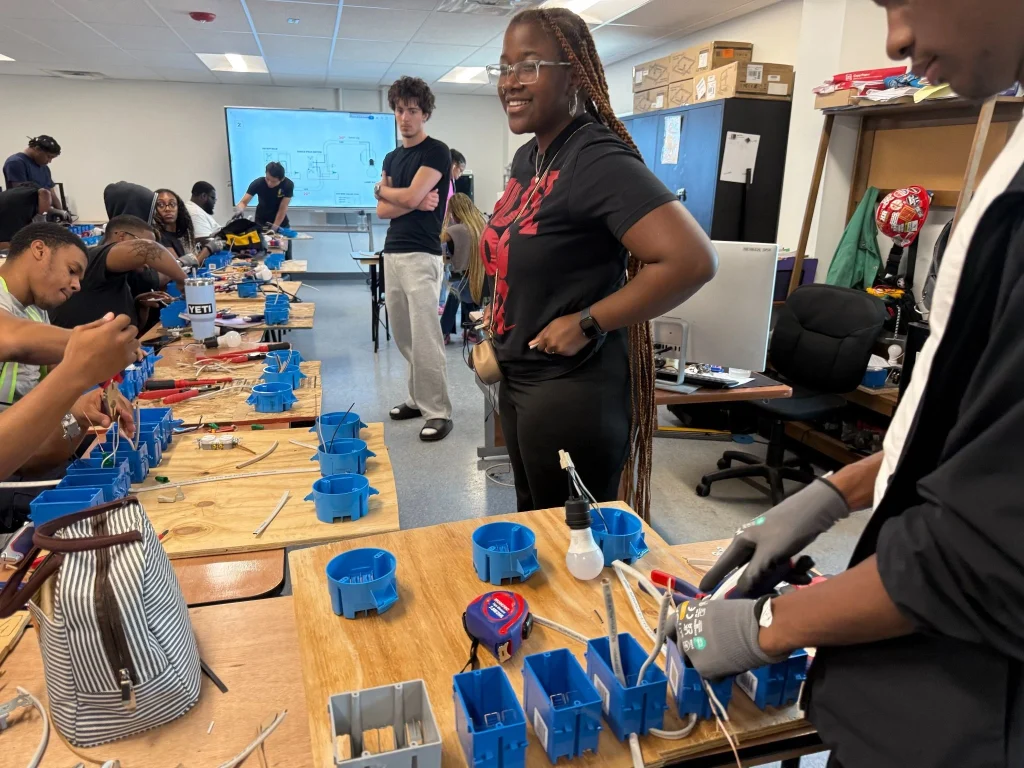
Here’s what a typical hour breakdown looks like at a solid trade school program.
| Program Component | Hours (Example: Drywall Program) |
| Lecture/Classroom | 325 hours |
| Shop/Hands-On Practice | 375 hours |
| Externship (Real Job Site) | 200 hours |
| Total | 900 hours |
As you can see, shop time outweighs lecture time. Moreover, some programs push that ratio even further. Automotive training, for example, runs roughly 80 percent hands-on, with students working on real vehicles using real diagnostic tools.
Every skilled trade applies hands-on learning a bit differently. Students enrolled in vocational school learn through hands-on training with tools and equipment. Because this is what they will be solving in the real world. Skilled trade is 70 percent hands-on and 30 percent theoretical. That also involves maths and cognitive ability skills. However, the core idea stays the same: real tools, real materials, real conditions.
Overall, this is what separates true skilled trade education from theory-only courses.
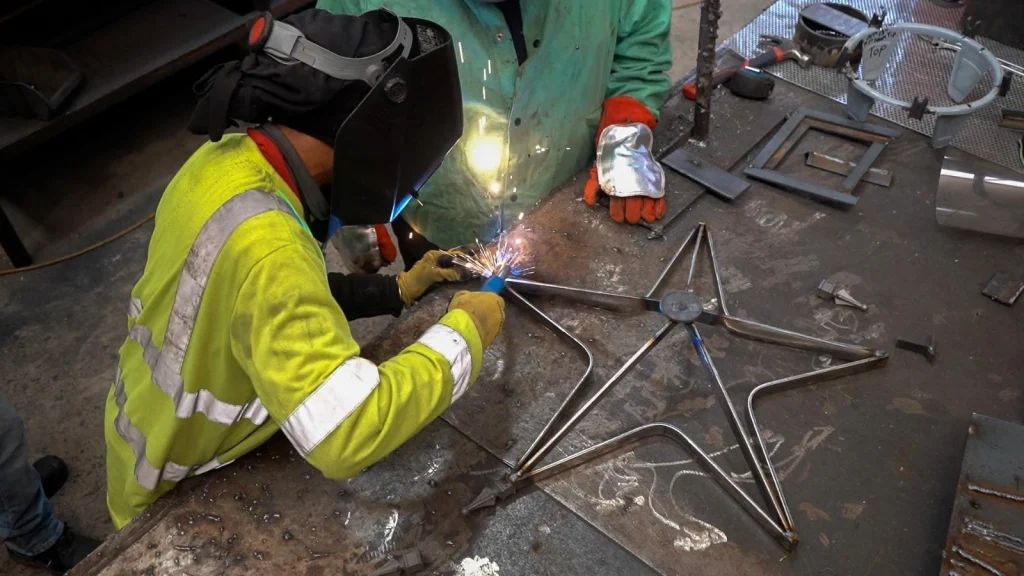
Hands-on work means real risk. Therefore, every strong trade school program builds safety training in from day one. Students learn proper tool handling before they ever touch a live system.
Furthermore, most programs include OSHA 30 certification as part of the coursework. This certification is important for the people working in skilled trades. This ensures that, whatever the work situation is, you are well aware of safety . The precautionary steps are also taught and explained at skilled trade institutes like PTTI and also well communicated by employers. That means safety isn’t an afterthought. It’s baked into every single shop session students complete.
An externship in skilled trades is considered an opportunity to observe and understand the issues before fixing them. However, observing and applying that while doing is also part of learning . The Hands-on training doesn’t stop inside the shop. Additionally, most trade school programs finish with an externship. Students work at real job sites, under real supervisors, before graduation.
This step matters enormously. Consequently, employers trust externship-trained graduates more than candidates trained solely in the classroom. PTTI offers this externship approach as a part of cognitive skill trade development in trade careers. It helps boost each student’s confidence and understanding. It proves you can perform under actual working conditions, not just in a controlled lab.
Philadelphia’s construction and manufacturing scene stays busy year-round. As per a few reports, vocational institutes in Philadelphia have steady access to real employer partnerships. Philadelphia is a growing city on the East Coast, covering five counties. Southern philadelphia That connection matters more than most people realize.
Moreover, a hands-on training program in Philadelphia benefits directly from this local demand. Students train on skills local employers are actively hiring for right now. That alignment shortens the gap between graduation and a real paycheck. Universities and massive health care development are rolling in Philadelphia
Not every trade school delivers equally on hands-on promises. But PTTI, the best institute for Skilled Trade program in USA guarantees placement in the skilled trades industry. The career placement service department assists students from résumé writing to placement assistance. However, a few clear signs separate strong programs from weak ones.
The best institute for a skilled trade program in the USA will answer every one of these questions clearly and directly.
PTTI builds every program around this exact model. Shop hours outweigh lecture hours across every trade offered. Additionally, OSHA 30 certification comes included at no extra cost.
Furthermore, PTTI maintains strong employer relationships across Philadelphia. That has set a placement record of 92 percent. Best institute for Skilled Trade program in USA .That means externships turn into real job leads for many graduating students. Finally, career services support continues well past graduation day, from resume help to interview coaching.
Ready to enroll in PTTI hands-on training that makes you job-ready? Call 215-381-9403 or email info@ptt.edu to see PTTI’s shops in person.
Learning by experimenting and doing . It includes real tools, real materials, and supervised practice on industry-standard equipment.
Skilled trade programs run 60 to 80 percent hands-on, depending on the trade you select.
No. Definitely not needed. The hands-on training programs are built for complete beginners.
Local employer demand remains strong, creating real job placement opportunities.
Check shop-hour ratios, equipment quality, included certifications, and job placement rates.
Hands-on training is all about physical strength along with cognitive Ability .PTTI assists you bout training and makes you industry-ready. Overall. Overall, real hands-on training means tools in your hands, not just notes on a page. Best institute for Skilled Trade program in USA .A strong trade school program builds in safety, repetition, and real job-site experience each week. Therefore, if you want true skilled trade education, look for shop hours, externships, and included certifications. Philadelphia’s hands-on training programs, including PTTI, are built exactly around that model.
Read More: