
If you want a healthcare career that skips years of college and puts you to work supporting surgical teams, two roles come up again and again: the sterile processing technician and the surgical tech. They sound similar, they both protect patients from infection, and they both live inside the surgical side of a hospital. But the day-to-day work, the training length, the pay, and the hiring path differ in ways that matter for your decision. For anyone weighing these options in the Philadelphia area, hands-on sterile processing and central services training can be one of the fastest ways into a hospital.
This guide breaks down sterile processing vs surgical tech in plain terms: what each professional actually does, how long the training takes, what certification you need, what the roles pay according to current federal data, and how to decide which fits your goals. By the end, you will know how sterile processing vs surgical tech stacks up and which healthcare career lines up with the time, budget, and work style you have in mind.
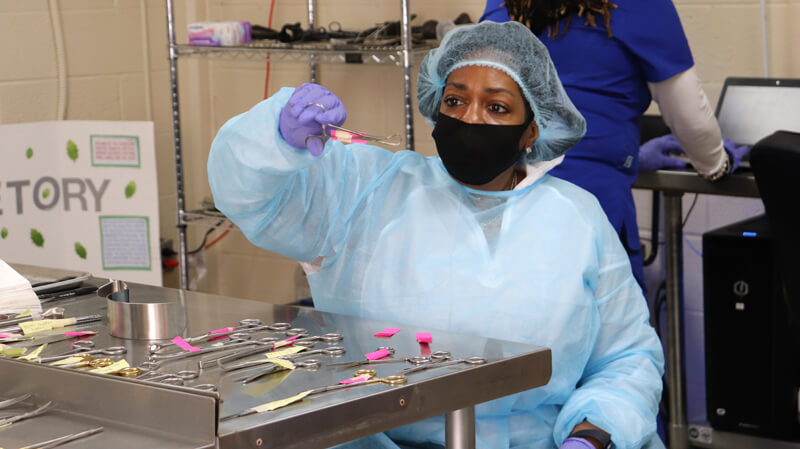
The core difference is location and timing. A sterile processing technician decontaminates, inspects, assembles, and sterilizes surgical instruments in a hospital’s sterile processing department, before and after surgery. A surgical technologist works in the operating room during surgery, setting up the sterile field and handing instruments to the surgeon. Both protect patients, but only one is in the room while the procedure happens.
Here is the side-by-side view before we go deeper:
| Factor | Sterile Processing Technician | Surgical Tech |
| Where they work | Sterile processing department (behind the scenes) | Operating room (during surgery) |
| Core role | Clean, inspect, assemble, and sterilize instruments | Assist the surgical team and maintain the sterile field |
| Typical training length | Often under a year | About 1 to 2 years |
| Main certification | CRCST (HSPA) or CSPDT (CBSPD) | |
| Median pay (BLS) | ~$47,700/year | ~$62,830/year |
| Job growth, 2024–2034 | ~10% (faster than average) | ~5% (faster than average) |
| Direct patient contact | Minimal to none | Works alongside the surgical team |
A sterile processing technician cleans, decontaminates, inspects, assembles, packages, and sterilizes surgical instruments and medical equipment so they are safe for the next patient. The work happens in the sterile processing department, not in the operating room during surgery, and it is a frontline defense against healthcare-associated infections.
A typical shift moves through clear stages. Used instruments arrive from surgery and are decontaminated. Each item is inspected for damage and function. Instruments are then reassembled into precise sets, packaged, and run through sterilizers such as steam autoclaves. Finally, sterile trays are stored and distributed back to surgical and procedural areas. Accuracy is everything, because a single missing or improperly cleaned instrument can delay a case or put a patient at risk. These are exactly the kinds of essential skills these technicians master during hands-on training.
The role rewards people who are detail-oriented, organized, and calm under pressure. You do not need to be comfortable watching surgery, but you do need to care deeply about doing careful, consistent work that other people’s safety depends on.
A surgical tech, also called a surgical technologist, prepares the operating room and assists the surgical team during procedures. They set up sterile instruments and supplies, help gown and glove surgeons, maintain the sterile field, and pass instruments to the surgeon throughout the operation. Unlike a sterile processing tech, the surgical technologist is present while surgery is happening.
Before a case, the surgical tech arranges the instruments and equipment the procedure will need. During surgery, they anticipate the surgeon’s next move, keep the sterile field intact, and manage supplies and counts. After the case, they help prepare the room for the next patient. It is fast-paced, physically demanding, and directly connected to the surgical team’s rhythm.
This career suits people who want to be in the action, can stand for long stretches, and stay composed in a high-stakes environment. The trade-off for that front-row role is a longer training commitment, which we cover next.
When people compare sterile processing vs surgical tech, both roles protect patients and both are strong entry points into healthcare without a four-year degree. The real decision comes down to four practical factors: how long you want to train, which certification you will earn, what you can expect to make, and where you want to spend your workday.
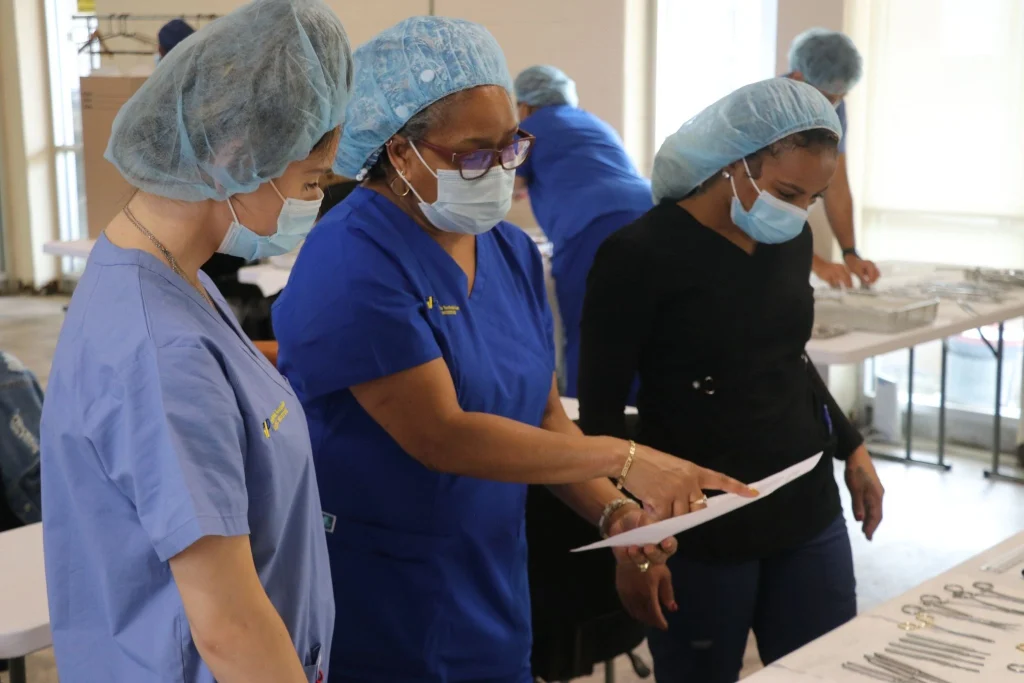
Training length is the biggest practical difference. Sterile processing training is typically short and focused, often completed in a matter of months, followed by a certification exam and, in many cases, hands-on clinical hours. Surgical tech programs are longer, generally running one to two years as a diploma or associate degree, because the role requires deeper clinical education and operating-room preparation.
If your priority is getting hired and earning quickly, sterile processing has the shorter runway. Many motivated students can start a healthcare career in about six months through a focused program. If you are willing to invest more time up front for a higher starting wage and an in-the-room role, surgical tech may be worth the longer path.
Certification is where the two careers clearly split. Sterile processing technicians typically earn the CRCST certification (Certified Registered Central Service Technician) from the Healthcare Sterile Processing Association, or the CSPDT credential from the CBSPD. Surgical techs typically pursue the CST credential (Certified Surgical Technologist) from the National Board of Surgical Technology and Surgical Assisting.
Most hospitals treat CRCST certification as the real hiring filter, so a training program that prepares you for the exam matters. Understanding how the CRCST certification fits into the hiring process helps you plan your first year. Certified technicians generally earn more than uncertified peers in the same department.
Surgical technologists earn more on paper, but sterile processing is growing faster. According to the U.S. Bureau of Labor Statistics, surgical technologists had a median annual wage of about $62,830 in May 2024, while medical equipment preparers, the category that covers sterile processing roles, had a median of roughly $47,700 as of May 2025. Certified CRCST certification holders often earn above that midpoint. In Pennsylvania, the sterile processing median sits near $45,820.
On job growth, the picture flips. BLS projects employment in sterile processing (medical equipment preparers) to grow about 10% from 2024 to 2034, faster than the average for all occupations, while surgical technologists are projected to grow about 5% over the same period. Both are healthy, but the sterile processing field is expanding more quickly, driven by rising surgical volume and an aging population. Because pay rises with certification, shift differentials, and experience, sterile processing technician salaries vary by state and setting.
A sterile processing tech spends the shift in the sterile processing department, focused on instruments and sterilizers, with minimal direct patient contact. The surgical technologist is in the operating room, on the surgical team, and part of the intensity of live procedures. Neither is “better.” They simply suit different personalities. If you prefer steady, detail-driven, behind-the-scenes work, sterile processing fits. If you want to be in the room where it happens, the operating-room role fits.
When you weigh sterile processing vs surgical tech, choose based on time, temperament, and goals. Sterile processing is the better fit if you want the fastest entry into a hospital, prefer methodical work over live-procedure pressure, and want to keep training costs and time low. Surgical tech is the better fit if you want to be part of the operating-room team, can commit to one to two years of training, and want a higher starting wage.
There is also a longer game to consider. A sterile processing role is one of the most accessible front doors into healthcare, and many people use it to gain hospital experience, confirm they enjoy the environment, and then move into other roles, sometimes including surgical technology, over time. If you are still deciding, reviewing the differences between these two roles in more detail can help you commit with confidence.
For many students, especially those who need to start earning soon, the short, focused path of sterile processing makes it the practical first step, with the option to specialize later.
Philadelphia is a strong place to launch a healthcare career. The region has major hospital systems, surgical centers, and a growing life-sciences sector, all of which rely on sterile processing to keep operating rooms running safely. That local demand is part of why sterile processing programs are changing careers in Philadelphia for students across the city and nearby communities in Pennsylvania and South Jersey.
Good sterile processing training does more than cover theory, and quality sterile processing training in a real lab is what sets graduates apart. It puts you in a lab with real instruments, sterilization equipment, and the decontamination-to-distribution workflow you will use on the job, and it prepares you for the certification exam that hospitals expect. For students in neighborhoods from North and West Philadelphia to nearby areas like Camden, Cherry Hill, Darby, and Drexel Hill, training close to home shortens the distance between the classroom and a hospital job.
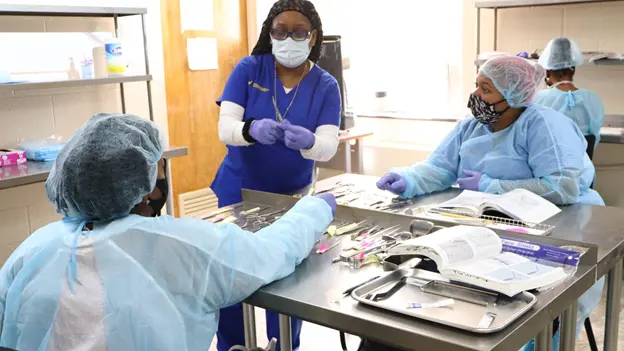
Sterile processing vs surgical tech comes down to what you want from a healthcare career. Both roles keep surgery safe, both skip the four-year degree, and both are in steady demand. The operating-room role earns more and keeps you inside the OR, but the training takes one to two years. A sterile processing technician trains faster, enters a field that is growing more quickly, and works behind the scenes on the instruments every procedure depends on. If speed of entry and a fast return on your time matter most, sterile processing is often the smarter first move, with room to specialize later.
If you are ready to take the next step in the Philadelphia area, explore PTTI’s sterile processing and central services program or contact admissions to ask about start dates and what training looks like.
A sterile processing tech cleans, assembles, and sterilizes surgical instruments in the sterile processing department, before and after surgery. A surgical technologist works in the operating room during surgery, maintaining the sterile field and passing instruments to the surgeon. One works behind the scenes; the other is in the room.
The operating-room role generally earns more. BLS lists a median of about $62,830 (May 2024) versus roughly $47,700 for sterile processing technicians (May 2025). However, sterile processing requires less training time, so the cost-to-income ratio is often favorable, and pay rises with CRCST certification and experience.
Yes. Sterile processing training is typically short and focused, and many students complete a program and sit for certification within months rather than years. That short runway is one of the main reasons people choose this path to enter healthcare quickly.
No. A sterile processing tech works in the sterile processing department, handling instruments before and after procedures rather than during them. Direct patient contact is minimal, which appeals to people who prefer detailed, behind-the-scenes work.
Yes. It is one of the most accessible entry points into a hospital, with a short training path, steady demand, and clear value to surgical teams. Many people start here, build hospital experience, and use it as a stepping stone toward other healthcare careers.