
If you have ever felt out of place in a classroom but completely at home fixing an engine, building something, or taking a machine apart to see how it works, you are not broken, and you are definitely not out of options. Struggling with lectures, essays, and standardized tests says very little about whether you can build a skilled, well-paid career. In fact, the hands-on strengths that made traditional school feel like a poor fit are exactly what employers in the skilled trades are hiring for right now. This guide answers the real question behind the title: yes, there is a career for you, and a focused hands-on trade program in Philadelphia can help you reach it faster than you might expect. You will learn which skilled trades careers suit people who are good with their hands, what they pay, how long training actually takes, and how to choose a trade school in Philadelphia that turns practical ability into a steady paycheck. No four-year degree required.
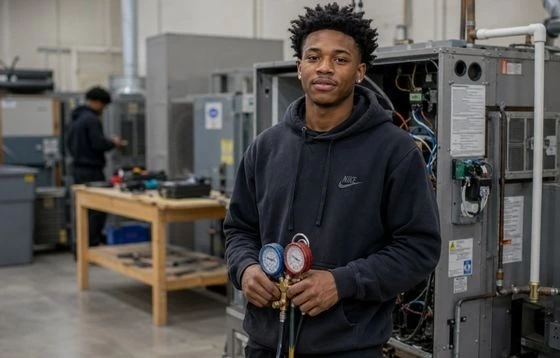
Here is something most people figure out too late: struggling in a traditional classroom usually has nothing to do with intelligence or ability. Many people who felt lost during lectures, reading assignments, and timed exams are sharp, capable learners who simply learn better by doing. Sitting still and memorizing facts is one narrow kind of learning, and it is the only kind most schools reward.
The trades flip that script. In a welding booth, an engine bay, or a mechanical room, you learn with your hands, your eyes, and real feedback. When a weld holds or an engine starts, you know you got it right. That immediate, tangible result is exactly how hands-on people thrive. If school made you feel slow, a shop floor may make you feel fast.
This matters because the skills that frustrated you in school are not the skills that pay the bills in a skilled trade. Precision, spatial reasoning, patience, mechanical instinct, and problem-solving under pressure are the real currency, and they rarely show up on a report card.
There are many strong careers for people who are good with their hands, including welding, automotive repair, HVAC, pipefitting, sterile processing, masonry, drywall, and manufacturing automation. These skilled trades careers reward practical ability over academic test scores and can be entered through focused training rather than a four-year degree.
What makes these fields a good match is that they turn physical and mechanical aptitude into real value. A few of the most accessible hands-on paths include:
Each of these is a legitimate, in-demand career path, not a fallback. And each one values the kind of person who would rather build something than write a paper about it.
Yes. Skilled trades pay well, with many Philadelphia-area roles earning roughly $45,000 to $70,000 per year, and experienced or specialized technicians often earning more. Because training is short and demand is steady, the trades frequently deliver strong earnings far sooner than a traditional degree path.
Pay varies by trade, experience, certifications, employer, and overtime, so the figures below are regional estimates rather than guarantees. Still, they show why so many people are rethinking the assumption that college is the only road to a solid income. For anyone exploring high-paying trade jobs, a skilled automotive repair career is a good example of a high-paying trade where certifications and specialization steadily raise earning potential.
| Skilled Trade | Approximate Annual Range (Philadelphia Area) |
| Welding | $52,000 – $60,000+ |
| Pipefitting / Steamfitting | $55,000 – $70,000+ |
| HVAC Technician | $50,000 – $60,000+ |
| Automotive Technician | $45,000 – $55,000+ |
| Sterile Processing Technician | $45,000 – $62,000+ |
| Masonry / Concrete | $45,000 – $55,000+ |
According to the U.S. Bureau of Labor Statistics, skilled trades also offer steady openings year after year, driven largely by experienced workers retiring. That replacement demand means consistent opportunity for people entering now, regardless of whether a particular field is growing quickly.
Most trade school programs can be completed in under a year, and many run between roughly six and twelve months. Because training focuses only on the skills employers actually need, you can move from beginner to job-ready far faster than the four years a traditional degree typically requires.
This is one of the biggest advantages of the hands-on route. Instead of spending years and taking on heavy debt, you concentrate on learning a specific trade, practicing it in real lab settings, and preparing for the certifications that matter. For people who were counting the minutes in high school, the pace and purpose of a trade school in Philadelphia often feel like a relief. You are learning something you can see, touch, and use.
Short training also means you start earning sooner. A year of focused study can lead directly into a paying trade, while peers who chose a four-year path may still be in classrooms with no income and mounting loans.

No. You do not need to have been good at school to succeed in the trades. Employers in skilled trades hire based on demonstrated ability, reliability, safety awareness, and willingness to learn — not on grades or test scores. What matters is whether you can do the work and show up ready to improve.
That said, the trades do involve learning, just a different kind. You will read measurements, interpret basic blueprints, follow safety procedures, and understand how systems work. The difference is that this learning is applied and immediate, not abstract. Most hands-on people absorb it quickly because it connects directly to something real in front of them.
Good trade programs are built for exactly this. They teach through practice, repetition, and real equipment, with instructors who have worked in the field. If you learn best by doing rather than by reading, a quality trade school in Philadelphia is designed around your strengths, not against them.
For someone who is good with their hands but struggled academically, trade school often makes far more sense than a traditional four-year college. It is faster, more affordable, more hands-on, and tied directly to in-demand jobs. College still suits some goals, but it is not the only path to a stable, respected career.
The honest comparison looks like this:
| Factor | Trade School | Four-Year College |
| Time to finish | Often under a year | About four years |
| Cost | Lower, focused tuition | Frequently heavy debt |
| Learning style | Hands-on, applied | Lecture and reading heavy |
| Time until earning | Fast | Delayed |
| Fit for hands-on learners | Strong | Often weak |
| Path to a specific job | Direct | Indirect |
Cost is a real concern for most students, which is why it helps to understand financial aid options for trade programs before assuming any path is out of reach. For hands-on learners especially, trade school is not a consolation prize. It is frequently the smarter, more strategic choice.
Philadelphia is a strong place to enter the trades because the region has real, ongoing demand across construction, manufacturing, healthcare, automotive, and infrastructure. That means several hands-on fields you can train for locally and then put to work close to home.
One steady, indoor option is sterile processing and central services, where sterile processing techs keep hospitals running by cleaning and preparing surgical instruments. It is a trade that suits detail-oriented people who prefer a clean, climate-controlled environment over a job site.
For those drawn to buildings and mechanical systems, training in steam, sprinkler, and pipe fitting opens the door to pipefitter and steamfitter roles that are consistently in demand for commercial construction and building maintenance across the area.
If you are mechanically curious and interested in where modern industry is heading, manufacturing and automation training prepares you to run and maintain the automated systems and robotics that today’s production lines rely on. It is a strong fit for people who like technology and machines working together.
Construction-minded learners have options too. Programs in concreting, masonry, and framing teach the job-site skills behind the structures all around us, while drywall, framing, and finishing focuses on the interior build-out work that every renovation and new build requires. Welding, automotive repair, and HVAC round out a lineup that gives hands-on people real choice. Across these programs, students train in and find work throughout North Philadelphia, South Philadelphia, West Philadelphia, and nearby communities such as Yeadon, Lansdowne, Darby, and Drexel Hill, as well as South Jersey towns like Camden, Pennsauken, and Cherry Hill.
You already have a head start if you recognize yourself in a few common traits. The people who thrive in skilled trades careers tend to share qualities that classrooms rarely measure:
Notice what is not on that list: perfect grades, strong essay writing, or high test scores. These trades reward a different kind of intelligence, the kind that builds, fixes, and makes things work.
Getting started is more straightforward than most people expect. You do not need a perfect academic record or a plan figured out to the last detail. You need a willingness to learn a trade and a first concrete step.
The most important thing is simply to begin. If you are genuinely good with your hands, training is the bridge between raw ability and a career that pays and lasts.
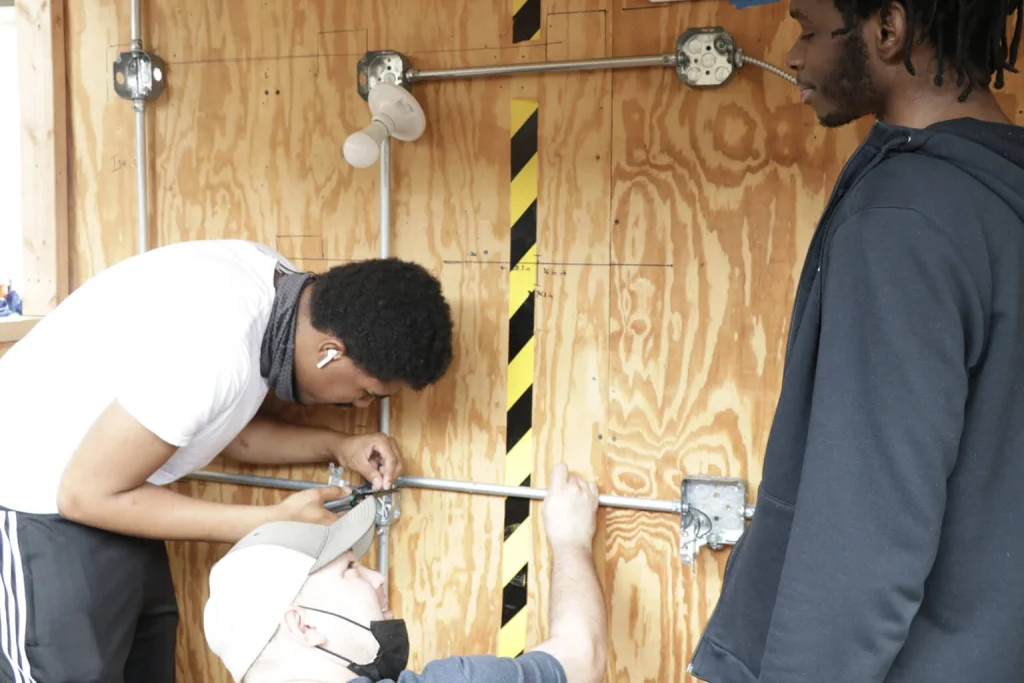
Being good with your hands but bad at school is not a dead end. It is a signal pointing you toward work you can actually be great at. The skilled trades reward the exact strengths that traditional classrooms overlooked, and they do it with short training, strong pay, and real demand across the Philadelphia region.
The only thing standing between practical ability and a lasting career is the decision to start. If that sounds like you, talk with PTTI’s admissions team about the trades that fit you best, or schedule a visit to see the hands-on training up close.
Yes. Skilled trades careers are built for hands-on people and value practical ability over grades. Fields like welding, automotive repair, HVAC, and pipefitting offer solid pay and steady demand, and most can be entered through short training rather than a four-year degree.
Most trade school programs can be completed in under a year, often between six and twelve months. Because the training focuses only on job-relevant skills, you become job-ready far faster than the roughly four years a traditional degree typically takes, and you start earning sooner.
Yes. Many Philadelphia-area trades pay roughly $45,000 to $70,000 per year, with experienced and certified technicians often earning more. Earnings vary by trade, experience, certifications, and overtime, and these figures are regional estimates rather than guarantees of any specific outcome.
You need basic, applied skills — reading measurements, following procedures, and understanding how systems work — but not academic test-taking ability. Quality programs teach these through hands-on practice, which is how most practical learners absorb them best.
It depends on what you enjoy. If you like metal, consider welding; engines, automotive repair; buildings and systems, HVAC or pipefitting; precision indoor work, sterile processing; and machines and technology, manufacturing automation. Exploring programs at a trade school in Philadelphia helps you match your strengths to a path.