
Most people considering a career change ask the same question. Can six months really turn someone into a working technician? It is a fair doubt. Cars are complex. Shops are busy. Nobody wants to spend money and still get turned away.
Here is the direct answer. Yes, a focused program can make you shop-ready in about 26 weeks. But only if the training is built the right way. The hours must go into the bay, not the lecture hall. The curriculum must match what shops actually service. And the program must prepare you for real credentials.
This guide breaks down exactly what quality 6 month automotive training in Philadelphia covers. You will see the week-by-week skill build, the diagnostic work, the certifications that matter, and how local shops make hiring decisions.
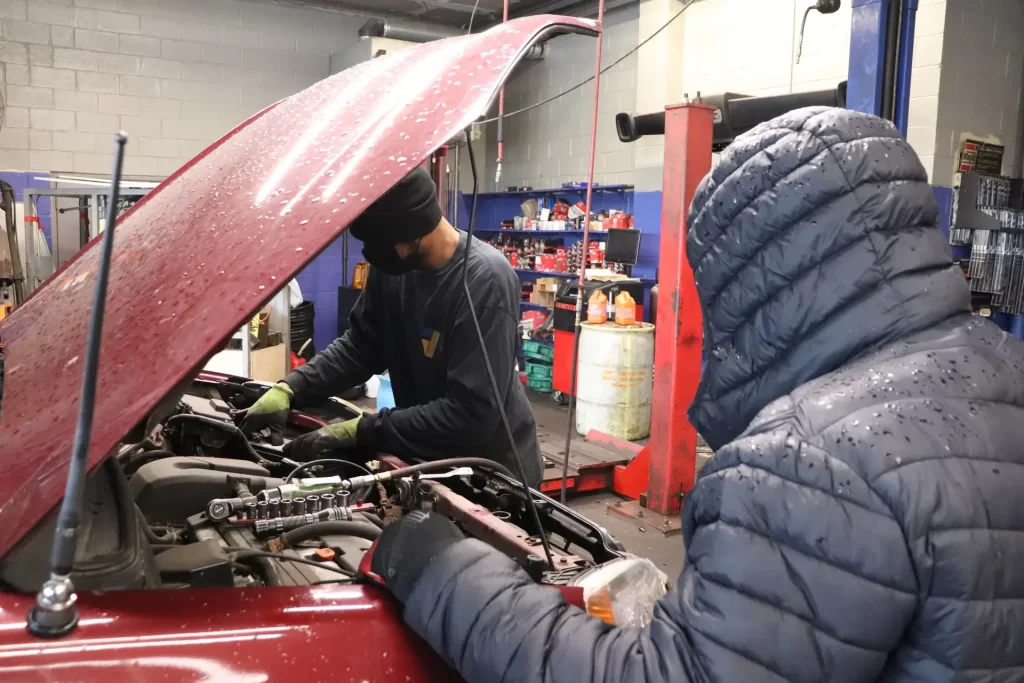
Yes, six months is enough to enter the field as an entry-level technician. The U.S. Bureau of Labor Statistics lists a postsecondary nondegree award as the typical entry-level education for automotive service technicians. Employers then build on that foundation with short-term on-the-job training. You do not need a four-year degree to start building a successful career in the industry.
Instead, you need practical skills, the right attitude, and a willingness to keep learning on the job. That single fact reframes the whole debate. Shops are not looking for graduates with long transcripts. Instead, they want people who can work safely, follow proven procedures, solve basic problems, and finish each job correctly and efficiently.
The numbers support a short, focused path. According to the U.S. Bureau of Labor Statistics, roughly 70,000 technician openings are projected each year through 2034. Employment is also projected to grow about 4 percent over that decade.
Most of those openings come from replacement demand. Experienced technicians retire or move into service advising and management. That churn creates steady room for trained newcomers.
Automotive work is performance-based. A service manager can judge your ability in an afternoon. They watch how you handle a lift, a torque wrench, and a scan tool.
This is why a short auto program in Philadelphia can work so well. Concentrated practice builds competence faster than spread-out theory.
Shop owners screen new technicians on a short list of practical questions:
Notice what is missing. Nobody asks about your GPA.
A well-built 26-week program moves in a deliberate sequence. First you learn to work safely. Then you master core vehicle systems. Finally you layer diagnostics on top. Each phase builds on the last, so skills compound rather than scatter.
Here is how that progression typically looks.
| Phase | Focus | What You Can Do After |
| Early weeks< | Safety, tools, measurement, shop practice | Work safely and use equipment correctly |
| Middle weeks | Brakes, steering, suspension, electrical | Complete common service and repair jobs |
| Later weeks | Diagnostics, drivability, career prep | Trace faults and interview with confidence |
Everything starts here. You learn personal protective equipment, lift operation, and hazardous material handling. You also learn precision measurement.
These basics matter more than beginners expect. Shops will not tolerate unsafe habits. Strong safety discipline is often the first thing a hiring manager notices.
This is the heart of the program. You spend most of your hours on the systems that generate daily shop revenue.
Brake and suspension work fills service bays every day. You learn inspection, measurement, component replacement, and road testing. These are the jobs a new technician performs first.
Modern vehicles run on networks and sensors. So electrical training carries real weight now. You learn circuit theory, wiring diagrams, and meter use.
You also practice testing rather than guessing. That habit separates a technician from a parts-changer.
The final phase pulls everything together. You move from replacing parts to finding causes.
Instructors teach a repeatable process, not tricks. Students practice it until it becomes automatic:
This workflow is what shops mean by “diagnostic ability.” It is teachable within a focused program. Strong automotive technician training in Philadelphia builds it deliberately.
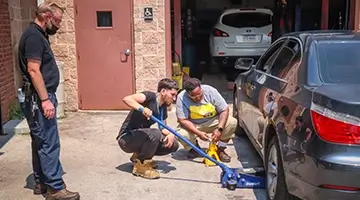
Shop hours are the reason a short program can outperform a longer one. You are not just learning about repairs. You are performing them, repeatedly, under supervision.
That repetition builds speed. Speed is what shops pay for.
A technician earns their keep through completed work. Employers therefore value graduates who already move with purpose.
Consider what repetition actually produces:
None of this develops from reading. It develops from doing. That is the core argument for hands-on auto repair training over any online alternative.
Local hiring managers are practical people. They expect a new hire to handle basic service work immediately.
The Philadelphia region supports a deep and varied service market. Dealerships line the major commercial corridors. Independent shops serve neighborhoods across North Philadelphia, South Philadelphia, and West Philadelphia. Fleet and municipal operations add another layer of demand.
That variety helps new technicians. You can start at an independent shop near Mantua or Powelton Village. Then you can move to a dealership in Northeast Philadelphia as your skills grow. Graduates also find work across the river in Camden, Pennsauken, and Cherry Hill, and west toward Drexel Hill, Darby, and Lansdowne.
Because the credential travels, your options widen quickly. PTTI’s careers and job opportunities support is built around that regional reality.
Certification is what turns training into proof. Employers use credentials to sort applicants quickly. For a new graduate, the right certification removes doubt about your skill level.
Start with the credential designed for people at your stage.
The National Institute for Automotive Service Excellence offers entry-level certification specifically for students. Importantly, these tests carry no work experience requirement. You simply need to pass them.
That detail matters enormously. It means you can finish a fast mechanic training program in Philly and hold a recognized credential before your first shop job.
Later, professional ASE certification becomes the goal. Those tests do require documented experience. However, formal training can count toward part of that requirement. So your program time works in your favor twice.
If you want the full picture of that pathway, PTTI covers it in detail in how a mechanic can gain ASE certification.
Pennsylvania technicians often pursue state safety and emissions inspection certification. Inspection work adds steady billable hours for a shop. Technicians who hold it become more valuable quickly.
Ask any school directly which credentials their curriculum prepares you for. A transparent program will answer plainly. You can raise this question with admissions before you enroll.
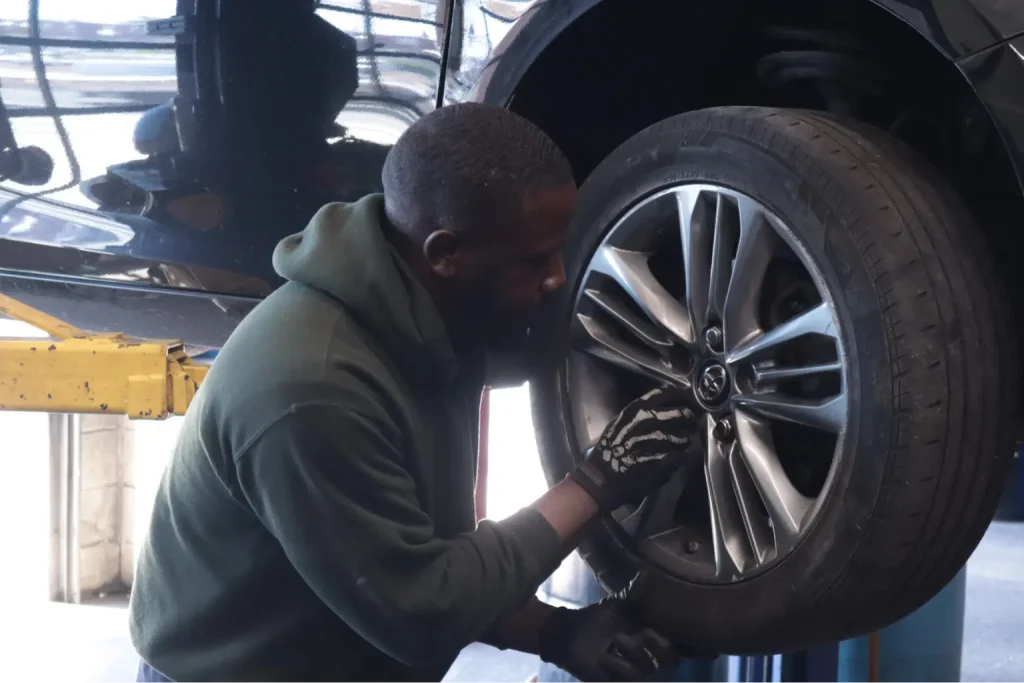
Yes, shops regularly hire graduates of short, hands-on programs. Employers often prefer candidates who have completed formal postsecondary training because it shows a solid foundation of technical knowledge and practical skills. Entry-level certification also strengthens your application and helps you stand out. Most importantly, employers value demonstrated
skill, safety discipline, reliability, and a strong work ethic more than the length of your program. However, hiring is still competitive. Therefore, treat the final weeks of training as valuable job-search preparation by refining your résumé, practising interview skills, and building confidence before applying.
New technicians typically start in one of several settings. Each offers a different learning curve.
Each path teaches something different. Many technicians move between them early in their careers.
Be realistic about the starting point. Entry-level pay sits below the occupational median while you build speed. The national median for automotive service technicians was $49,670 in May 2024, per federal wage data.
Earnings then climb with capability. Diagnostic skill, certifications, and inspection authority all raise your value. Some shops also pay on production, so efficiency directly increases income.
For a broader look at regional earning paths, see PTTI’s guide to becoming an automotive technician in Philadelphia. If cost is a concern, review financial aid options early, and veterans should check veterans’ benefits specifically.
Choosing a route matters as much as choosing a school. Each path produces a different kind of candidate. Here is an honest comparison.
| Path | Time to Work | Hands-On Depth | Employer Readiness |
| 6-month hands-on program | About 26 weeks | High | Strong |
| Two-year degree | Roughly 2 years | Varies | Strong but slower |
| Online-only course | Flexible | None | Weak |
| Self-teaching | Unpredictable | Uneven | Inconsistent |
Online courses can explain how a brake system works. They cannot let you bleed one. You also miss instructor correction, which is where bad habits get caught early.
Self-teaching has a similar gap. You may learn plenty, yet arrive without credentials or documented training. Shops then have no way to verify your ability.
A degree is valuable in many fields. In automotive service, though, employers hire on demonstrated skill. A focused program delivers that skill sooner and at lower cost.
You also start earning years earlier. That head start compounds. PTTI explains this timing advantage further in its overview of the fast-track automotive trade program
Technology is another reason to choose current, hands-on instruction. Vehicles now rely on advanced electronics and hybrid systems. Training must keep pace, which is why EV technician training increasingly matters for new graduates.
Doubt about short programs is reasonable. But the doubt usually rests on an assumption that training means classroom time. Good automotive training does not work that way. It works through hours in the bay, on real vehicles, with an instructor correcting you in real time.
That is how 6 month automotive training in Philadelphia produces genuine technicians. The curriculum targets the work shops actually sell. The diagnostics instruction builds a repeatable process. The certification path gives employers proof.
You do not have to take any of this on faith, either. Walk the shop floor and judge the equipment yourself.
Ready to see it? Schedule a campus tour of the shop and watch a class in session. You can also explore the Automotive Training and Repair program, browse all PTTI programs, or contact admissions with your questions.
Yes, for entry-level work. Federal data lists a postsecondary award as the typical entry point, followed by on-the-job training. PTTI’s hands-on automotive program concentrates that time into real bay work so graduates arrive shop-ready.
You learn shop safety, precision measurement, brakes, steering, suspension, and electrical systems. Later weeks add diagnostics and career preparation. PTTI structures its automotive training around the services Philadelphia shops perform most often.
Yes. Employers prefer candidates with formal training and value entry-level certification. Reliability and safety discipline matter as much as technical skill. PTTI supports graduates through career services and regional employer connections.
Not always, but it helps considerably. ASE entry-level certification requires no prior work experience, so students can earn it near graduation. PTTI’s curriculum is built to prepare students for recognized industry credentials.
Starting pay usually falls below the occupational median while you build speed. The national median was $49,670 in May 2024. Earnings rise with certifications, diagnostic ability, and inspection authority.