
Many students ask a smart question before enrolling. Will my credential still count if I move? It is a fair worry. You do not want a certificate that only works in one city. The good news is simple. The most valuable credentials in the skilled trades are not local at all. They are nationally recognized trade certifications. They follow you across state lines, employers, and industries.
This guide explains the four that matter most: AWS, ASE, OSHA, and NDT. You will learn what each one proves. You will see how they transfer between states. You will also learn which training builds the skills they test for. By the end, you will understand why portable trade certifications are the real prize of skilled trades education.
Nationally recognized trade certifications are credentials honored across the country, not just one region. A national body such as the American Welding Society or ASE sets the standard. Employers everywhere trust that standard. So the credential works whether you stay in Philadelphia or move to Texas.
This portability is the whole point. Your skill does not change when you cross a state line. A good weld is a good weld anywhere. A national credential proves that skill in a language every employer understands.
Portable trade certifications protect your future. You may move for family, cost of living, or a better job. With a national credential, you carry your value with you. You do not start over.
In the Philadelphia region, this matters even more. Work flows across Pennsylvania, New Jersey, and Delaware. A credential that travels lets you follow the best opportunity.
A certification proves skill through a national body. A license is a legal permit issued by a state or city. Some trades need both. Many trades hire on certification alone. Understanding this difference helps you plan your path with confidence.
The AWS Certified Welder credential is one of the most portable in the trades. AWS stands for the American Welding Society. Its Certified Welder program is performance-based. You pass a real weld test at an Accredited Test Facility. A certified inspector checks your work. If it meets the standard, you earn a transferable credential.
That word “transferable” is key. AWS states the credential travels with you wherever you go. There are no prerequisite courses. You simply prove you can produce a sound weld to code.
AWS certification proves you can weld to a recognized standard. It confirms your skill in specific positions and processes. Employers in structural steel, pipe, and fabrication all respect it. Industry data shows certified welders often earn more than uncertified peers.
Because AWS is a national body, its credential is recognized nationwide. A welder certified in Philadelphia can seek work in another state. The standard does not change at the border. You can learn more from the American Welding Society directly.
Welding certification rewards hands-on ability above all else. That ability comes from real booth time on professional equipment. PTTI’s Welding Technology program is built around that applied practice. Students train on industry-standard machines in real labs. This is the foundation these portable credentials are built on.
ASE certification is the national standard for automotive technicians. ASE stands for the National Institute for Automotive Service Excellence. It has certified professionals since 1972. Today, hundreds of thousands of technicians hold the credential. Shops across the country recognize the ASE Blue Seal.
ASE is competency-based, not tied to one school. You prove your knowledge by passing focused tests. The credential shows employers you can diagnose and repair vehicles correctly.
ASE proves technical competence in specific automotive systems. The core automobile series runs from A1 through A8. Each test covers a major system, like brakes or engine performance. Pass all eight and you earn Master Automobile Technician status.
ASE is recognized across the United States and parts of Canada. Your certification does not reset if you relocate. A technician certified here keeps that standing elsewhere. These are true certifications that transfer between states.
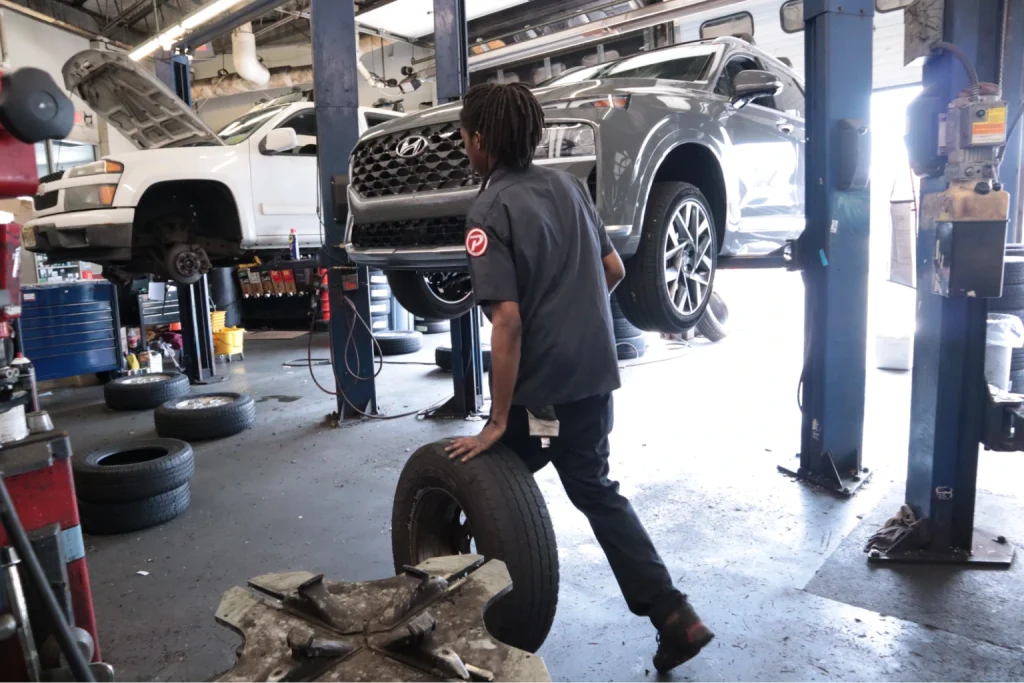
Modern vehicles are rolling computers. Diagnosing them takes real, hands-on skill. PTTI’s Automotive Training and Repair program develops that skill in a working shop. Students practice on real vehicles and diagnostic tools. For more on why this credential matters, see why an automotive tech certification matters.
OSHA safety cards are among the most widely expected credentials in the trades. OSHA stands for the Occupational Safety and Health Administration. It issues the OSHA 10 and OSHA 30 Outreach completion cards. These cards prove you understand core job-site safety.
Officially, OSHA calls these “completion cards,” not licenses. In practice, employers treat them as a hiring requirement. Many job sites will not let you work without one.
OSHA 10 covers safety awareness for entry-level workers. OSHA 30 goes deeper and suits supervisors and leads. Both teach hazard recognition, worker rights, and prevention. This knowledge protects you and your whole crew.
OSHA cards are recognized across every construction trade in the country. They also do not expire, though some employers ask for refreshers. That makes them a durable part of your résumé. You can confirm the details at the Occupational Safety and Health Administration.
Safety credentials matter on nearly every regional job site. Philadelphia construction, manufacturing, and pipefitting all value them. PTTI’s programs, including Manufacturing & Automation, reinforce safety as a core skill. Employers across Camden, Cherry Hill, and Drexel Hill expect that discipline. Safety literacy travels with you to any site.
NDT stands for nondestructive testing. It is a specialized, high-value path in the trades. NDT lets professionals inspect welds and materials without damaging them. The American Society for Nondestructive Testing sets the standards. These credentials are respected in demanding, high-paying industries.
NDT is often a step beyond basic welding. Many welders pursue it to grow their careers. It rewards precision, patience, and a sharp eye.
NDT proves you can find hidden flaws in critical work. Inspectors use methods like ultrasonic and radiographic testing. This work keeps bridges, pipelines, and aircraft safe. The stakes are high, so the pay often is too.
NDT credentials are portable across states and industries. An inspector’s skill is valued wherever critical structures are built. You can explore the field through the American Society for Nondestructive Testing.
Strong welding knowledge is the foundation for many NDT careers. You must understand welds before you can inspect them. That is why hands-on welding training is such a smart start. It opens the door to inspection roles later. Related reading: why certified welding skills are a passport to global careers.
Yes, nationally recognized trade certifications transfer between states. AWS, ASE, OSHA, and NDT are all set by national bodies. Their standards do not change at a state border. A credential earned in Philadelphia is honored in Florida, Texas, or Ohio. This is exactly why portable trade certifications hold their value.
Some trades still require a state license for legal work. Electricians and plumbers are common examples. But the certifications in this guide are different. They prove skill, and that proof travels with you everywhere.

Some worry that a regional trade school limits their future. That worry misunderstands how credentials work. The value is in the national credential, not the school’s zip code. A school in Philadelphia can prepare you for credentials that work anywhere.
PTTI trains students who go on to work far beyond the city. That reach is possible because the credentials travel. You can see how graduates connect to work through careers and job opportunities.
Nationally recognized trade certifications tend to raise pay in any market. Employers pay more for proven, verified skill. A certification removes doubt about what you can do. That confidence often translates into higher wages and better roles.
The pay effect follows you across state lines. A certified welder or technician negotiates from a stronger position anywhere. Certifications also open doors to specialized, higher-paying work.
| Credential | Field | Typical Pay Effect |
| AWS Certified Welder | Welding | Certified welders often earn more than uncertified peers |
| ASE Certification | Automotive | Roughly 10–20% higher pay is commonly reported |
| OSHA 10 / 30 | All trades | Removes a hiring barrier; often required to work |
| NDT Credentials | Inspection | Access to high-paying energy and aerospace roles |
These figures are general industry patterns, not guarantees. Actual pay varies by employer, experience, and region. Still, the direction is clear and consistent. Certification pays across the board. For a broader view, see the U.S. Bureau of Labor Statistics occupational data.
Stacking credentials makes you even more employable. A welder with AWS plus OSHA is more versatile. A technician with several ASE tests stands out fast. Read more on why multi-certification programs are valuable.
These credentials reward proven ability, not just knowledge. That is why hands-on training is the strongest way to prepare. You build real skill on real equipment. Then you can pass the tests that certify that skill.
Other paths fall short in specific ways. Understanding the gaps helps you choose wisely.
Applied training solves all three problems at once. It is faster than a four-year degree. It builds the muscle memory tests demand. It also instills the safety discipline employers require. This is the model behind PTTI’s hands-on programs.
PTTI focuses on the skills that portable trade certifications test for. Training happens in real labs on industry-standard equipment. Students practice the tasks employers actually screen for. This applied approach is what turns effort into job readiness.
The result is training that does not trap you in one city. The credentials you work toward travel with you. That is a powerful advantage for any career.
PTTI supports students beyond the classroom. Career services help connect graduates to real employers. Veterans can explore dedicated veterans’ benefits support. To ask specific questions, you can reach out to admissions directly. For a deeper look at credentials, read which skilled trade certifications matter most.
Your credential should never trap you in one place. The strongest option is clear. Choose training that prepares you for nationally recognized trade certifications. Then your skill and value travel wherever life takes you.
PTTI builds that foundation through real, hands-on training. If certifications are on your mind, take the next step. Talk to admissions about certifications, explore the welding and automotive programs, or start your application today. Your portable career can start here in Philadelphia.
Which trade certifications are recognized nationally?
AWS for welding, ASE for automotive, OSHA safety cards, and NDT for inspection are all nationally recognized trade certifications. National bodies set their standards, so employers across the country honor them. PTTI’s hands-on programs build the skills these credentials test for.
Do trade certifications transfer between states?
Yes. Credentials like AWS, ASE, OSHA, and NDT are set by national organizations. Their standards do not change at a state line. A credential earned in Philadelphia stays valid if you move, which makes these portable trade certifications so valuable.
What are AWS, ASE, OSHA, and NDT?
AWS certifies welders through the American Welding Society. ASE certifies automotive technicians nationally. OSHA issues safety completion cards expected on job sites. NDT certifies inspectors who test welds and materials. Together they form the core of certifications that travel.
Which certifications travel with me if I relocate?
All four in this guide travel with you. AWS, ASE, OSHA, and NDT credentials are recognized nationwide. Your skill and standing move when you do. PTTI trains students for these portable credentials, so relocation never means starting over.
Do these certifications raise pay?
Generally, yes. Certified workers often out-earn uncertified peers in the same roles. ASE technicians commonly report higher pay, and certified welders do too. Certification removes doubt about your ability, which strengthens your position in any regional market.