
Not all credentials carry the same weight when you’re job hunting. Certifications that get you hired are the ones employers actually recognize and require, not just a piece of paper for the wall. However, plenty of certifications exist that don’t move the needle much at all. Below, we break down which credentials actually matter across the trades, and why some carry more weight than others.
Employers don’t treat every certification equally. Evidently, some certifications hold their own value; credentials prove legal compliance or specialized skill, while others simply confirm attendance in a course. Sometimes certifications simply assure employers that the student in question is well aware of the industry and its safety procedures. Therefore, understanding this difference helps you focus training time on what actually pays off.
Here’s what separates a strong certification from a weak one:
Overall, the strongest certifications combine legal necessity with genuine, tested skill.
HVAC Technicians
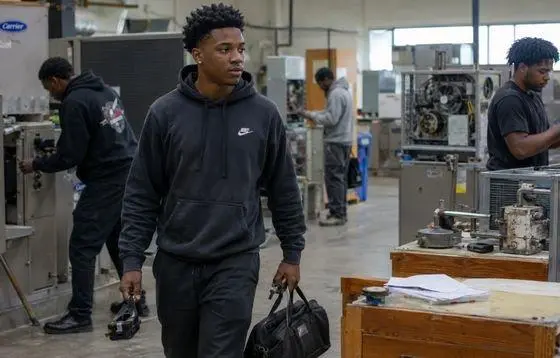
HVAC hiring almost always requires proof of proper certification, since refrigerant handling is subject to legal requirements.
Therefore, these two credentials together practically function as a hiring requirement in HVAC work.
Automotive Technicians
Automotive hiring often hinges on proof of diagnostic and repair competency across specific vehicle systems.
Moreover, technicians pursuing EV and hybrid specialization increasingly benefit from additional high-voltage safety certifications as that demand grows.
Welders
Welding hiring decisions depend heavily on proof of technical proficiency through standardized testing, not just training completion. These are the two important Trade certifications required in this industry.
Therefore, employers can trust AWS-certified welders to meet a consistent, tested skill level.
Sterile Processing Technicians
Healthcare employers rely heavily on certification to confirm sterile processing competency before hiring.

Additionally, hospitals and surgical centers consistently prioritize CRCST-certified candidates over uncertified applicants.
Steamfitters and Pipefitters
This trade depends on proof of safe, technically sound work with high-pressure systems.
Therefore, combining pipefitting skills with a recognized welding certification often enhances hiring prospects.
Concrete and Masonry Workers
While this trade relies heavily on demonstrated hands-on skill, safety certification still matters to employers.
Here’s a simple comparison of how these credentials function during hiring:
| Certification | Legally Required? | Industry-Recognized? | Common In |
| EPA Section 608 | Yes | Yes | HVAC |
| ASE Certification | No | Yes | Automotive |
| AWS D1.1 | No | Yes | Welding |
| CRCST | No | Yes | Healthcare/Sterile Processing |
| OSHA 30 | No | Yes | All construction/industrial trades |
The certification achievements of any student build up trust and certainty that the student is well-trained and has completed all necessary tests. Overall, legally required certifications, like EPA 608, serve as a hiring gateway for so many students, while others, like ASE or CRCST, serve as strong hiring signals.
Employers trust certified candidates more because certification serves as evidence that the student knows tools and safety procedures and is well-versed in industry expectations. That’s roughly how employers weigh certification when comparing job candidates.
Here’s why certification carries real weight during hiring:
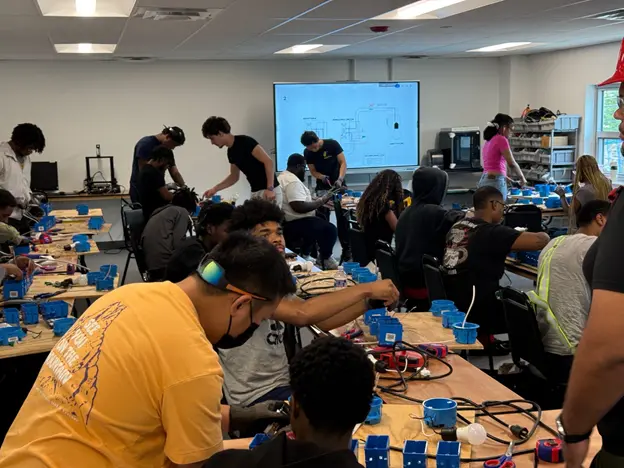
Therefore, certified candidates often move through the hiring process faster than uncertified applicants with similar experience.
Not every certificate carries real hiring weight. Moreover, it’s worth knowing which credentials matter less so that training time is spent wisely.
Watch for these lower-impact credentials:
Therefore, it’s worth asking whether a certification is truly industry-recognized before assuming it will help with hiring.
Before committing time to any certification, ask these questions:
Finally, choosing wisely here saves time and strengthens your resume.
According to the U.S. Bureau of Labor Statistics, employment in HVAC, automotive repair, welding, and healthcare support trades is projected to grow steadily over the next decade (2026- 2034), with certified workers often filling roles more quickly than uncertified applicants.
Therefore, pursuing the right certifications now supports both immediate hiring and long-term career stability.
Philadelphia Technician Training Institute (PTTI) includes industry-recognized certifications directly within its programs, at no extra cost. Additionally, this includes EPA Section 608 and OSHA 30 in HVAC, AWS D1.1 in welding, and CRCST in sterile processing.
Here’s how enrollment works: