
Heating and cooling systems do not run, get repaired, or stay legal without trained people behind them, and the credential on a technician’s wallet card often decides which jobs they can take and how much they earn. If you are weighing an HVAC certification, three names come up again and again: EPA 608, NATE, and HVAC Excellence. They are not interchangeable. One is a federal legal requirement, and the other two are voluntary industry credentials that prove skill. Knowing the difference matters before you spend money on an exam or choose an HVAC training program in Philadelphia. This guide breaks down what each credential actually does, which one you must have by law, which ones raise your pay, and how to stack them in the right order. You will also see what HVAC technicians earn in the Philadelphia area, how strong the job outlook is, and what to look for in quality HVAC training. By the end, you will know exactly which HVAC certification is worth it for your stage and goals.

An HVAC certification is a credential that proves you can safely and competently work on heating, ventilation, air conditioning, and refrigeration systems. You need at least one by law: EPA 608 is federally required to handle refrigerants. Beyond that, credentials like NATE and HVAC Excellence are voluntary but valuable.
It helps to separate three terms that people often confuse. A certification is awarded by an organization, such as the EPA or an industry body, after you pass an exam. A license is issued by a state or local government and grants legal permission to perform work or run a business. Manufacturer credentials are brand-specific and tied to equipment warranties. For most people entering the field, the practical question is not whether to get certified at all, but which credentials to pursue and in what order.
The short version: one credential is mandatory, and the rest are strategic. Getting the required one wrong can cost you a job before you start, while skipping the voluntary ones can cap your earning potential. That is why understanding EPA 608, NATE, and HVAC Excellence side by side is worth the time.
The EPA 608 certification is a federal requirement under Section 608 of the Clean Air Act. Any technician who maintains, services, repairs, or disposes of equipment containing regulated refrigerants must hold it. It is not optional, not a state license, and not something you can skip. Without it, you cannot legally open a refrigerant line or even buy refrigerant.
This requirement is codified in federal regulation (40 CFR Part 82, Subpart F) and enforced by the U.S. Environmental Protection Agency. Violations carry steep civil penalties, which is exactly why employers will not put an uncertified technician on refrigerant work. For anyone serious about the trade, EPA 608 is the non-negotiable starting point.
EPA 608 is divided into a mandatory Core section plus three equipment-specific types. You earn the type that matches the equipment you plan to service, and passing all of them earns Universal certification.
| Type | What It Covers | Typical Equipment |
| Core | Required foundation for every type | Refrigerant rules, safe handling, recovery |
| Type I | Small appliances | Window units, mini-fridges, vending machines |
| Type II | High-pressure systems | Central air conditioning, heat pumps, rooftop units |
| Type III | Low-pressure systems | Commercial centrifugal chillers |
| Universal | All of the above | Maximum job flexibility |
Each section contains 25 multiple-choice questions, and you generally need about 70% to pass. For most residential and light commercial work, technicians pursue Type II or go straight for Universal to keep their options open. One more advantage: this EPA 608 certification does not expire. Once you earn it, it is valid for life, with no renewal fees.
NATE certification is a voluntary, nationally recognized credential from North American Technician Excellence that proves hands-on diagnostic and service competence. Unlike EPA 608, which tests regulations, NATE tests whether you can actually troubleshoot and repair real systems. It is widely regarded as the industry’s gold standard for skill.
Founded in 1997 by HVACR trade groups and equipment manufacturers, NATE is the credential that brand representatives, premium contractors, and many utility rebate programs look for. Major manufacturers recognize it, and many service companies tie raises and senior roles to it. The structure runs from an entry-level Ready-to-Work exam through Core and specialty exams, then Senior and Master Specialist levels for experienced techs. Specialties include areas like air conditioning, heat pumps, gas furnaces, and commercial refrigeration.
Why does a working technician pursue it? Because it pays. A NATE credential signals to employers that you will not misdiagnose a system and generate expensive callbacks, which is why it is frequently associated with higher wages. A NATE credential is renewed roughly every two years through continuing education, so it also keeps your knowledge current as equipment evolves.
HVAC Excellence certification is a voluntary, tiered credential from the ESCO Institute that recognizes technicians at every stage, from students still in training to seasoned professionals. It is often compared with NATE, but it serves a slightly different purpose: it builds and verifies knowledge progressively rather than targeting only mid-career techs.
The ladder typically includes Student Outcome assessments, Employment Ready certifications for new technicians, Professional-Level certifications for those with field experience, and Master Specialist certifications at the top. Professional-Level exams generally expect around two years of field experience, while Master Specialist credentials expect roughly three years plus a passing hands-on and written exam. HVAC Excellence also accredits training programs, which is a useful signal when you are evaluating a school’s curriculum.
For students and early-career technicians, an HVAC Excellence certification can be an excellent way to document progress and prepare for state or local licensing exams. Because its lower tiers are affordable and designed for learners, this HVAC Excellence certification pairs naturally with a classroom-and-lab program. Think of it as a structured path that grows with you rather than a single finish line.

Seeing the three credentials together makes the decision clearer. The table below summarizes how each credential compares on the factors that matter most.
| Factor | EPA 608 | NATE | HVAC Excellence |
| Required by law? | Yes (federal) | No (voluntary) | No (voluntary) |
| Governing body | U.S. EPA / Clean Air Act | North American Technician Excellence | ESCO Institute |
| What it proves | Legal right to handle refrigerants | Real-world diagnostic and service skill | Knowledge from student to pro level |
| Best for | Every HVAC tech | Working techs seeking higher pay | Students and techs building credentials |
| Renewal | Never expires | About every two years | Varies by credential |
| Typical cost | Low exam fee | Roughly $60 to $500 by tier | Roughly $0 to $100 by level |
The pattern is clear. EPA 608 is the gate you must pass to work legally. NATE and HVAC Excellence are the credentials that distinguish you once you are in, prove deeper skill, and open the door to better-paying and more specialized roles.
All three can be worth it, but in a specific order. Start with EPA 608, because it is legally required and no serious employer will hire you for refrigerant work without it. Then add NATE or an HVAC Excellence credential to prove skill, stand out, and increase your earning potential as you gain experience.
Here is a practical way to think about sequencing. If you are brand new, earn EPA 608 (ideally Type II or Universal) first, and consider an HVAC Excellence Employment Ready credential while you train. Once you have a year or two of real service experience, a NATE credential in your specialty becomes the credential most likely to lift your pay and qualify you for senior work. This is also why multi-certification training has become increasingly valuable; stacking credentials is now the norm rather than the exception.
Choosing between NATE and HVAC Excellence is less about which is better and more about timing and fit. HVAC Excellence shines for students and newer technicians because of its progressive ladder, while NATE carries exceptional weight with employers and manufacturers for working technicians. Many people eventually hold both. For a technician who wants a clear, durable answer: EPA 608 is mandatory, and the voluntary credentials are the smart add-ons that compound over a career.
HVAC technicians in the Philadelphia area typically earn about $55,000 to $75,000 per year, with entry-level pay lower and experienced, certified, or specialized workers often reaching $80,000 or more. Nationally, the U.S. Bureau of Labor Statistics reported a median wage around $59,810 for these workers, and Pennsylvania runs slightly higher at roughly $62,400.
Certifications move those numbers. A technician who holds a NATE credential or an advanced HVAC Excellence credential, on top of the required EPA 608 credential, is positioned for the higher end of the range, overtime, and specialized roles that pay premiums. The job prospects for HVAC technicians support this: the field rewards proven skill because callbacks and warranty issues are expensive for employers.
| Career Stage | Approximate Annual Pay (Philadelphia Area) |
| Entry-level / apprentice | $40,000 to $50,000 |
| Service technician | $55,000 to $68,000 |
| Experienced / specialized | $70,000 to $80,000+ |
The outlook is strong. The BLS projects employment of heating, air conditioning, and refrigeration mechanics and installers to grow 8% from 2024 to 2034, much faster than the average for all occupations, with roughly 40,100 openings each year over the decade. Demand is driven by new construction, the push toward energy-efficient and heat pump systems, aging equipment that needs replacement, and a wave of experienced workers retiring. In short, a well-certified HVAC technician is unlikely to run out of work.
In Pennsylvania, there is no single statewide HVAC license, so requirements can vary by municipality, and some local jurisdictions have their own registration or permitting rules. What does not vary is the federal EPA 608 requirement, which applies everywhere. This makes quality HVAC training in Philadelphia valuable: the right program prepares you for the exams that actually gate the work.
The Philadelphia region is a strong place to build this kind of career. Aging commercial and residential buildings, ongoing construction, and the regional shift toward heat pump installation and energy-efficient systems keep demand steady across the city and nearby communities in Pennsylvania and South Jersey. For many learners, the most direct path is to start a trade career through hands-on HVAC training rather than a four-year degree.
Mechanical trades also overlap, which widens your options. Skills in piping, system layout, and safe equipment handling connect this work to related fields like steam, sprinkler, and pipe fitting, giving trained technicians more directions to grow. When you evaluate any HVAC training, look for real lab time, modern equipment, instructors with field experience, and clear preparation for EPA 608 along with NATE or HVAC Excellence exam readiness.
This article is for educational purposes and is not legal advice. Certification and licensing rules change and vary by location, so verify current requirements with the U.S. EPA and your local licensing authority before making decisions.
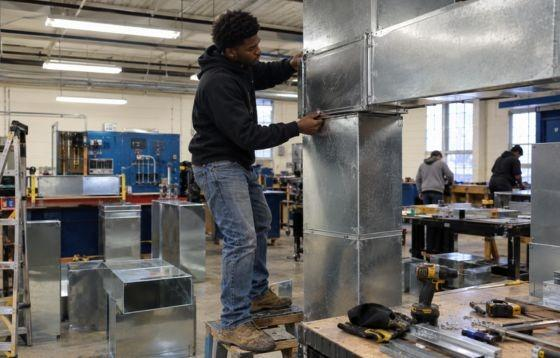
When it comes to an HVAC certification, the decision is not really EPA 608 versus NATE versus HVAC Excellence; it is the order in which you earn them. The EPA 608 certification is the legal foundation every technician must have. From there, a NATE certification and HVAC Excellence credentials prove the hands-on skill that employers pay for and that turns an entry-level job into a long-term, well-paid career. With strong demand across the Philadelphia region and a healthy national outlook, now is a practical time to begin HVAC training and build that credential stack the right way.
If you are ready to begin, explore PTTI’s hands-on training programs and connect with PTTI admissions to ask how training can prepare you for the certifications that matter most.
Yes. EPA 608 certification is a federal requirement under Section 608 of the Clean Air Act for anyone who maintains, services, repairs, or disposes of equipment containing regulated refrigerants. It is enforced nationwide and is not a voluntary credential like NATE or HVAC Excellence.
EPA 608 tests your knowledge of refrigerant regulations and is legally required to handle refrigerants. A NATE certification is voluntary and tests real-world diagnostic and repair skill. In practice, EPA 608 lets you work legally, while NATE helps you earn more and advance.
Earn EPA 608 first, since it is mandatory for refrigerant work. New technicians often add an HVAC Excellence Employment Ready credential during training, then pursue the NATE credential after gaining a year or two of hands-on experience.
Pennsylvania does not have a single statewide HVAC license, but some municipalities require local registration or permits, and the federal EPA 608 credential is always required for refrigerant handling. Always confirm the rules for the specific area where you plan to work.
HVAC technicians in the Philadelphia area typically earn about $55,000 to $75,000 per year. Entry-level pay starts lower, while experienced workers with credentials such as NATE and an advanced HVAC Excellence certification can reach $80,000 or more.