
Most career advice assumes you have a guide at home. It assumes someone can explain applications, aid forms, and what a good job looks like. Many students in Philadelphia do not have that. If you are the first in your family to plan a career after high school, you are not behind. You simply have not been handed the map yet.
This first generation trade school guide gives you that map. It explains how to choose a path when nobody at home can advise you. It covers how training actually works, how people pay for it, and what support exists. It also shows you where to begin, step by step.
You do not need a family connection to start a skilled trades career. You need clear information and one honest first step.
If you are the first in your family to enter the trades, you face a specific problem. It is not ability. It is information. Others get advice at the dinner table. You have to go find it. That gap is real, but it closes fast once someone explains the basics clearly.
Students often assume everyone else knows something they do not. That is rarely true. Most people learn this process by asking questions. Asking early simply speeds it up. Nobody is born knowing how aid forms work. Nobody is born knowing what a weld test is.
Skilled trades reward what you can do. Employers watch you work. They check your welds, your diagnostics, and your safety habits. They do not check your family background. That makes the trades one of the fairest starting points available.
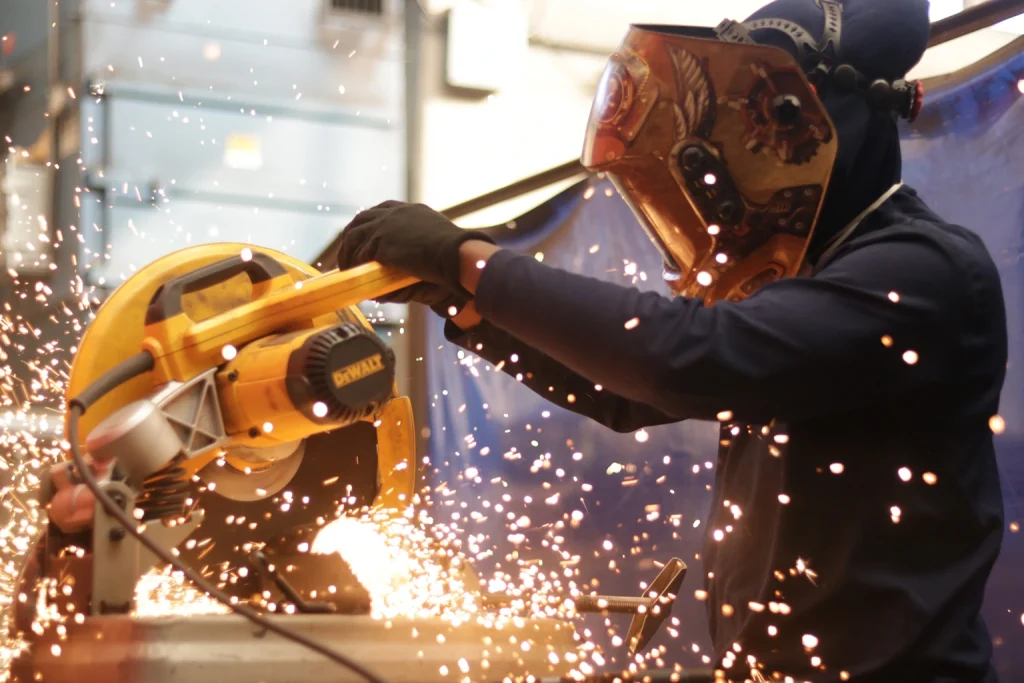
Philadelphia builds, fixes, and maintains essential infrastructure every day. The region supports fabrication shops, construction sites, hospitals, and manufacturing plants that continue hiring skilled workers throughout the year. Students from North Philadelphia, West Philadelphia, and South Philadelphia all draw from the same strong regional job market. So do students commuting from Darby, Lansdowne, Drexel Hill, or across the bridge from Camden and Cherry Hill .
By training centrally in Philadelphia, you gain access to a wide range of career opportunities across the region. As a result, your skills remain valuable and can take you wherever new job opportunities arise.
Start by learning what fits you, not what impresses others. Pick a field that matches how you like to work. Then confirm the training is hands-on. Next, ask admissions about cost and aid directly. Finally, tour the campus and enroll. One conversation begins the whole process.
That answer is short on purpose. The process is simpler than it looks from outside. Below, each step is broken down so nothing stays vague.
Forget job titles for a moment. Think about conditions instead. Ask yourself a few direct questions.
Your answers point toward a field. Someone who likes diagnosing problems may fit Automotive Repair Technology. Someone who likes precision and procedure may fit Central Processing & Sterile Services. Neither is better. They are different.
Once you know your working style, compare it against actual fields. This is where trades for first-gen students becomes concrete rather than abstract.
| If you like… | Consider… |
| Building with metal, seeing immediate results | Welding Technology |
| Machines, systems, and troubleshooting | Manufacturing & Automation |
| Diagnosing faults, modern vehicle tech | Automotive Technology & Repair Program |
| Mechanical systems, piping, steady site work | Steam, Sprinkler & Pipe Fitting |
| Structures, materials, outdoor job sites | Concreting, Masonry & Framing |
| Detail, protocol, healthcare settings | Central Processing & Service Program |
Still unsure? That is normal. You can browse all programs or use the Program Matchmaker to narrow it down quickly.
You have more than one path. Four-year college is one option. Hands-on trade training is another. Both are legitimate. They simply work differently. Trade training is shorter, applied, and focused on employer-tested skills. For many first-gen students, it delivers a faster, clearer route to steady work.
Nobody should pressure you into a single choice. Instead, understand what each path actually offers.
A four-year degree takes years. It often carries debt. Earning usually starts after graduation. Hands-on training compresses that timeline. You train on real equipment. You build skills employers test directly.
This is why a first in family college alternative appeals to so many students. It is not a lesser path. It is a different product with a different return.
| Factor | Hands-On Trade Training | Four-Year College |
| Time to finish | Shorter, focused | About four years |
| Debt exposure | Typically lower | Often significant |
| Learning style | Doing the work | Mostly classroom |
| Skill relevance | Employer-tested | Broader, less applied |
| Time to earning | Sooner | Delayed |
Online courses can teach theory. They cannot give you booth time. You cannot learn to weld through a screen. You cannot diagnose a real fault on video alone.
Self-teaching has similar limits. It rarely builds certification readiness. It rarely builds safety discipline. It never builds employer relationships. Generic vocational programs often stop at theory too.
Hands-on career training Philadelphia employers respect works differently. You practice on industry-standard equipment. You repeat tasks until they become reliable. That repetition is what makes you hireable.
Start by asking for the all-in cost in writing. Then apply for aid. Most students do not pay the sticker price. Federal aid, grants, loans, and veterans’ benefits reduce the real number. Philadelphia Technician Training Institute publishes its aid information openly so you can plan before committing.
Money is the question first-gen students worry about most. It is also the question people avoid asking. Do not avoid it. Ask directly and early.
The honest number includes more than tuition. Ask about every piece.
A school that gives you this clearly is treating you fairly. PTTI’s financial aid section walks through what applies to you. You can also run the net price calculator to estimate your own situation rather than guessing.
Different students qualify for different support. Ask about each one specifically.
PTTI outlines its financial aid programs in detail. Veterans should review the veterans’ program information directly, since benefits differ.
Aid feels complicated until someone breaks it down. Here is the honest sequence.
PTTI’s how to apply guidance covers this process. Advisors walk students through it regularly. Asking for help here is normal, not embarrassing.
If aid paperwork feels overwhelming, remember something important. Staff do this every single day. You are not the first person to need it explained.
Expect to work with your hands from early on. Expect real equipment, not simulations. Expect instructors who worked in the field. Expect safety to be treated seriously. Expect certification preparation built into the curriculum. Expect to be taught, not just tested.
Knowing what happens removes most of the fear. Here is what training actually involves.
You will spend meaningful time in applied learning environments. You will use industry-standard equipment. You will repeat tasks until they become consistent. That repetition builds the muscle memory employers need.
Instructors matter here. Field-experienced instructors teach the small things. They correct your setup. They explain why a weld failed. They show you what a job site actually expects.
Technical ability is the foundation. It is not the whole picture. Employers consistently look for a wider set of skills.
Good programs teach all of these. PTTI builds them into training rather than treating them as extras. You can read more about how students build careers before graduation as part of that approach.
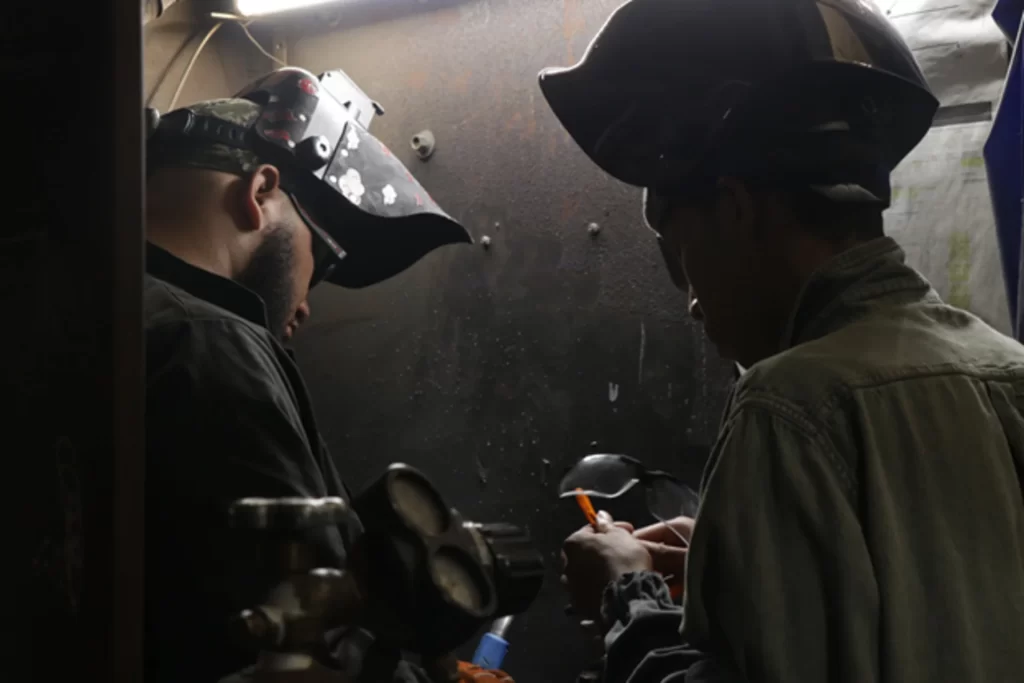
Several roles exist specifically to support students.
PTTI describes how staff support students from enrollment to employment. That continuity is the point. You get help at each stage, not only at the start.
You are allowed to ask anything. In fact, asking is how you close the gap fastest. Bring this list with you.
No good school resists these questions. Resistance is a warning sign.
Trade training prepares you for entry-level work in your field. It does not guarantee a specific salary. Pay depends on trade, certification, employer, and overtime. Skilled trades across the region support steady demand. Certification and experience raise your earning ceiling over time.
Honesty matters more than hype here. So here is the honest version.
Skilled trades stay in demand partly because workers retire. According to the U.S. Bureau of Labor Statistics, many trade occupations see consistent annual openings driven by replacement needs. That demand is steady rather than explosive. Steady is good. Steady means work.
Philadelphia’s mix helps too. Construction, healthcare, fabrication, and manufacturing all hire technicians. That variety spreads your options across the region.
Your first job is a starting point, not a ceiling. Growth follows a pattern.
Each step raises what you can earn. PTTI’s careers and job opportunities resources explain how graduates approach that progression.
Be cautious of any school promising exact salaries. Nobody can guarantee that. Ask for realistic ranges instead. Then verify them independently.
\Begin with one conversation. Contact admissions and ask your questions. Tour the campus and see the labs. Discuss cost and aid honestly. Then decide. You are not committing by asking. You are simply gathering the information nobody handed you.
Keep it simple. Follow this order.
You can visit the campus to see training in person. Seeing the labs answers questions no brochure can.
Plenty of students arrive uncertain. Many started with zero experience. Others changed careers later in life. PTTI’s guidance on starting trade jobs in Philadelphia with no experience speaks to exactly that situation.
Uncertainty is not a reason to wait. It is a reason to ask.
Being first in your family is not a gap in ability. It is a gap in information. This first generation trade school guide exists to close it. You now know how to choose a path, how to fund it, and what to expect.
The rest is one phone call. Talk to admissions. Ask every question on your list. Nobody expects you to already know the answers.
Ready to begin? Talk to admissions about your goals, contact PTTI directly with your questions, or review common questions before you call. Your career can start without a family roadmap. It just needs a first step.
Start by identifying how you like to work, then match that to a hands-on program. Ask admissions about cost, aid, and support directly. PTTI advisors walk first-generation students through each step, so no prior family experience is needed.
You can pursue college, hands-on trade training, or direct work. Trade training offers a shorter, applied route into steady fields. PTTI trains students across welding, automotive, manufacturing, pipe fitting, construction, and sterile processing.
Ask for the all-in cost, then apply for aid. Federal aid, grants, loans, and veterans’ benefits often reduce what you pay. PTTI publishes financial aid information and offers a net price calculator so you can plan with real numbers.
Begin with one conversation. Contact admissions, ask your questions, and tour the campus. Nothing commits you. PTTI’s staff support students from enrollment through employment, which fills the guidance gap directly.
Yes. Skilled trades hire on demonstrated ability rather than degrees. Training is applied and employer-focused. For many first-generation students, PTTI’s hands-on programs offer a faster, clearer route into stable technical work.