
Let’s keep it a hundred with you. Most people in Philly hear the word “pipefitter” and have no idea what it means. They think it’s basic plumbing, fixing a leaky sink, or unclogging a drain. But that’s not even close.
A pipefitter builds and installs the pipe systems that keep power plants running, hospitals operating, and industrial buildings functioning. It’s skilled, technical, in-demand work and a solid pipefitter training program in Philadelphia can get you certified and job-ready in as little as six months.
Entry-level pipefitters earn $45,000–$55,000 per year. Experienced pipefitters earn $60,000–$70,000. And pipefitter welders with advanced certifications? They can clear $80,000 or more. That’s real money. And it starts with the right training.
Explore PTTI’s Steam, Sprinkler, and PipeFitting Program
Before anything else, let’s make sure you understand what this job actually looks like day to day. Pipefitters are highly skilled tradespeople who fabricate, assemble, install, and maintain piping systems used in industrial, commercial, and energy facilities. These systems transport steam, chemicals, water, and gases, making pipefitters essential to the safe and efficient operation of power plants, manufacturing facilities, refineries, and more. Here’s what you’re doing on a typical job:
This isn’t a job you can Google your way through. You need real, hands-on training to do it right and that’s exactly what PTTI delivers.
Here’s the real talk. Philly has a serious shortage of skilled tradespeople right now. And that shortage is creating an opportunity for young people who are willing to train for it.
With a 9–14% projected job growth by 2028, pipefitting ensures job security and long-term benefits. On top of that, the work demand for plumbers, pipefitters, and steamfitters is projected to rise 6% by 2033, according to employment projections, showing faster growth than most professions. That growth means employers are not waiting around. They need trained people now. And if you’ve got the certification and the skills, you move to the front of the line.
There is always a high demand for well-qualified workers, which leads to less competition in the job market. Salary packages are competitive depending on the certifications in pipe fitting and welding. Extra hours generate more income in a year.
PTTI’s Steam, Sprinkler, and PipeFitting Program runs for just 26 weeks six months. And in that time, you build a complete, job-ready skill set.
Here’s what the curriculum covers:
Industrial Plumbing and Pipefitting Fundamentals
It starts with the basics but later on move to practicality. You will learn what pipefitting actually is, how the systems work, and what employers expect. As you get comfortable with tools, equipments safety procedures, and the language of the trade.
Blueprint Reading and Shop Math
Pipefitters read blueprints and technical drawings to design and install piping systems that must meet exact specifications. These systems may handle high-pressure steam, corrosive chemicals, or flammable gases so precision, safety, and code compliance are critical.
Valve Installation and Pipe Fabrication
You will learn about every type of valve, how they work, how to install them, how to maintain them, and how to troubleshoot when something goes wrong. Exactly the way job sites requires .You also learn pipe fabrication, cutting, threading, and the full process of getting a pipe from raw material to an installed system.
Pipe Welding Basics
Pipefitter welders earn more this is what the data tells us . Significantly its true because the demand is quite high.PTTI introduces you to welding fundamentals. According American welding society welder get really good pay check who are certified and well trained equipment use, safety, and basic technique so you graduate with a foundation to build on.
Safety: Ladders, Scaffolds, and Motorized Equipment
Working in industrial environments means working at heights, on scaffolding, and around heavy equipment. PTTI covers all of these practicality and procedures while training the students. because safety isn’t optional in this trade.
The average salary for a pipefitter in Philadelphia is $33.45 per hour, with $10,107 in overtime pay per year. Indeed
Here’s how that breaks down across career levels:
| Experience Level | Hourly Rate (Philadelphia) | Annual Salary |
| Apprentice (0–2 years) | $24.52 – $31.30/hr | $47,000 – $58,000 |
| Journeyman (2–5 years) | $31.30 – $38.00/hr | $60,000 – $74,000 |
| Experienced (5–8 years) | $38.00 – $45.00/hr | $74,000 – $88,000 |
| Certified / Union Pipefitter | $40.00 – $50.00+/hr | $80,000 – $100,000+ |
And that’s before overtime. A pipefitter in the United States can expect an annual salary of $65,387, which comes with an additional $10,107 for overtime. Therefore, add union membership and specialty certifications and you’re looking at a genuinely competitive income. All from a six-month program and the willingness to put in real work.
How to Become a Pipefitter with No Experience
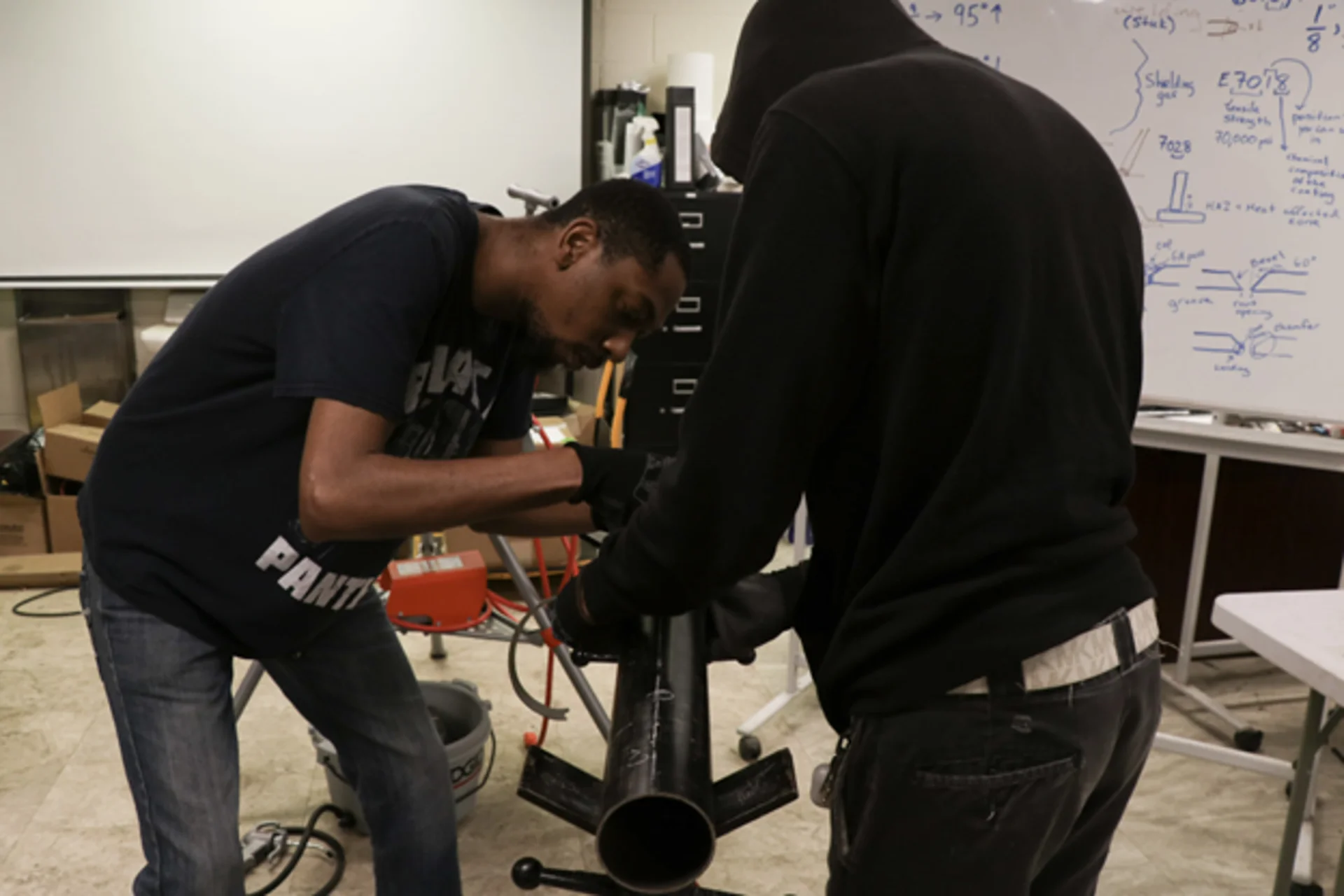
This is one of the most common questions people ask. And the answer is simpler than most people expect. However, to thrive as a pipefitter apprentice, you need a basic understanding of mathematics, mechanical aptitude, and a high school diploma or equivalent. Familiarity with hand and power tools, blueprint reading, and safety certifications such as OSHA 10 are often required.PTTI’s program is specifically built for beginners. Most students come in with zero experience in the trade. The curriculum is designed to take you from scratch and build your skills step by step.
Here’s what how to become a pipefitter with no experience actually looks like through PTTI:
Step 1: Enroll
Get your high school diploma or GED together. Apply to PTTI. Meet with the financial aid team to sort out funding.
Step 2: Complete the 26-Week Program
Six months of hands-on training. Blueprint reading. Valve installation. Pipe fabrication. Welding basics. Safety certifications.
Step 3: Career Services Kick In
It is estimated that aprox 700 hours devoted during training at PTTI’s, proved to be successful under the mentorship of Career Services team later on you get work with you directly. That covers Resume, interviews, employer connections all of it.
Step 4: Get Your Certification
Graduate with the credentials employers look for. Best training facilities provide practical learning while awarding professional certificates, including a pipe fitter certificate, plus they assist with job placements.
Step 5: Get Hired
PTTI’s overall placement rate for pipefitting graduates sits at approximately 92%. Many students receive job offers before they even finish the program. That’s the full path — from zero to employed in about six months.
Pipefitting certification and job placement at PTTI work together as one system. The certification proves your skills. The career services team gets those skills in front of the right employers.
Here’s what that support looks like in practice:
Finding the best trade schools for pipefitting in Philadelphia should lead to schools that guarantee employment support upon the completion of the program. PTTI checks that box and backs it up with numbers.
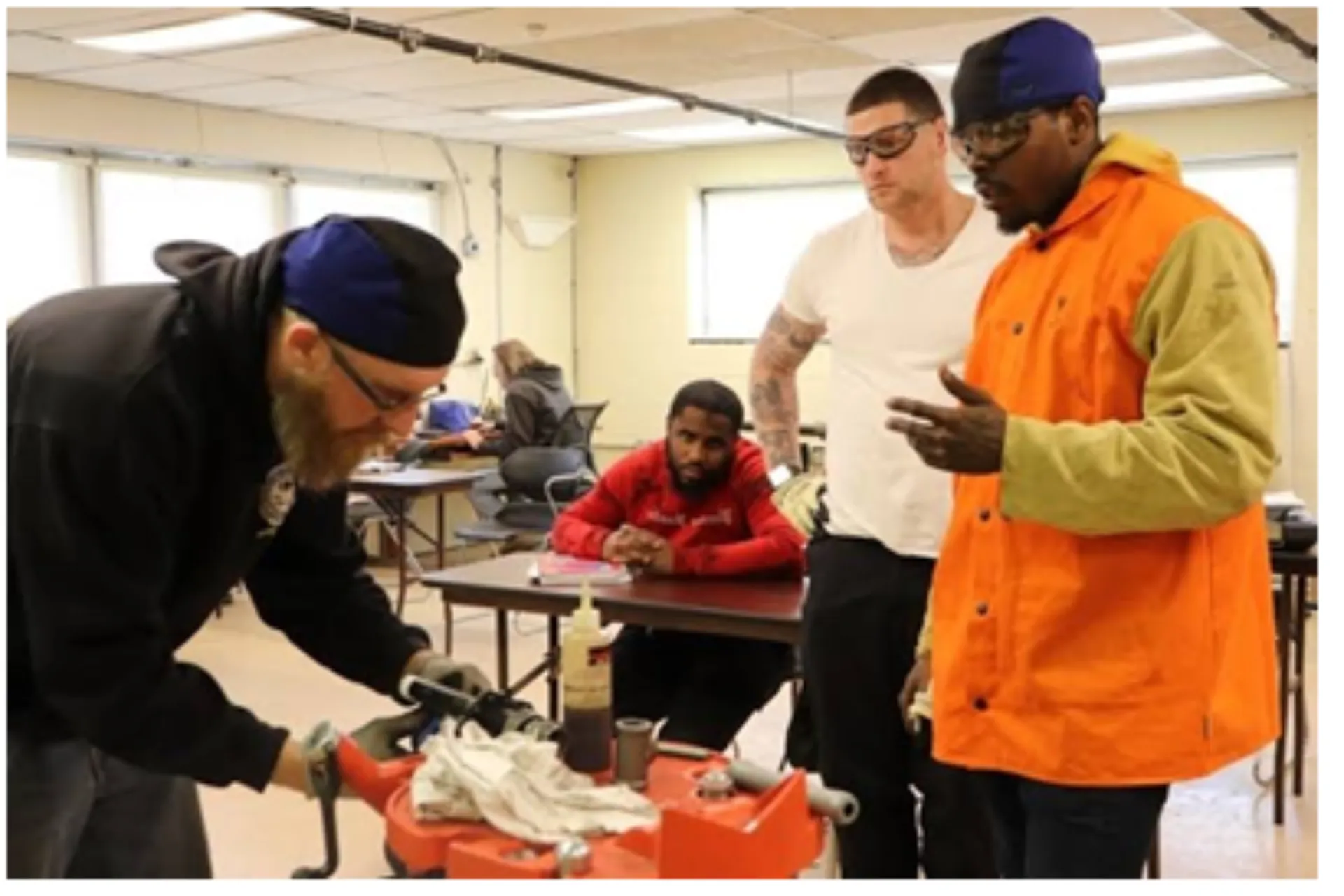
The number one thing that stops people from enrolling is the belief that they can’t afford it. But the cost is way more manageable than most people assume. Financial aid for the pipe fitter trade program. Moreover, PTTI accepts the FAFSA (school code: 042213). Federal grants, loans, institutional financing, and veterans’ education benefits are all available to qualifying students.
Overall, Students need to commit 6 months to 2 years, depending on their training program, and programs give students access to monetary assistance programs and job training during their education.At six months for PTTI’s pipefitting program, the timeline and cost are both significantly lower than any four-year degree. And you start earning real money the moment you’re hired.
So are you ready to take the move, especially designed for Philly youth?And the pipefitter training program in Philadelphia at PTTI is one of the clearest paths to a skilled, stable, well-paying career that this city offers right now.
The pipefitter salary in Philadelphia rewards people who put in the work. And PTTI’s PTTI pipefitting and steam program is built to make sure you’re ready for every bit of it — from the first blueprint you read to the day you sign your offer letter.
Q1. How long does PTTI’s pipefitter training program in Philadelphia take?
PTTI’s Steam, Sprinkler, and PipeFitting Program takes 26 weeks — about six months. In that time, you learn industrial pipefitting fundamentals, blueprint reading, valve installation, pipe fabrication, welding basics, and workplace safety.
Q2. What is the pipefitter salary in Philadelphia?
The average pipefitter in Philadelphia earns $33.45 per hour around $65,000–$70,000 annually with overtime. Entry-level positions start at $47,000–$58,000, while experienced and certified union pipefitters can earn $80,000–$100,000 or more per year.
Q3. Can I become a pipefitter with no experience?
Yes, and that’s exactly who PTTI’s program is built for. You only need a high school diploma or GED to enroll. PTTI builds your skills from the ground up across six months of hands-on training. Most students enter with zero prior knowledge of the trade and graduate job-ready with real certifications and employer connections.
Q4. Does PTTI help pipefitting graduates find jobs?
Yes. PTTI’s Career Services department begins working with students around 700 hours into the program well before graduation. They cover resume writing, interview coaching, career identification, and direct employer connections across Philadelphia.
Q5. Is financial aid available for PTTI’s pipefitting program?
Yes. PTTI accepts FAFSA (school code: 042213), and federal grants, institutional loans, financing plans, and veterans’ education benefits are all available for qualifying students.
Read More related blogs: