
Ask any experienced welder how many ways there are to join two pieces of metal, and the honest answer is: a lot. But four processes account for the overwhelming majority of the work done in fabrication shops, construction sites, shipyards, and manufacturing plants across the country. Those four are MIG, TIG, Stick, and Flux-Core welding. If you are considering welding as a career, understanding the difference between these methods is one of the first things that separates a beginner from someone who knows what they are talking about.
All four are forms of arc welding, meaning they use an electric arc to generate the heat needed to melt and fuse metal. Where they differ is in how the filler metal is delivered, how the weld is protected from the air, and what kind of work each one does best. This guide breaks down the different types of welding in plain language, explains where each process shines, and helps you understand which one to learn first and how welders in the Philadelphia region put these skills to work every day.
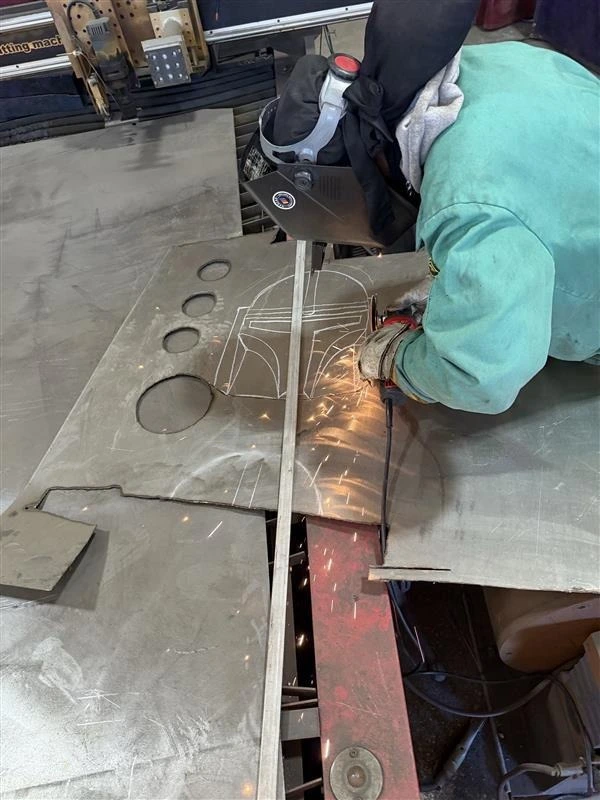
The difference between MIG Vs TIG welding, Stick, and Flux-Core welding comes down to how each one feeds filler metal and shields the molten weld pool from the surrounding air. MIG and Flux-Core use a continuously fed wire, TIG uses a hand-fed rod with a non-consumable electrode, and Stick welding for beginners uses a consumable coated rod. Each is suited to different metals, thicknesses, and job sites.
That distinction is not just academic. Choosing the wrong process for a job leads to weak welds, wasted material, and failed inspections. A welder who understands the different types of welding can walk onto a job site, look at the material and conditions, and know immediately which method will produce a sound, code-compliant weld. That judgment is exactly what employers are paying for, and it is built through hands-on practice rather than memorization.
MIG welding, formally known as Gas Metal Arc Welding (GMAW), uses a spool of solid wire that feeds continuously through a welding gun while an external shielding gas protects the weld from contamination. It is widely regarded as the easiest welding process to learn, which is why most training programs start beginners here.
You pull the trigger, the wire feeds automatically, and you guide the gun along the joint. Because the machine handles the filler feed, you can focus on travel speed and gun angle. The shielding gas, usually a mix of argon and carbon dioxide, blankets the weld pool and keeps oxygen out.
MIG is the workhorse of auto body shops, metal fabrication, and manufacturing lines. If you want to understand the foundational skills involved, our overview of what happens during metal inert gas arc welding training is a useful starting point.
MIG struggles outdoors because wind blows away the shielding gas, ruining the weld such as stick welding for beginners provide the basic technique used in welding. It also needs relatively clean metal to produce good results. On rusty, painted, or dirty surfaces, MIG performance drops sharply.
TIG welding, or Gas Tungsten Arc Welding (GTAW), uses a non-consumable tungsten electrode to create the arc while the welder feeds a separate filler rod by hand. It is the most precise and cleanest of the different types of welding, and also the most difficult to master.
TIG demands genuine coordination. One hand controls the torch, the other feeds the filler rod, and often a foot pedal regulates the heat in real time. This three-point control is what allows for exceptional precision, but it is also why TIG takes the longest to learn. Trade programs that teach students to properly operate a TIG welding machine give graduates a real edge in specialized, higher-paying work.
TIG is slow compared to the other methods and requires spotless, well-prepped metal. It is not the process you reach for when you need to lay down a lot of weld quickly, but when quality and precision matter most, nothing beats it.
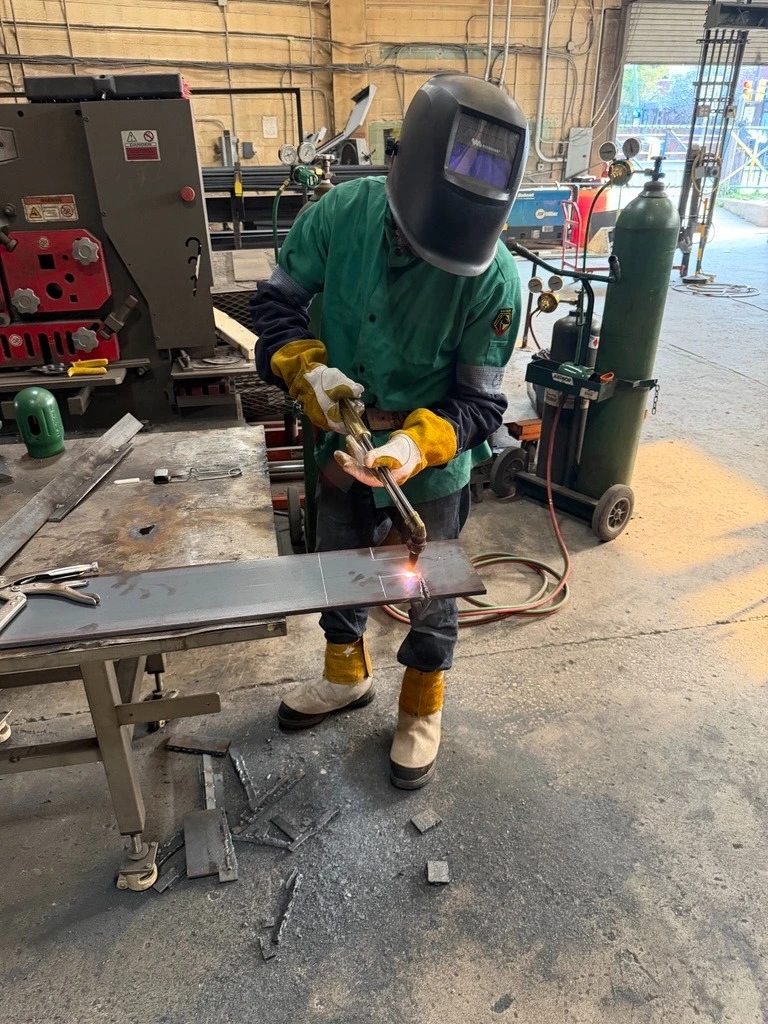
Stick welding, or Shielded Metal Arc Welding (SMAW), uses a consumable electrode coated in flux. As the arc melts the rod, the flux coating burns to create a shielding gas and leaves behind a protective slag layer that is chipped away afterward. Stick is the most rugged and forgiving process for tough field conditions.
There is no external gas tank and no wire feeder, just the welding machine, a cable, and a rod holder. That simplicity is exactly what makes stick so portable and dependable. If you want a deeper look at the fundamentals, our guide to shielded metal arc welding and becoming an SMAW technician covers the process in detail.
Stick welding remains a staple of construction, pipeline, structural steel, and maintenance work. Improving your technique matters here, which is why practical tips for better stick welding results are part of building real job-site competence.
Stick produces more spatter and leaves slag that must be cleaned, and it has a steeper learning curve than MIG. Frequent rod changes also slow the process down compared to wire-fed methods.
Flux-Core welding, or Flux-Cored Arc Welding (FCAW), works much like MIG but uses a hollow, tubular wire filled with flux instead of solid wire. The flux inside the wire provides shielding, which means some flux-core setups need no external gas at all. It combines the speed of wire feed with the outdoor capability of stick.
There are two variations. Self-shielded flux-core (FCAW-S) needs no shielding gas, making it excellent for outdoor and field work. stick welding for beginners,Gas-shielded flux-core (FCAW-G) adds an external gas for even better results on certain jobs. Either way, the continuous wire feed lets you weld quickly. Because certification matters in this space, understanding the role of flux-cored arc welding training and credentials helps students target the work that pays.
Flux-core generates more smoke, spatter, and slag than MIG, and the equipment and wire can cost more. It is also less suited to thin or delicate materials, where TIG or MIG is the better call.
When people compare different types of welding, the most common question is MIG vs. TIG, but the full picture also includes stick and flux-cored welding. stick welding for beginners is the most widely ised technique taught in the training curriculum Here is how the four processes stack up across the factors that matter most on the job.
| Factor | MIG (GMAW) | TIG (GTAW) | Stick (SMAW) | Flux-Core (FCAW) |
| Ease of learning | Easiest | Hardest | Moderate | Moderate |
| Speed | Fast | Slow | Moderate | Fastest |
| Weld quality/appearance | Good | Best | Fair | Fair to good |
| Works outdoors | No | No | Yes | Yes |
| Best metal thickness | Thin to medium | Thin | Medium to thick | Thick |
| Shielding | External gas | External gas | Flux coating | Flux (gas optional) |
| Cleanup | Minimal | Minimal | Slag removal | Slag removal |
| Common industries | Fabrication, auto | Aerospace, pipe root | Construction, pipe | Shipbuilding, structural |
Across all the different types of welding, no single process is “the best.” Each is the best tool for a particular job. That is precisely why versatility across these methods is so valuable in the trade.
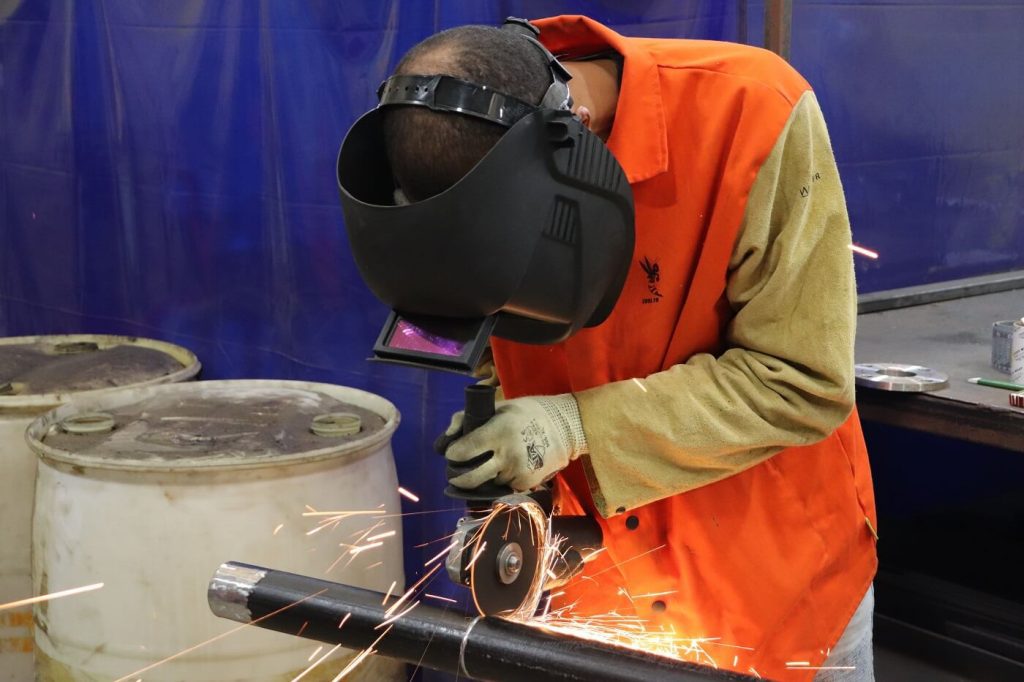
For most beginners, My TIG as coordination and confidence grow. Stick welding for beginners comes next for a reason: it teaches arc control and manual technique that make every other process easier.
That progression is not accidental. It mirrors how the different types of welding build on one another. Once you understand how heat, filler, and shielding interact in MIG, the same principles carry over to the other processes with new variables added. A structured program introduces each method in a logical order, which is far more effective than trying to self-teach from scattered videos. Our welding 101 breakdown of the different types of welding for beginners explains this learning path in more depth.
The Philadelphia region puts every one of these processes to work daily, which is part of what makes welding such a stable trade here. A welding certification program in Philadelphia offers flexible classes and support toward placement. Shipbuilding and ship repair rely heavily on flux-core and stick for thick structural steel. Fabrication shops across North Philadelphia, Mantua, and the Spring Garden corridor lean on MIG for production work. Pipefitting and mechanical contractors use TIG for precise pipe root passes and stick or flux-core for fill.
This variety extends well beyond the city. Welders trained in the different types of welding find work throughout the surrounding Pennsylvania communities such as Yeadon, Lansdowne, Darby, Drexel Hill, and Ardmore, and across the river in South Jersey towns including Camden, Pennsauken, Cherry Hill, Maple Shade, and Haddonfield. Because welding skills transfer directly across employers and states, training in one of the region’s hands-on welding technology programs opens doors across the entire tri-state market.
You do not need to master all four processes to get hired, but knowing several dramatically increases your value and earning potential. Employers consistently prefer welders who can switch between MIG, stick, and flux-core, and a welder who adds TIG to that toolkit qualifies for the most specialized, higher-paying work.
The demand is real and durable. According to the U.S. Bureau of Labor Statistics, roughly 45,600 openings for welders, cutters, solderers, and brazers are projected each year through 2034, driven largely by the need to replace an aging workforce as experienced welders retire. In the Philadelphia area, welders generally earn between roughly $52,000 and $60,000 per year, with certified, specialized, and union welders frequently exceeding $70,000. Pipe welders who combine TIG and stick skills often sit at the top of that range.
Certification is what turns skill into higher pay. Earning credentials that verify your ability across processes is one of the highest-return steps a welder can take, which is why quality welding certification programs and welding training in Philadelphia focus on preparing students to pass real weld tests. Understanding which welding certifications carry the most weight in 2026 helps you focus your training. For a fuller picture of pay and roles, our guide to welding career salary and job options breaks down what to expect at each stage.
The fastest, most reliable way to learn all four processes is structured, hands-on training on industry-standard equipment. Reading about the difference between MIG, TIG, Stick, and Flux-Core welding process is a good start, but skill in this trade is built at the booth, under the guidance of instructors who have done the work in the field.
At Philadelphia Technician Training Institute (PTTI), welding training in Philadelphia covers the different types of welding in real lab settings that mirror job-site conditions, then prepares students for the certifications employers actually test for. For motivated students, this is also one of the quickest paths to becoming a welder in Philadelphia, often in less than a year. If you are ready to explore your options, you can request information, schedule a campus tour, or reach out to our team directly to talk through the path that fits your goals.
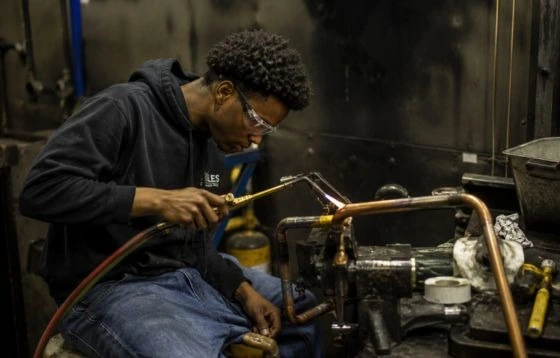
Understanding the difference between MIG Vs TIG welding , Stick, and Flux-Core welding is more than trivia; it is the foundation of thinking like a professional welder. Each process exists because it solves a specific problem: MIG for speed and ease, TIG for precision, stick for rugged versatility, and flux-core for fast, deep welds on heavy metal. The welders who thrive are the ones who understand the different types of welding well enough to choose the right one for any job in front of them.
That kind of judgment is built through practice, not memorization, and the Philadelphia region offers steady demand for people who have it. If you are ready to turn curiosity about welding into a real, high-demand career, the next step is straightforward. Explore PTTI’s welding training, contact admissions, and start building the hands-on skills that employers across Philadelphia, Pennsylvania, and South Jersey are hiring for right now.
All four are arc welding training program in Phialdelphia is a processes, but they differ in how they feed filler and shield the weld. MIG and Flux-Core use continuous wire, TIG uses a hand-fed rod with a tungsten electrode, and Stick uses a coated consumable rod. Each suits different metals, thicknesses, and job conditions.
MIG welding, or gas metal arc welding, is the easiest process for beginners. Because the machine feeds the wire automatically, new welders can focus on travel speed and gun angle rather than juggling multiple tasks at once. This shorter learning curve is why most training programs introduce the different types of welding starting with MIG before moving to other methods.
Neither is universally better; they serve different purposes. MIG is faster, easier, and ideal for production and fabrication. TIG is slower but produces the cleanest, most precise welds, making it the choice for thin metals, stainless, aluminum, and jobs where appearance and quality are critical.
The flux-core welding process is used for thick steel, structural work, shipbuilding, and outdoor or field jobs. Its high deposition rate lays down metal quickly, and self-shielded flux-core needs no external gas, so it performs well outdoors where wind would ruin a MIG weld. Among the different types of welding, it is the go-to for heavy, fast production.
Weld strength depends more on proper technique and correct process selection than on the method alone. TIG produces the highest-quality welds, while stick and flux-core deliver deep penetration on thick material. A sound weld made with the right process for the job is what determines strength.
Not always. Self-shielded flux-core (FCAW-S) needs no external shielding gas because the flux inside the wire provides protection, which makes it ideal outdoors. Gas-shielded flux-core (FCAW-G) does use external gas for improved results on certain applications.
With focused, hands-on training, students can build working ability across MIG, TIG, Stick, and Flux-Core welding in under a year. Welding is performance-based, so consistent practice under skilled instruction matters far more than time spent in a classroom.