
If your teenager just told you they want to pursue a trade school instead of college, your first reaction may be worry. That reaction is normal, and it comes from love. For a generation of parents, a four-year degree was treated as the only safe route to a stable life. So when a bright, capable teen says they would rather weld, fix cars, or run automated manufacturing equipment, it can feel like they are closing doors.
Here is the reframe worth sitting with: choosing a trade instead of college is not settling. In 2026, it is often a strategic, financially sound decision backed by real labor-market demand. Skilled trades careers offer stable pay, fast entry, and work that cannot be shipped overseas or fully automated. Meanwhile, the cost of a bachelor’s degree keeps climbing, and a diploma no longer guarantees a job.
This guide is written for parents, not marketers. It lays out what the data actually shows about trade school vs college, what skilled trades pay, how job demand looks in and around Philadelphia, and, most importantly, how you can support your teen’s decision without abandoning your role as a thoughtful, protective parent. By the end, you will be able to evaluate whether a trade school instead of college is the right move for your child, and how to help them choose a program that leads somewhere real.
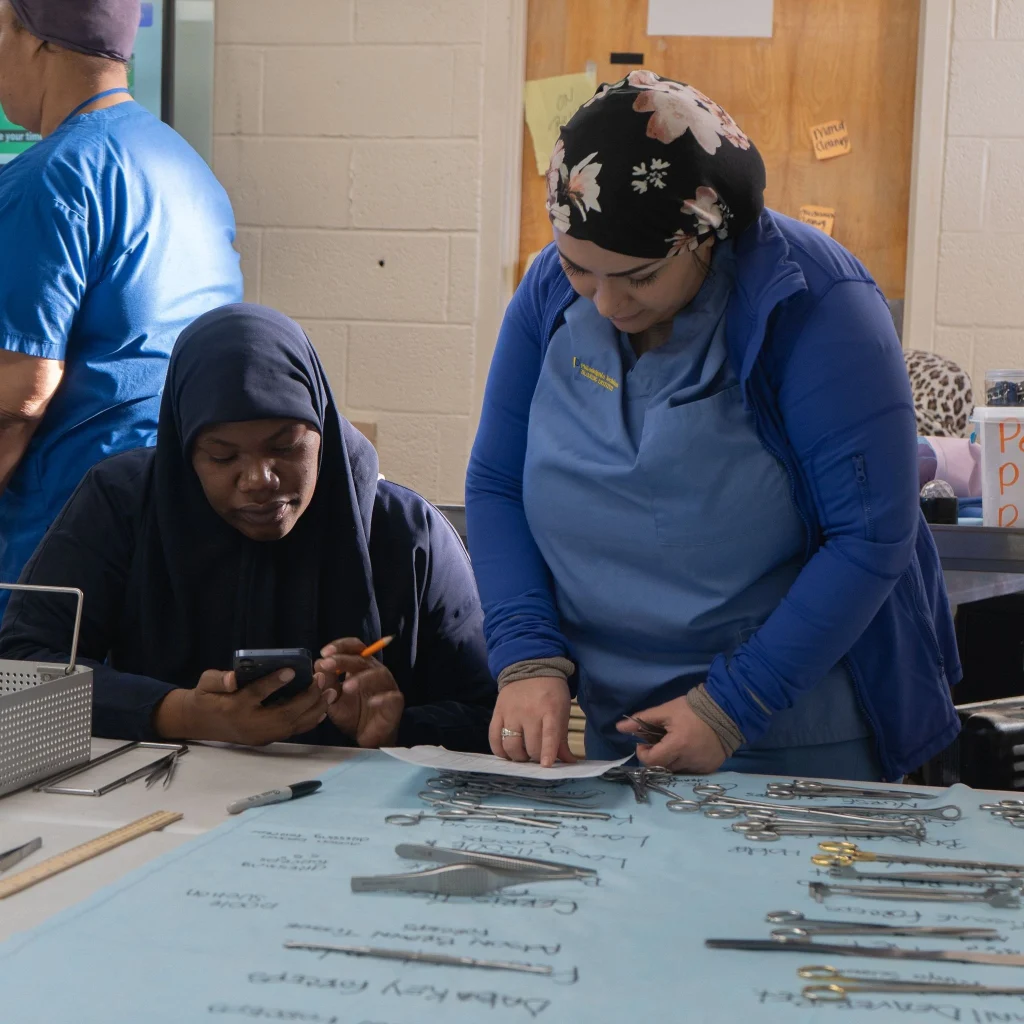
The shift is not a trend or a rebellion. It is a rational response to what young people see around them. Many watched older siblings or cousins earn degrees and still struggle to find work in their field while carrying significant debt. At the same time, they see electricians, welders, and technicians who are booked solid, earning good money, and owning homes.
Two forces are driving the move toward a trade instead of college. The first is cost. Total student loan debt in the United States now exceeds $1.7 trillion, and students who borrow for a bachelor’s degree typically graduate owing roughly $30,000 or more. For families, that is a heavy bet to place on an 18-year-old who is not sure what they want to study.
The second force is demand. Skilled trades careers are facing a genuine labor shortage as experienced workers retire faster than new ones enter. That imbalance means employers are competing for trained talent, which supports wages and job security. When your teen says they want a trade instead of college, they may be reading the market more accurately than the conventional wisdom suggests.
A useful frame for parents: The real question is not “trade or college?” It is “what is the fastest, most affordable path to a stable, well-paying career my child will actually enjoy?” Sometimes that answer is a trade school instead of college.
No. Choosing a trade instead of college is not settling; it is choosing a different, often faster route to financial independence. Skilled trades require real technical skill, problem-solving, safety discipline, and craftsmanship. Many trades professionals out-earn peers who hold four-year degrees, and they do it without student debt.
The “settling” fear usually comes from an outdated picture of trade work as low-skill or dead-end. Modern skilled trades careers are technical and evolving. An automotive technician today runs computerized diagnostics on hybrid and electric vehicles. A manufacturing technician programs and maintains automated systems. A welder reads blueprints and works to precise engineering codes. These are cognitive, high-responsibility jobs, and they reward people who like solving real problems with their hands and their heads.
There is also a dignity point worth naming for your teen. Work that keeps hospitals sterile, cars safe, buildings standing, and water flowing is essential. That kind of work carries purpose, and it does not disappear in a recession.
When parents weigh trade school vs college, it helps to look at three numbers together: cost, time to earning, and pay. The picture that emerges often surprises families who assumed college was automatically the safer investment.
| Factor | Trade School Path | Four-Year College Path |
| Typical time to finish | Several months to about a year | About four years |
| Typical debt at finish | Low, often a fraction of a degree | Roughly $30,000+ for bachelor’s borrowers |
| When earning begins | Quickly, often within a year | Usually delayed until after graduation |
| Hands-on job readiness | Core of the training | Often limited without extra steps |
| Job-specific demand | Strong, retirement-driven | Highly variable by major |
On pay, the trades are competitive. According to the U.S. Bureau of Labor Statistics, the median wage for automotive service technicians was about $49,670 in 2024, with experienced technicians earning well beyond that. Welders follow a similar pattern, and in the Philadelphia area, experienced and certified welders frequently exceed $60,000 to $80,000. These are livable, growth-oriented wages that begin years earlier than a typical college graduate’s first paycheck.
None of this means college is wrong for every teen. It means the honest comparison of trade school vs college is far closer than most families assume, and for many young people, a trade instead of college is the stronger financial decision.
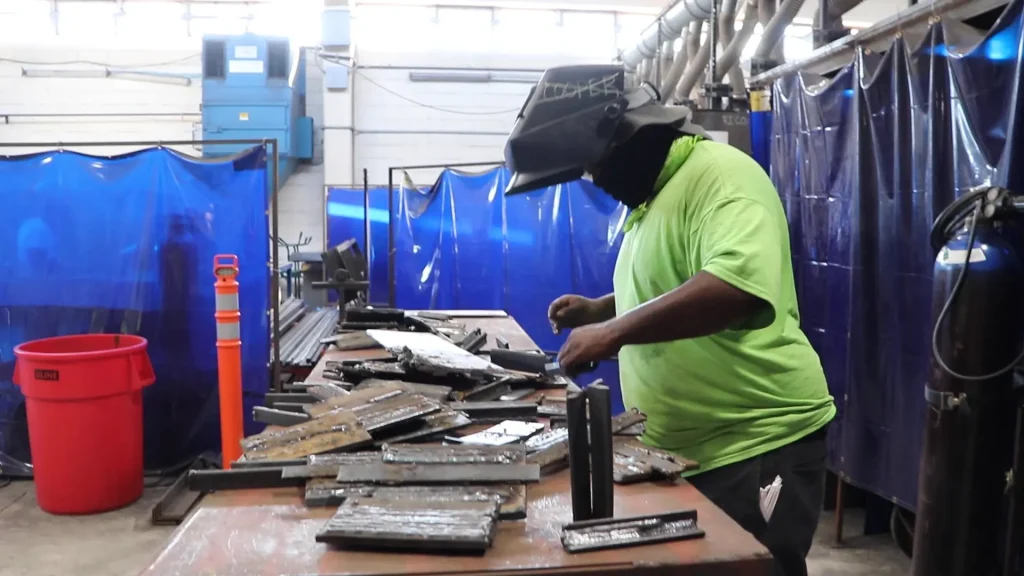
Trade school is a good choice for a teen who learns by doing, wants to start earning sooner, and prefers concrete, hands-on problem-solving over years of classroom theory. It fits students who are practical, mechanically curious, or drawn to how things are built, repaired, and maintained. For these teens, a trade instead of college can be an excellent fit.
Signs a trade instead of college may suit your child include restlessness in traditional classrooms, strong interest in building or fixing things, a desire for financial independence, and hesitation about taking on debt for an undecided major. If your teen lights up talking about cars, tools, machines, construction, or how systems work, that is meaningful information, not a phase to override.
At the same time, trade school is a real commitment. It rewards attendance, discipline, and follow-through. A good program will be honest with your family about what it takes to succeed, which is exactly what you should look for.
Support does not mean surrendering your judgment. It means staying engaged, asking good questions, and helping your teen make a strong, informed decision. Here is a practical framework parents can use.
Do this next as a family: Schedule a campus visit and see the training environment for yourselves. Touring together turns a tense debate into a shared, informed decision.
Not all programs are equal, and this is exactly where a parent’s judgment adds the most value. When evaluating a Philadelphia trade school, focus on the factors that determine whether training actually leads to a career.
This is the checklist that separates a worthwhile trade school instead of college from an empty promise. Apply it rigorously, and you protect your teen while still honoring their choice.
Philadelphia Technician Training Institute (PTTI) is a Philadelphia trade school built around hands-on training and career readiness. For families weighing a trade instead of college, PTTI offers programs that map directly to regional workforce demand, including Automotive Repair Technology, Welding Technology, Manufacturing & Automation, Steam, Sprinkler & Pipe Fitting, Concreting, Masonry & Framing, Central Processing & Sterile Services, and HVAC training.
What matters to parents is what happens inside those programs. Students train on real equipment in applied lab settings, learn the safety discipline employers require, and prepare for the certifications that make graduates hireable. That combination, hands-on skill plus recognized credentials plus placement support, is what turns a trade instead of college into a genuine career rather than a gamble.
The local dimension matters too. A Philadelphia trade school connects graduates to employers across the city’s neighborhoods and the surrounding Pennsylvania and New Jersey communities. That regional pipeline is one of the strongest arguments for training close to home.
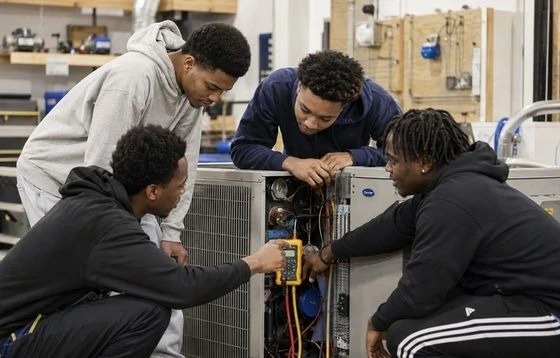
Parents often worry that a trade instead of college leaves a teen with narrow skills. In practice, quality programs build exactly what employers hire for. Beyond core technical ability, that includes safety training, blueprint and diagnostic reading, troubleshooting, teamwork, and professional communication.
Certifications are the credential that reassures both employers and parents. In welding, AWS credentials signal verified, transferable skill. In automotive, ASE certifications mark competency across systems. HVAC technicians pursue EPA certification, and sterile processing technicians earn CRCST. These are the professional qualifications that anchor skilled trades careers and support long-term earning growth. A strong Philadelphia trade school prepares students specifically to earn them.
This is also why the automation fear is overblown. Technology is changing the trades, but it is raising the skill level, not eliminating the worker. Someone has to install, program, diagnose, and repair the increasingly advanced systems in modern vehicles, factories, and buildings. Trained technicians are becoming more valuable, not less.
Let’s name the concerns directly, because unspoken fears drive most resistance to a trade instead of college.
“Is it risky?” Every path carries risk. The relevant comparison is against the alternative. A trade instead of college typically means lower debt, faster earning, and demand-backed job security, which for many families is the lower-risk option, not the higher-risk one.
“What if they change their mind later?” Skilled trades build transferable, marketable skills and income. Many trades professionals later pursue supervisory roles, start businesses, or add further education, often while employed. Starting in the trades keeps options open rather than closing them.
“Will they earn enough?” As the wage data shows, skilled trades careers offer competitive, growth-oriented pay, and high-paying trades without a degree are well documented. Certified, experienced tradespeople in the Philadelphia region can build strong middle-class incomes.
“Is this just because they didn’t do well in school?” Not necessarily, and even if grades were a factor, hands-on intelligence is real intelligence. Many excellent technicians simply learn better by doing than by sitting in lectures.
If your teen wants a trade instead of college, the most helpful thing you can do is stay in the room. Trade school vs college is a closer, more nuanced decision than most parents were raised to believe, and in 2026, skilled trades careers offer a legitimate, financially sound path to independence. Your job is not to force a four-year degree; it is to make sure your child chooses a quality program that leads to real work.
That means researching together, asking about certifications and outcomes, and, above all, seeing the training environment for yourselves. A trade instead of college can be one of the smartest decisions your family makes, provided the program is accredited, hands-on, and connected to employers. When you evaluate a Philadelphia trade school with that lens, you protect your teen and honor their choice at the same time.
🚀 Take the next step together. Schedule a campus tour and visit PTTI as a family, explore all programs, review financial aid options, or contact admissions with your questions. Seeing the labs together is the clearest way to decide whether a trade instead of college is right for your child.
Trade school is a strong choice for teens who learn by doing, want to start earning sooner, and prefer hands-on problem-solving. If your child is drawn to building, fixing, or how systems work, a trade instead of college can lead to a stable, well-paying career with far less debt than a four-year degree.
Support them by staying engaged rather than shutting the idea down. Ask why the path appeals to them, research wages and demand together, tour a Philadelphia trade school as a family, and scrutinize the program’s certifications and job-placement support. Your judgment adds the most value in choosing a quality program.
Not compared to the alternative. A trade instead of college usually means lower debt, faster time to earning, and demand-driven job security. For many families, that combination makes it the lower-risk path, especially when the teen is unsure what they would study in college.
No. Modern skilled trades careers are technical and evolving, from computerized automotive diagnostics to automated manufacturing. Many trades professionals out-earn degree holders without student debt. Choosing a trade instead of college is a strategic decision, not a fallback.
Trade school typically costs a fraction of a bachelor’s degree and starts earning sooner, while the average bachelor’s borrower graduates owing roughly $30,000 or more. On pay, trades like automotive repair and welding offer competitive median wages with clear growth for certified, experienced workers.
For many students, yes. With rising college costs, heavy student debt, and a genuine skilled-labor shortage, is trade school worth it becomes an easy yes when the program is accredited, hands-on, and connected to employers. The key is choosing the right Philadelphia trade school.
The best fit is a program that offers hands-on training, industry certification prep, and job-placement support in the trade your teen is drawn to. PTTI provides these across automotive, welding, manufacturing and automation, pipefitting, construction trades, HVAC, and sterile processing.
Yes. Starting with a trade instead of college keeps options open. Many tradespeople later add certifications, move into supervisory or business-ownership roles, or pursue further study, often while earning a full income in a skilled trade.