
Ask any hiring manager in the heating and cooling trade and they will tell you the same thing: an EPA 608 certification gets you in the door, but it rarely gets you the best job on the board. That single federal credential proves you can legally handle refrigerant. It says nothing about whether you can diagnose a failing heat pump, wire a control board, or braze a clean joint under pressure. In 2026, employers are looking past the bare minimum, and the HVAC certifications you add after EPA 608 are what move you from helper wages into skilled-technician pay.
This guide breaks down the HVAC certifications that carry real weight with employers this year, what each one signals, what it costs, and when to pursue it. It is written for people weighing a career in the trade, whether you are a high school graduate, a career changer, a veteran, or an adult learner in the Philadelphia area who wants a job-ready skill instead of a four-year degree. Along the way, we will look at pay, job demand, Pennsylvania licensing, and how solid hands-on training sets the foundation for every credential that follows.
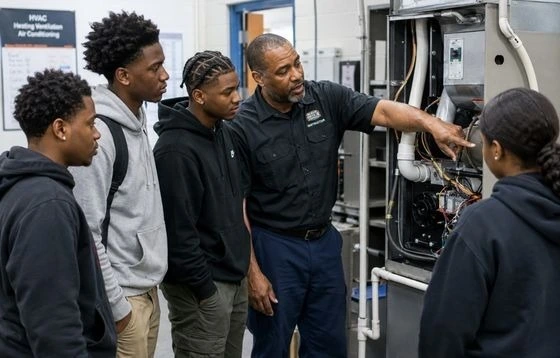
Legally, no. In practice, yes. The EPA 608 certification is the only federally required credential for anyone who handles refrigerant, and without it a company cannot deploy you on most service calls. But employers treat it as a compliance checkbox, not proof of skill. To stand out, an HVAC technician needs credentials that show verified competency, safety awareness, and readiness for real job-site conditions.
Think of it this way. EPA 608 is the barrier to entry. Everything you stack on top of it is what actually raises your pay, expands the systems you can service, and puts your resume near the top of the pile. That is why the smartest candidates plan a credential path rather than stopping at the one certification the law demands. The rest of this article maps that path.
Image Suggestion: A close-up of an HVAC technician reading refrigerant gauges on a service manifold connected to a condensing unit. Recommended Placement: Directly below the introduction or beside this section. SEO Alt Text: HVAC technician checking refrigerant pressures with EPA 608 certification in Philadelphia Image Description: Reinforces the article’s core idea that refrigerant handling (EPA 608) is only the starting point of a technician’s credential path.
Beyond EPA 608, the HVAC certifications employers value most in 2026 are NATE certification, HVAC Excellence credentials, OSHA safety cards, A2L refrigerant safety training, and NCCER credentials, followed by specialty certifications in areas like refrigeration, hydronics, and building automation. Each one signals something different to an employer, and the right combination depends on where you want your career to go.
Here is a closer look at each, ranked roughly by how often hiring managers ask for them.
NATE certification is the most widely recognized voluntary credential in the trade, and it is the one large service companies most often list as “preferred” or “required.” It tells an employer that an independent body has verified your knowledge in a defined specialty, such as air conditioning, heat pumps, gas furnaces, or air distribution. Multiple industry sources report that NATE-certified technicians commonly earn a few dollars more per hour than uncertified peers.
For newcomers, NATE also offers a Ready-to-Work certificate that validates foundational knowledge before you have field hours to point to. Most working technicians pursue full NATE certification after a year or two on the job, then keep it current through continuing education. If you want one credential that signals you are serious about the craft, this is it.
HVAC Excellence is the other major certifying body, and its credentials are popular with schools and employers as a way to verify skill at different career stages. Its Employment Ready certificates are aimed at students finishing a program, while its higher Professional-level certifications recognize experienced technicians. Because they are affordable and recognized nationally, HVAC Excellence credentials are a practical way to show employers your training has been independently tested.
Safety credentials open doors, especially on commercial and construction sites. An OSHA 10-Hour card is often the fastest add-on for job-site access, and many general contractors will not let a technician on site without it. OSHA 30 goes deeper and is common for those moving toward lead or supervisory roles. These cards cost little, take little time, and signal that you take job-site safety seriously, which is exactly what employers want to see.
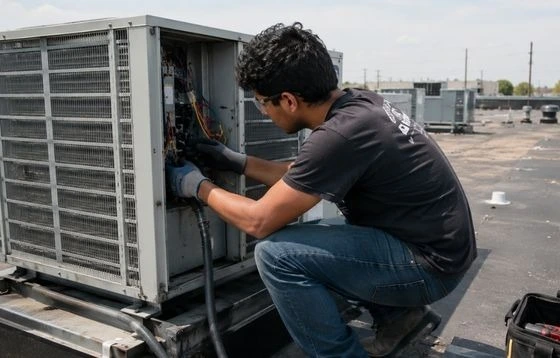
This is the credential category that changed the most this year. The industry is shifting to low-GWP A2L refrigerants such as R-454B and R-32, which are mildly flammable and require updated handling procedures beyond traditional R-410A work. On top of that, expanded EPA leak-repair rules took effect in 2026 for larger commercial systems. Employers now increasingly expect technicians to hold current A2L safety training, and getting it early is a genuine hiring advantage.
The National Center for Construction Education and Research offers standardized, portable credentials recognized across the construction and mechanical trades. NCCER certifications are especially valuable if you plan to work on commercial projects or move toward union and large-contractor environments, because they travel with you from employer to employer and state to state.
Once you have field experience, specialty credentials unlock higher-paying niche work where competition is thinner. These include EPA 609 for motor-vehicle air conditioning, boiler operator licenses, refrigeration credentials (such as those from RETA), hydronic heating specialties, geothermal accreditation through IGSHPA, and building automation certifications tied to systems like BACnet and Niagara. Industrial and process-cooling work in particular rewards heavy specialization with premium hourly rates.
Certifications pay. According to the U.S. Bureau of Labor Statistics, heating, air conditioning, and refrigeration mechanics and installers earned a median wage of $59,810 in May 2024, with the top 10 percent earning more than $91,000. Stacking credentials beyond EPA 608 can raise earning power meaningfully, and specialists routinely out-earn generalists.
Pay climbs steadily as a technician gains experience and adds credentials. The table below shows how earnings typically progress in the field.
| Career Stage | Typical Annual Range | Credential Profile |
| Entry-level / apprentice | $40,000 – $48,000 | EPA 608, OSHA 10 |
| Journeyman technician | $55,000 – $70,000 | EPA 608, NATE, A2L training |
| Senior / specialty technician | $70,000 – $90,000+ | Multiple NATE specialties, advanced credentials |
| Lead / supervisor | $80,000 – $100,000+ | OSHA 30, NCCER, leadership experience |
A few notes on these figures. Overtime is common during peak heating and cooling seasons and can add substantially to take-home pay. Union positions in the Philadelphia region often pay premium wages. And because credentials are portable, the earning power you build with these credentials follows you if you change employers or move across state lines
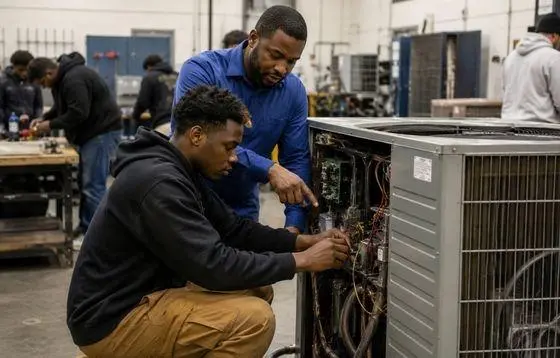
The outlook is strong. The Bureau of Labor Statistics projects employment of heating, air conditioning, and refrigeration mechanics and installers to grow 8 percent from 2024 to 2034, much faster than the average for all occupations. That translates to roughly 40,100 openings each year over the decade, many of them created as experienced workers retire.
Several forces drive this demand. Buildings constantly need heating and cooling, that work cannot be outsourced or automated, and the shift toward electric heat pumps plus tighter efficiency standards keeps expanding the skill set employers need. For anyone entering the trade now, that means steady, recession-resistant work, and it makes the case for HVAC training that prepares you for modern, high-efficiency systems rather than just the basics.
Here is what surprises many people: Pennsylvania has no statewide HVAC license. There is no state exam or single state card that certifies you across the Commonwealth. Instead, requirements are set federally through the EPA 608 certification and locally through individual municipalities.
In Philadelphia, the city’s Department of Licenses and Inspections governs local permits and credentials, including sheet metal and mechanical registrations handled through its online portal. So the realistic picture for a Philadelphia HVAC tech is straightforward: you must hold an EPA 608 certification to touch refrigerant, you follow local Philadelphia permit and licensing rules for the work you do, and you use voluntary certifications like NATE to prove your skill and raise your pay. If you want the full breakdown, PTTI’s guide to HVAC licensing in Pennsylvania walks through exactly what the city and federal rules require.
Keep one distinction in mind. Working as an employed HVAC tech is far simpler than running your own contracting business, which requires additional registrations, permits, and insurance. Most people start as employees, build credentials, and consider the business path later.
The technicians who advance fastest treat certifications as a sequence, not a pile. Here is a sensible order that matches how employers hire and promote.
This sequence keeps you employable at every step while steadily raising your ceiling. It is also why quality training matters so much early on: a strong program builds the hands-on ability you need to pass these exams and perform on the job.
Certifications verify skill, but they do not create it. Before you can pass a NATE exam or handle A2L refrigerants safely, you need real ability with tools, systems, and diagnostics, and that comes from hands-on HVAC training in a lab that mirrors the job site. This is where a Philadelphia trade school makes the difference between memorizing for an exam and actually being ready for work.
At Philadelphia Technician Training Institute (PTTI), that foundation is built through applied, equipment-based instruction in the mechanical trades. HVAC work overlaps heavily with piping, refrigeration lines, steam, and hydronic systems, which is exactly the skill set developed in PTTI’s Steam, Sprinkler and Pipe Fitting technician program. Students train on industry-standard equipment, practice the mechanical fundamentals that HVAC systems rely on, and build the safety habits and troubleshooting skills employers expect. For many students, that mechanical foundation is the launchpad for pursuing HVAC certifications and moving into heating and cooling work.
The broader point holds across the trade: employers hire for demonstrated ability. A program that emphasizes real labs, applied learning, and career readiness prepares you not just to earn these credentials but to keep them relevant as systems and refrigerants change.
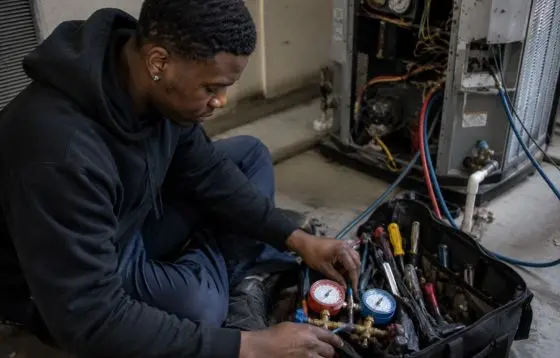
Demand for skilled heating and cooling workers is strong across the Philadelphia metro and the surrounding tri-state area. Every home, hospital, school, warehouse, and high-rise needs climate control, and the region’s cold winters and humid summers make that work non-negotiable year-round. An HVAC technician trained and certified in Philadelphia can find work throughout the city’s neighborhoods and out into nearby Pennsylvania and South Jersey communities such as Camden, Cherry Hill, Drexel Hill, Lansdowne, and Darby.
Because credentials like EPA 608 and NATE are portable, they carry across Pennsylvania, New Jersey, and Delaware, giving you flexibility in where you work. That regional reach, combined with steady demand and strong pay, is what makes the trade such a stable choice for people who want a job-ready career without heavy student debt. Solid HVAC training close to home is the practical first step toward all of it.
An EPA 608 certification will get you hired, but the HVAC certifications you stack on top of it are what build a real career. In 2026, employers place the most value on NATE certification, HVAC Excellence credentials, OSHA safety cards, current A2L refrigerant training, and NCCER and specialty credentials, and each one pushes your pay and your options higher. Pair those credentials with strong hands-on HVAC training, and you have a clear, debt-light path into a trade with fast-growing demand and dependable earnings across the Philadelphia region.
If you are ready to build the mechanical foundation that HVAC certifications are built on, explore PTTI’s Steam, Sprinkler and Pipe Fitting technician program and take the first step toward a hands-on career.
Beyond the required EPA 608 credential, employers value NATE credentials most, followed by HVAC Excellence certifications, OSHA 10 or 30 safety cards, A2L refrigerant safety training, and NCCER credentials. Specialty certifications in refrigeration, hydronics, or building automation add further value for experienced technicians.
Yes. The EPA 608 certification is the only federally required credential, and anyone who handles refrigerant must hold it. It is inexpensive, does not expire, and is the baseline for working in the field. Every other credential is voluntary but valuable for pay and advancement.
For most technicians, yes. A NATE credential is the most recognized voluntary certification in the industry, is often preferred or required by larger employers, and is commonly associated with higher hourly pay. Most technicians earn it after one to two years of field experience.
Pennsylvania has no statewide HVAC license. You must hold an EPA 608 credential for refrigerant work, and you follow local rules. In Philadelphia, the Department of Licenses and Inspections governs permits and mechanical registrations. Running your own business carries additional requirements.
Many HVAC training programs can be completed in under a year, which is why the trade appeals to career changers and adult learners. Program length varies, but hands-on training focused on real systems and certification readiness is the fastest route to becoming job-ready.
Nationally, the median wage for heating and cooling technicians was $59,810 in May 2024, with top earners exceeding $91,000. In the Philadelphia area, pay commonly runs from the mid-$40,000s at entry level into the $70,000s and beyond for experienced, certified technicians.
A2L refrigerants like R-454B and R-32 are lower-GWP, mildly flammable refrigerants now used in new systems. They require updated safety procedures beyond older R-410A work. With 2026 regulatory changes, A2L training is increasingly expected by employers and gives newcomers a hiring edge.
Yes. Most people enter the trade with a high school diploma or GED and hands-on training rather than prior experience. A quality program teaches the mechanical fundamentals, prepares you for the EPA 608 exam, and builds the skills to pursue further certifications on the job.