
Every commercial building, hospital, warehouse, and high-rise in the Philadelphia region depends on fire-protection systems that most people never think about until they are needed. Behind those systems are skilled sprinkler fitters, the tradespeople who install, test, and maintain the piping and sprinkler heads that suppress fires and save lives. It is steady, code-driven, well-paid work that a traditional four-year degree does not prepare you for, but focused, hands-on steam, sprinkler, and pipe fitting training does. If you are weighing a skilled trade that combines physical work, technical knowledge, and long-term stability, this career deserves a close look.
This guide explains what the work actually involves, how to enter the field, how long training takes, which certifications matter, what the work pays in 2026, and what the job outlook looks like across Pennsylvania, New Jersey, and Delaware.

A fire sprinkler fitter installs, inspects, tests, and repairs the automatic sprinkler systems and water-based fire protection systems found in commercial, industrial, and multi-family buildings. The work involves measuring and cutting pipe, joining it by threading, grooving, or welding, mounting sprinkler heads, and making sure every system meets fire code and functions on demand.
The role sits at the intersection of construction and life safety. On a new build, a fire sprinkler fitter reads plans, lays out piping runs, hangs and braces pipe, and connects the system to its water supply. On existing buildings, the same skills apply to inspection, testing, and repair, ensuring older fire protection systems still perform. Because these systems protect people, the work is governed by strict standards, most notably NFPA 13, the national standard for installing sprinkler systems.
This is hands-on, physically active work. A fire sprinkler fitter spends the day moving between ladders, lifts, and mechanical rooms, often overhead, and must read blueprints accurately, solve fit-up problems on the spot, and document work to code. It rewards people who like building something real and take pride in getting the details exactly right.
You become a sprinkler fitter by combining hands-on trade training with an apprenticeship, then stacking certifications as you gain experience. Most people start with a technical program that teaches pipe fitting fundamentals, safety, and blueprint reading, then move into paid apprenticeship hours where they learn fire-protection installation on real job sites.
Here is the typical path:
Initial sprinkler fitting training can often be completed in well under a year, while full journeyman-level competency through an apprenticeship typically takes several years. A focused technical program builds the core pipe fitting and safety skills quickly, and many students in the Philadelphia area pursue a focused, few-months training path before entering paid apprenticeship work.
The reason the two timelines differ is how the trade is learned. Classroom and lab training gives you the fundamentals: reading plans, operating tools, joining pipe, and working safely. Journeyman status, on the other hand, is earned through documented on-the-job hours, usually four to five years of apprenticeship, during which you are paid and your wage rises as your skills grow. In other words, you start earning early and keep earning more as you advance.

The most recognized credential in the field comes from NICET, the National Institute for Certification in Engineering Technologies. Its Water-Based Systems Layout program, built around NFPA 13, is the standard qualification for technicians who lay out and detail sprinkler and standpipe systems, and many employers and jurisdictions either require it or strongly prefer it.
Each level requires passing an exam and documenting increasing hands-on experience, so certification grows alongside your career rather than all at once. A related NICET track, Inspection and Testing of Water-Based Systems, certifies technicians who evaluate existing fire protection systems for code compliance.
Beyond NICET, two other qualifications matter for anyone entering the trade. If you are deciding where to focus, it helps to understand which trade certifications carry the most weight with employers before you invest time and money.
Note: Licensing and permitting rules for fire-protection work vary by jurisdiction and are governed by the Pennsylvania Uniform Construction Code and the local authority having jurisdiction. This information is educational, not legal advice; verify current requirements with the relevant authority before beginning work.
These technicians earn competitive wages that reflect the technical, code-driven, life-safety nature of the work. According to the U.S. Bureau of Labor Statistics, the median annual wage for plumbers, pipefitters, and steamfitters (the occupation group that officially includes them) was $62,970 in May 2024, or about $30.27 per hour. Fire-protection specialists frequently earn in a similar or higher range depending on certification, employer, and overtime.
Pay varies by experience, specialization, union status, and location. The table below shows realistic 2026 ranges for the region, drawn from federal and market wage data. These are estimates, not guarantees, and individual earnings depend on many factors.
| Career Stage | Approximate Annual Range (Region) |
| Apprentice (entry) | $37,000 – $46,000 |
| Journeyman fire sprinkler fitter | $56,000 – $66,000 |
| Experienced / union / certified | $70,000 – $90,000+ |
| Inspection, layout, or supervision roles | $75,000 – $105,000+ |
A few factors push earnings higher over a fire-protection career. Apprentices in structured programs typically receive scheduled raises as they log hours. NICET-certified technicians and those who move into layout, inspection, or estimating command premiums. Overtime is common in construction-driven fire-protection work and can add meaningfully to take-home pay. For a fuller picture of the trade’s earning path, PTTI’s overview of sprinkler fitter career scope and salary breaks down how pay progresses over time.
Locally, market data for 2026 places average pay for sprinkler and pipe fitting roles in the Philadelphia area in the high-$50,000s to low-$60,000s, with union and experienced fitters earning well above that. Nearby Delaware consistently ranks among the highest-paying states in the country for this occupation group, which benefits fitters trained in the tri-state region.
The job outlook is steady and dependable. The U.S. Bureau of Labor Statistics projects employment for plumbers, pipefitters, and steamfitters to grow about 4 percent from 2024 to 2034, with roughly 44,000 openings each year across the decade, driven by construction demand and the need to replace workers who retire.
Several forces keep these technicians in demand. Fire codes require fire protection systems in essentially all new commercial and multi-family construction, so every project generates work. Aging buildings need their systems inspected, tested, and upgraded. And because so much of the work happens overhead, in tight mechanical spaces, and to strict code, it is difficult to automate, which protects the trade over the long term. This durability holds across related mechanical trades as well, giving trained fitters flexibility.
For the Philadelphia region specifically, dense commercial development, an active healthcare-construction pipeline, high-rise residential growth, and ongoing warehouse and logistics build-out all sustain demand for fire-protection installation, inspection, and maintenance.
Hiring managers in fire protection look for more than the ability to cut pipe. The competencies that separate hireable candidates from the rest include:
These are exactly the skills quality sprinkler fitting training is designed to build, and knowing the tools beginner pipefitters need early helps new students hit the ground running.
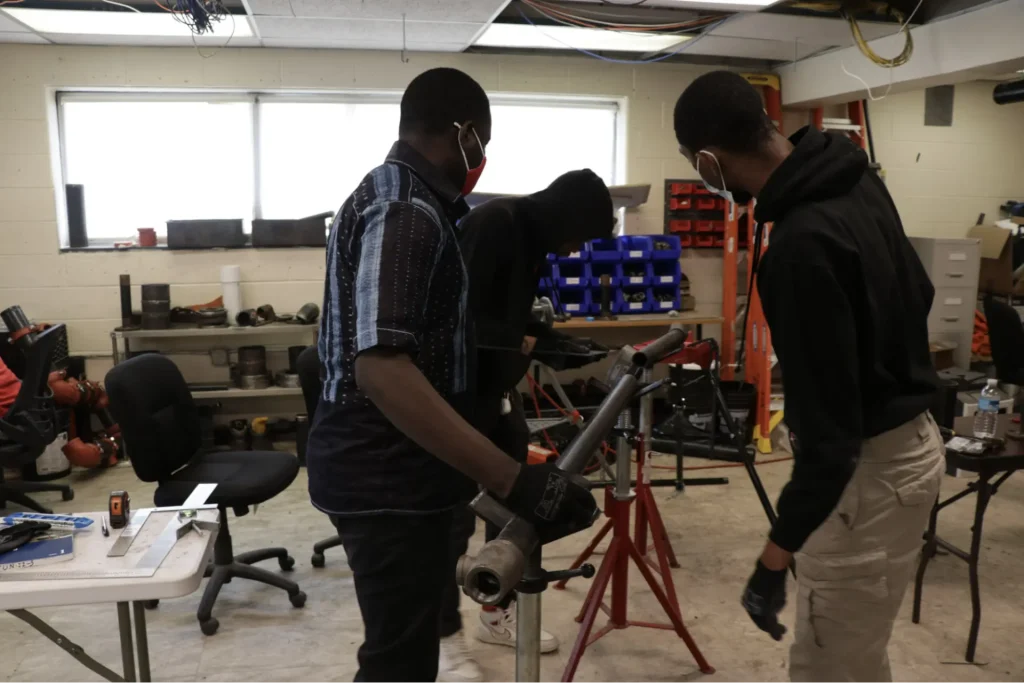
Philadelphia is a strong market for fire-protection work. The city’s mix of commercial towers, hospitals, universities, apartment construction, and industrial facilities. It generates continuous demand for fire-protection technicians across installation, inspection, and maintenance. Students who launch a fire-protection career here at the Steam, Sprinkler & Pipe Fitting campus are positioned for opportunities throughout the region rather than in a single neighborhood.
Because fire-protection skills transfer easily, graduates find work across Philadelphia, from Center City and North Philadelphia to South and West Philadelphia, and throughout the surrounding area. Opportunities extend into nearby Pennsylvania communities such as Yeadon, Lansdowne, Darby, Drexel Hill, and Ardmore, and across the river into South Jersey towns including Camden, Pennsauken, Collingswood, Cherry Hill, Maple Shade, and Haddonfield. Training centrally in Philadelphia also puts the strong Delaware market within reach.
These trades overlap but are not identical. All three work with pipe and mechanical systems, and the federal government even groups them together. Espececially , for wage reporting, but their day-to-day focus differs. The comparison below clarifies where a fire-protection career fits.
| Trade | Primary Focus | Typical Systems |
| Sprinkler fitter | Fire protection / life safety | Automatic sprinkler and standpipe systems |
| Pipefitter | Industrial and mechanical piping | High-pressure process, gas, and mechanical lines |
| Steamfitter | Steam and heating systems | High-pressure steam, heating, and cooling piping |
The skills are closely related, which is why many programs teach them together and why fitters can move between specialties as demand shifts. If you are weighing options, it is worth understanding how steamfitters and sprinkler fitters differ before choosing a focus. The shared foundation is one reason a combined steam, sprinkler, and pipe fitting program offers such flexible career entry.
Fire-protection work offers something rare: a hands-on trade that is essential, code-protected, well-paid, and open to anyone willing to train and learn. A sprinkler fitter builds and maintains the systems that keep buildings and the people inside them safe, and the path in does not require a four-year degree or heavy student debt. If a fire-protection career fits what you are looking for, the next step is straightforward. Explore PTTI’s Steam, Sprinkler & Pipe Fitting Technician program to see the hands-on training up close. When you are ready to begin, contact admissions to learn how you can start this year.
A fire sprinkler fitter installs, tests, inspects, and repairs automatic sprinkler systems. Also water-based fire protection systems required in commercial, industrial, and multi-family buildings. The work includes cutting and joining pipe, mounting sprinkler heads, and ensuring systems meet fire code, especially NFPA 13.
Start with hands-on pipe fitting and fire-protection training, then enter a paid apprenticeship to build on-the-job hours. Add NICET water-based certification and OSHA safety training as you go. A Philadelphia technical program is the most direct entry point into the trade.
Core sprinkler fitting training can often be completed in well under a year. However, Also giving you the fundamentals to begin apprenticeship work. Reaching full journeyman competency through an apprenticeship usually takes four to five years. During this time, you earn wages that rise as your skills grow.
The federal median for the occupation group that includes them was $62,970 as of the latest data. With apprentices starting lower and experienced, certified, or union fitters often earning $70,000 to $90,000 or more. Earnings vary by experience, certification, location, and overtime.
The most recognized credential is NICET Water-Based Systems Layout certification, offered in four levels and based on NFPA 13. OSHA safety training is also expected on most job sites. Together, these qualifications strongly improve employability and earning potential.