
Leaving the military means choosing what comes next, and for many service members the strongest option is a career built on a practical skill rather than a four-year degree. A trade school for veterans offers exactly that: focused, practical training that leads to steady, well-paying work in a matter of months. If you served, you may already have education funding waiting to be used, and understanding how to apply it is the difference between benefits that expire and benefits that launch a career. At a Philadelphia trade school focused on hands-on training, veterans can convert military discipline into civilian technical skill without starting over from scratch. This guide explains how the GI Bill applies to trade school, which skilled trades fit a veteran’s strengths, how long training takes, and the practical steps to get started in the Philadelphia region. The goal is simple: give you a clear, honest roadmap so you can make an informed decision about a skilled trade career and the education benefits you earned through service.
A trade school for veterans makes sense because it matches what service members already do well with what the civilian workforce urgently needs. Veterans bring discipline, reliability, and comfort with technical equipment and safety procedures. Skilled trades reward exactly those traits, and they do it without requiring years of classroom study or heavy student debt.
The timing is favorable, too. The nation’s aging infrastructure, ongoing manufacturing work, and a wave of retiring tradespeople keep demand steady. According to the U.S. Bureau of Labor Statistics, trades such as welding alone see tens of thousands of openings each year, many driven by the need to replace workers who are leaving the field. That replacement demand is consistent, which is part of what makes a career in the skilled trades stable.
For a transitioning service member, the appeal is practical. You can complete focused training, earn recognized credentials, and move into work that pays a competitive wage, often while your GI Bill covers a significant share of the cost. Instead of spending four years and taking on debt, you build a marketable skill quickly and keep more of what you earn.

Yes. Veterans can use GI Bill benefits for trade school as long as the program is approved for VA education benefits. The Post-9/11 GI Bill and the Montgomery GI Bill both cover non-college degree and vocational training, which includes many skilled-trade programs, not only traditional degrees.
Under the Post-9/11 GI Bill, eligible veterans may receive payment toward tuition and fees, a monthly housing allowance when attending more than half-time, and a stipend for books and supplies. The exact amounts depend on your length of qualifying service, the type of program, and where the school is located, as the housing allowance is tied to the school’s ZIP code. This is why two veterans in different programs can receive different benefit levels.
Because the details vary by individual, the most important step is confirmation. Verify that the specific program is VA-approved, and ask the school’s VA certifying official or the admissions team to walk through your entitlement before you enroll. Using GI Bill for trade school is common and well established, but your personal benefit depends on your service record and chapter of eligibility.
This section is educational and is not official benefits or legal advice. Always verify your specific eligibility and payment rates with the U.S. Department of Veterans Affairs at VA.gov.
Understanding how the money works helps you plan. GI Bill benefits are not a single flat payment; they are a set of supports that together reduce the cost of entering a skilled trade. For VA-approved vocational programs, those supports typically include the following.
| Benefit Component | What It Generally Covers |
| Tuition and fees | Paid toward the cost of an approved program, up to applicable annual limits |
| Monthly housing allowance | Paid when enrolled more than half-time, based on the school’s location |
| Books and supplies stipend | A set amount per academic year toward required materials |
Several benefit programs can apply. The Post-9/11 GI Bill is the most widely used. The Montgomery GI Bill is another option for those who contributed during service. Veterans with a service-connected disability may qualify for Veteran Readiness and Employment (VR&E), which supports retraining for suitable employment. Each has different rules, so matching the right program to your situation matters.
The practical takeaway is that using GI Bill for trade school can turn a months-long program into a low-cost or no-cost path to a credential. When benefits cover tuition and provide a housing allowance, you can focus on training rather than juggling bills, which is a meaningful advantage during the transition out of service.
The best skilled trades for veterans are ones that reward precision, safety discipline, and steady hands, traits most service members already have. There is no single right answer, but several trades consistently align well with a military background and offer strong regional demand.
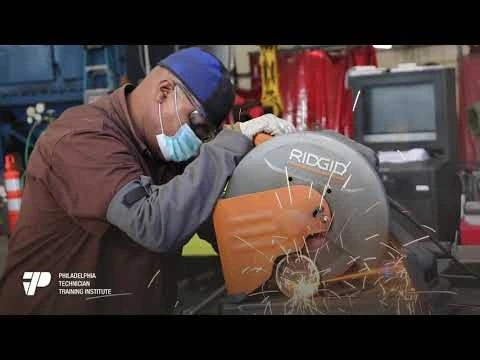
Many veterans gravitate toward welding because the skill is portable, the pay is competitive, and the credential travels across states. You can explore the Welding Technology program to see what focused, hands-on training looks like in practice.
Service members often underestimate how directly their experience maps onto civilian trade work. The habits that keep people safe and effective in the military are the same habits employers want on a job site.
Attention to safety is a clear example. Trades carry real hazards, and employers treat safety discipline as non-negotiable. Veterans already live this. The same is true for following technical procedures, maintaining equipment, working as part of a crew, and showing up on time. These are not skills a civilian student arrives with automatically, which gives veterans an edge.
A career in the trades also rewards the ability to read documentation and execute to specification, whether that is a blueprint, a welding procedure, or a repair order. Many veterans developed that precision in service. With structured hands-on practice, those instincts convert quickly into billable technical ability, which is one reason veterans often progress fast once they begin a program.
Most skilled trade programs take months, not years. Depending on the trade and schedule, a focused program can prepare a veteran for entry-level work in well under a year, which is a major reason a trade school in Philadelphia appeals to those who want to start earning soon after separation.
The speed comes from focus. Instead of general-education requirements, trade training concentrates on the specific competencies employers test for: core processes, safety, equipment operation, and reading technical documents. For a welder, that means time at the booth building real skill. For an automotive technician, it means diagnostic and repair practice on actual systems.
Because GI Bill benefits can cover much of the cost during that compressed timeline, veterans often find the math works strongly in their favor. A short program, largely funded by earned benefits, leading to a credential and a paycheck, is a very different proposition from a four-year degree financed by loans.
For many veterans, the real decision is whether to spend benefits on a trade school for veterans or a traditional degree. Both have value, but they serve different goals. Here is an honest comparison.
| Factor | Trade School | Four-Year College |
| Time to credential | Months | About four years |
| Path to income | Start earning quickly | Earning typically delayed |
| Hands-on training | Core of the program | Often limited |
| GI Bill stretch | Benefits may cover a short program fully | Benefits spread across four years |
| Job-specific skills | Directly employer-aligned | Broader, less applied |
College is the right call for careers that require a degree. But if your goal is to enter the workforce quickly with a marketable skill, a trade school for veterans usually delivers faster, with less financial risk, and with training that employers can evaluate directly. It also tends to use GI Bill for trade school efficiently, since a shorter program can be substantially funded rather than stretched thin.

The Philadelphia region is a practical place to train because the local economy still builds, maintains, and repairs things every day. Fabrication shops, shipbuilding and repair, mechanical and pipefitting contractors, auto service, and manufacturers all need skilled workers, which supports a durable skilled trade career for those entering the field.
Opportunity is not limited to the city center. Demand reaches across Philadelphia neighborhoods and into surrounding communities, from Spring Garden, Mantua, and West Powelton to Drexel Hill, Lansdowne, and Darby in Pennsylvania, and across the river to Camden, Pennsauken, Cherry Hill, and Collingswood in New Jersey. Because trade credentials are portable, training centrally positions veterans to take work wherever the best opportunity appears, including into Delaware.
Veterans who want a sense of the range of roles these trades lead to can review the career opportunities these skilled trades open up across the region. For many, the combination of local demand and portable credentials is what makes a trade school in Philadelphia a sound place to use GI Bill for trade school.
Not every program is equal, so veterans should evaluate a trade school for veterans with a few concrete questions in mind. Choosing well protects both your time and your benefits.
A quality trade school in Philadelphia should answer these clearly and connect you with a VA certifying official who can confirm how your education benefits apply. If a school is vague about approval or outcomes, treat that as a warning sign.
Getting started is straightforward once you know the sequence. Taking these steps in order helps you use GI Bill for trade school efficiently and avoid delays.
Each step is manageable, and a good admissions team will guide you through the paperwork so your benefits are applied correctly from the start.
For a transitioning service member, a trade school for veterans is one of the most practical ways to turn earned benefits into a stable, well-paying future. The traits that made you effective in uniform, discipline, safety awareness, and technical precision, are the same ones employers in the skilled trades actively want. With the GI Bill often covering tuition, a housing allowance, and supplies for approved programs, the path from service to a skilled trade career can be fast, affordable, and genuinely rewarding. The key is to choose a VA-approved trade school in Philadelphia, confirm the training is truly hands-on, and take the enrollment steps in order so your benefits are applied correctly.
If you are ready to explore your options, connect with the admissions team to confirm how your GI Bill benefits apply and find the program that fits your goals.
Yes. The Post-9/11 and Montgomery GI Bill programs cover approved non-college degree and vocational training, which includes many skilled-trade programs. Benefits may include tuition, a housing allowance, and a books stipend. Always confirm the program is VA-approved and verify your entitlement with the VA.
Veterans should look for a VA-approved trade school in Philadelphia that offers hands-on training, certification preparation, and a VA certifying official who can confirm benefit details. Philadelphia Technician Training Institute (PTTI) trains students across welding, automotive, pipefitting, manufacturing, and more, and can walk veterans through program and admissions questions.
Most skilled trade programs take months rather than years. Because training is focused on employer-tested skills, veterans can often reach entry-level readiness in under a year, which helps stretch your GI Bill efficiently.
Trades that reward precision and safety discipline tend to fit well, including welding, pipefitting, automotive repair, and manufacturing. Many veterans choose welding because the skill is portable and in demand, making it a reliable foundation for a skilled trade career.
If the specific welding or automotive program is VA-approved, GI Bill for trade school can apply to it. Coverage and payment rates depend on your eligibility and the program, so confirm approval and entitlement before enrolling.