
It is a fair question to ask before committing time and money: are the trades worth it if you only plan to work in them for a few years? Maybe you want income while you figure out a long-term plan, a faster alternative to a four-year degree, or a reliable fallback skill you can always return to. Whatever the reason, the short answer is that even a few years in the skilled trades can pay off in ways that four-year programs rarely match, starting with how quickly you begin earning. Across Philadelphia and the surrounding region, employers in welding, automotive repair, pipefitting, and manufacturing hire trained technicians year-round, and the hands-on trade programs that prepare people for this work are built to be completed fast.
This guide looks honestly at whether the trades are worth it for a shorter stretch of your career. It covers how fast you start earning, how little debt you take on, which skills and credentials stay with you for life, how this path compares to college, what training actually costs, and which high-paying trade jobs you can begin quickly in the Philadelphia area.
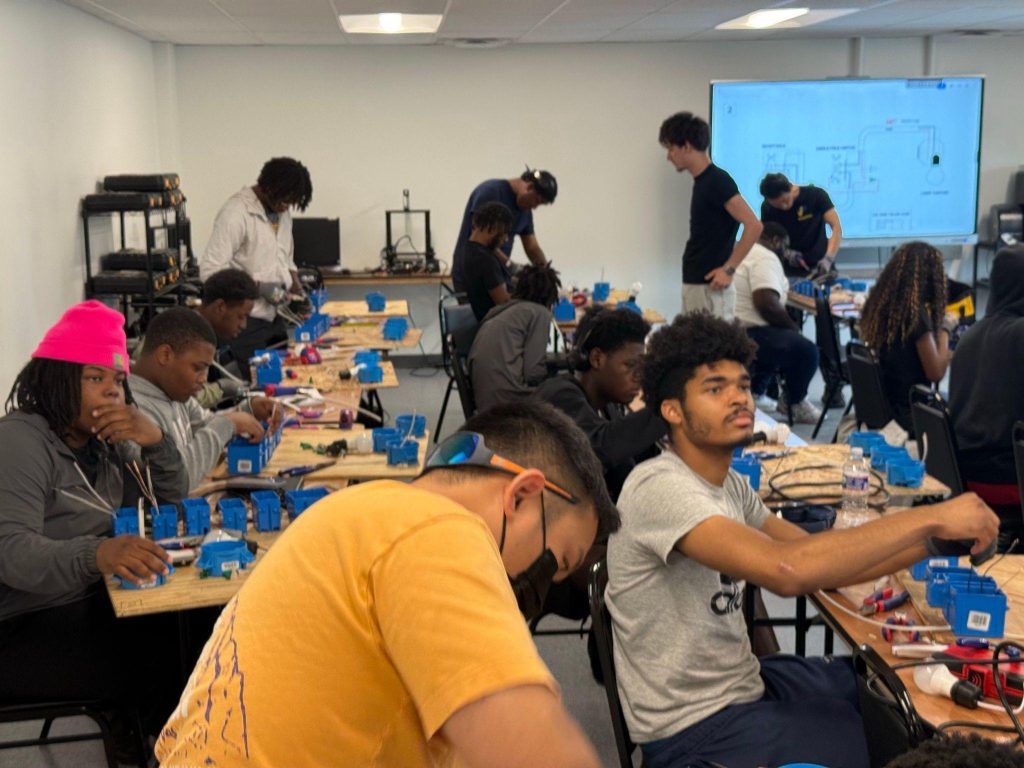
Yes, the trades are usually worth it even for a few years. Because training is short and inexpensive compared with a four-year degree, you start earning quickly, avoid heavy debt, and walk away with a certified, portable skill. A few focused years can fund savings, pay off faster, and leave you better positioned for whatever comes next.
The math is what makes the case. A traditional degree asks for roughly four years and significant tuition before you earn a full-time paycheck. A short trade program flips that order: you train for a matter of months, then spend the rest of those years working and getting paid. Even if you only stay in the field for two or three years, you have been earning for most of that time instead of accumulating debt. That difference is the core reason so many people who ask “are the trades worth it” conclude that they are, regardless of how long they plan to stay.
The question of whether the trades are worth it really comes down to timing, cost, and what you keep, and each one works in your favor even on a limited timeline. Put plainly, “are the trades worth it” is less about loving the work forever and more about speed to income and low financial risk.
The biggest advantage of the skilled trades is speed to income. Many programs can be completed in several months to under a year, which means your earning window opens almost right away. For someone planning only a few years in the field, that head start matters enormously, because nearly all of that time is spent collecting a paycheck rather than waiting to graduate. Short, welding technology training and similar technician programs are designed around this exact goal.
Compare that with a four-year path, where income typically arrives only after graduation. On a short timeline, the trades put more working years into the same calendar window, and that is a large part of why the trades are worth it even briefly.
Cost is the second half of the equation. Trade training usually costs far less than a bachelor’s degree, so you are far less likely to spend years repaying loans for a credential you used only briefly. Many students also combine tuition support with financial aid options to lower the out-of-pocket amount further.
This is where short-term trade work quietly wins. Spending four years and heavy tuition on a degree you may not use is a real risk; spending a few months and a modest tuition on a trade you work for a few years is a far smaller bet. Low debt is one of the clearest reasons high-paying trade jobs appeal to career changers and anyone hedging their long-term plans.
Even a short stretch in a trade leaves you with something permanent: a verified, marketable skill. Welding a sound joint, diagnosing a vehicle, or fitting pipe to code are abilities you do not lose, and many are backed by industry certifications that travel with you. If you ever return to the field, you re-enter with real experience rather than starting over.
That permanence changes how you should think about the question. Walking away from a desk job often means walking away from the specific knowledge it required. Walking away from a trade means keeping a portable skill you can pick back up, moonlight with, or fall back on. Programs in manufacturing and automation and other technician fields build exactly this kind of durable, resume-ready competency through hands-on training.
Not sure which trade fits a shorter timeline? Compare PTTI’s skilled trades programs and talk with an advisor about the fastest path to work.
If you might only commit a few years, the comparison between a trade program and college tilts sharply toward the trades. The reason is risk: a shorter, cheaper path loses far less if your plans change.
| Factor | Trade School | Four-Year College |
| Time before earning | Months | About four years |
| Typical cost | Lower, focused tuition | Often significant debt |
| Risk if you leave early | Low — skill and savings remain | Higher — debt may outlast the degree’s use |
| Hands-on training | Core of the program | Often limited |
| Portability of skill | High, often certified | Varies by field |
| Fit for a few-year plan | Strong | Weaker |
College still makes sense for careers that require a degree. But for someone weighing whether the trades are worth it on a short timeline, the lower cost, hands-on training, and faster payback of a trade program are hard to argue against. That is the heart of the decision for anyone who is not certain they’ll stay for the long haul.

Most trade programs take several months to under a year to complete, and they typically cost a fraction of a four-year degree. Exact length and price depend on the trade and schedule, but the pattern holds: short training, lower cost, and a faster return than a traditional college path.
That structure is precisely what makes short-term trade work practical. Because you are not locked into years of coursework, you can test a field, earn in it, and move on without having sunk a fortune or a decade into the decision. For a clear picture of program length, tuition, and support, the admissions team can walk through the specifics for each field.
When people ask how much trade school costs or how long it takes, the honest answer is that it varies, but it is consistently shorter and cheaper than the alternative. That affordability is a major reason high-paying trade jobs remain accessible to people who cannot or will not take on large loans.
Several skilled trades combine quick training with strong pay, which is exactly what you want if you plan only a few years in the field. According to the U.S. Bureau of Labor Statistics, many skilled trades report median wages in the roughly $50,000 to $80,000-plus range, and specialized, certified, or union roles can reach well into six figures with experience and overtime. Earnings vary by employer, location, certification, and hours, and no program can guarantee a specific wage, but the ceiling in these fields is real.
Trades that pay well without a degree and train relatively quickly include:
Among welding alone, the Bureau of Labor Statistics projects roughly 45,600 openings nationally each year through 2034, driven largely by the need to replace retiring workers. That replacement demand is what keeps these high-paying trade jobs open to newcomers year after year, whether you stay a few years or longer.
Using a trade as a bridge is a legitimate and often smart strategy. A few years of trade jobs can fund college later, launch a business, support you between careers, or simply build savings while you decide, all with a portable skill to fall back on. There is no rule that a trade must be a lifetime commitment.
Consider how it plays out in practice. A graduate might weld or fix vehicles for three years, bank earnings with little debt, and use that stability to pursue a degree, start a shop, or move into a supervisory or sales role in the same industry. The trade did its job: it paid the bills, built real experience, and kept options open. Seen this way, asking “are the trades worth it” for a few years almost answers itself, because the downside is small and the flexibility is large. For many, the career-focused training that trades provide becomes the thing that funds the next chapter.
Local demand is part of what makes a short trade commitment realistic here. Philadelphia’s mix of construction, manufacturing, shipbuilding, healthcare, and infrastructure work keeps trained technicians in demand across the city and its neighborhoods, from North and South Philadelphia to West Philadelphia, Mantua, and the Spring Garden corridor.
That reach extends well beyond the city. Graduates find work across nearby Pennsylvania communities such as Yeadon, Lansdowne, Darby, Drexel Hill, and Ardmore, and across the river into South Jersey towns including Camden, Pennsauken, Cherry Hill, Maple Shade, and Collingswood. Because trade credentials are portable, hands-on training completed in Philadelphia positions you to take work in whichever direction the best opportunity appears, including into Delaware and the wider tri-state market.
Short-term trade work and high-paying trade jobs fit a wide range of people:
If you value speed, low debt, and a skill you keep no matter what, the answer to “are the trades worth it” for a few years is a clear yes — a reasonable and often rewarding choice.
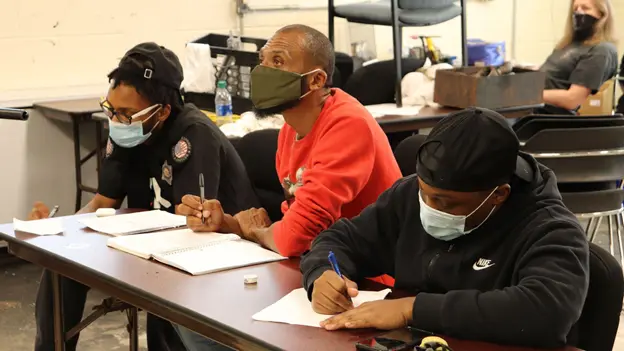
So, are the trades worth it if you only plan to do them for a few years? For most people, yes. You train quickly, spend little, start earning almost right away, and keep a portable, certified skill whether you stay three years or thirty. On a short timeline, that combination of fast income and low risk is difficult for a four-year degree to match, and it is exactly why the trades remain one of the smartest short-term career bets available in the Philadelphia region.
If a focused, hands-on path sounds like the right fit, explore PTTI’s technician training programs to see how quickly you could start.
Yes. Short, affordable training means you start earning quickly and avoid heavy debt, so even a few years typically pays off. You also keep a certified, portable skill you can return to later, which makes the trades a low-risk choice on a short timeline.
It often is. A trade program costs far less and takes far less time than a four-year degree, so the financial risk of changing direction later is small. Many people use trade jobs as a bridge that funds their next move, whether that’s college, a business, or another field.
Most programs take several months to under a year and cost a fraction of a bachelor’s degree. Exact figures depend on the trade and schedule, but the pattern is consistent: shorter and cheaper than college, with a faster return. An admissions advisor can provide specifics for each program.
Welding, automotive repair, pipefitting, manufacturing and automation, sterile processing, and construction trades all offer solid pay without a bachelor’s degree. According to the Bureau of Labor Statistics, many skilled trades report median wages in the $50,000 to $80,000-plus range, with higher earnings for certified and specialized roles.
Absolutely. A few years of hands-on training and paid work can build savings, experience, and confidence while you plan a longer-term path. Because the skill stays with you, treating a trade as a launchpad rather than a lifetime job is a practical, widely used strategy.