
Walk into almost any food-processing line, pharmaceutical plant, or distribution center around Philadelphia and you will find the same thing: machines doing the heavy lifting, and a short bench of people who can keep those machines running. That second group is the problem. The industrial maintenance technician has become one of the hardest roles for regional plants to fill, and the gap is widening as factories add robotics, conveyors, and programmable controls faster than they can hire people to service them. For anyone exploring PTTI’s Manufacturing Automation and Electrical Technician program, that shortage is not bad news — it is opportunity.
This article explains exactly what an industrial maintenance technician does, why Philadelphia employers cannot fill these positions, what the work pays locally, and how someone with no prior experience can train for the role. It is written for high school graduates, career changers, veterans, and adult learners who want stable, well-paid, hands-on work in a field where demand is outrunning supply. You will also learn the skills and certifications employers expect and the realistic path from classroom to plant floor.
An industrial maintenance technician keeps production equipment running by installing, inspecting, troubleshooting, and repairing machinery across a plant. The role blends mechanical, electrical, and automation skills: one hour you might align a motor or replace a bearing, the next you might diagnose a fault on a programmable logic controller that stopped a packaging line.
In practice, the work falls into a few recurring buckets. Preventive maintenance means scheduled inspections, lubrication, and part replacement that stop breakdowns before they happen. Reactive repair means responding fast when a line goes down, because every minute of downtime costs a plant money. Diagnostics means using schematics, sensors, and software to find the root cause rather than just swapping parts. And installation means setting up or upgrading equipment as plants modernize.
Because modern plants run on manufacturing automation, today’s technician spends real time with conveyors, robotics cells, sensors, pneumatic and hydraulic systems, and industrial controls. That mix is exactly why the role is both demanding and durable — it cannot be reduced to a single narrow task, and it cannot easily be offshored or automated away.
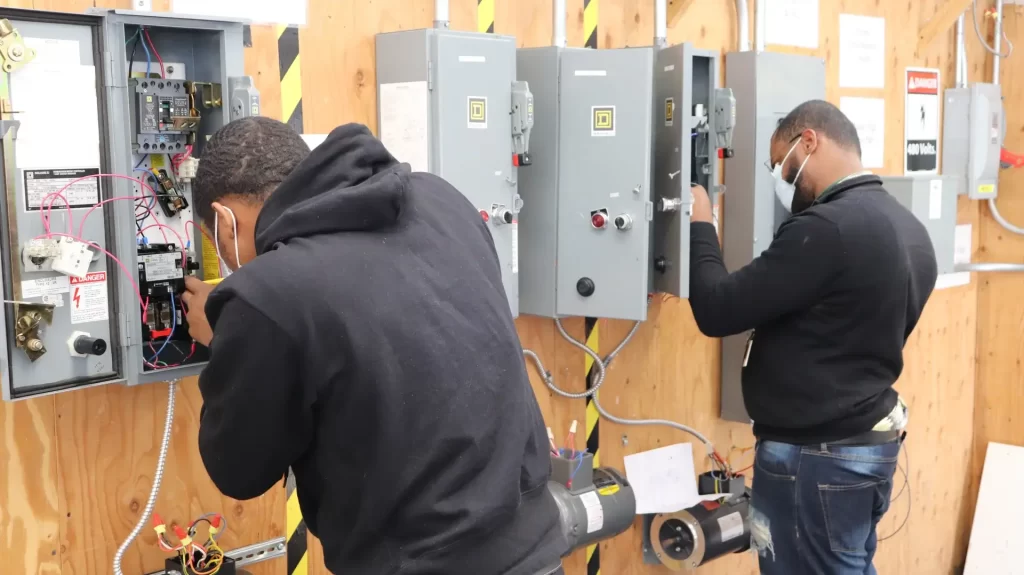
Philadelphia plants struggle to fill these roles because demand for automation skills is rising while the experienced workforce retires faster than it can be replaced. Many veteran technicians are leaving, plants keep adding automated equipment, and too few new workers have the blended electrical-mechanical training the jobs require.
Three forces compound the shortage. First, retirements: a large share of the skilled maintenance workforce is nearing the end of its career, and each departure takes decades of troubleshooting knowledge with it. Second, modernization: as regional food, beverage, pharmaceutical, and logistics facilities invest in robotics and controls, the skill bar rises. A plant that once needed mechanics now needs technicians who are comfortable with how automation is changing manufacturing jobs on the plant floor. Third, a training gap: fewer young workers were steered toward the trades over the past two decades, leaving a thin pipeline.
For a prospective student, this is the whole point. When employers cannot find enough qualified people, the people who do train gain leverage — in hiring, in pay, and in long-term stability. The shortage that frustrates plant managers is precisely what makes maintenance technician jobs worth pursuing right now.
Industrial maintenance technician salary in the Philadelphia area averages roughly $73,000 per year, or about $35 per hour, with entry-level pay starting near $60,000 and experienced technicians earning $88,000 or more. Pay varies by industry, shift, certifications, and overtime, but the role consistently pays well for a career that requires no four-year degree.
Several factors push regional pay upward: round-the-clock plant operations that reward shift and overtime work, specialized automation skills that command premiums, and the simple supply-and-demand reality of a worker shortage. Nationally, the Bureau of Labor Statistics reports a median wage of about $64,100 per year for industrial machinery mechanics and maintenance workers, and higher-cost, industry-dense markets like Philadelphia tend to run above that figure.
| Career Stage | Approximate Annual Range (Philadelphia Area) |
| Entry-level technician | $60,000 – $66,000 |
| Experienced technician | $70,000 – $81,000 |
| Senior / specialized automation technician | $85,000 – $95,000+ |
Treat these as regional estimates rather than guarantees. Actual earnings depend on the employer, the complexity of the equipment, the certifications a technician holds, and how much overtime a plant offers. Still, the pattern is clear: this is a trade where strong pay begins early and climbs as skills deepen.

The job outlook is excellent. The U.S. Bureau of Labor Statistics projects employment of industrial machinery mechanics and maintenance workers to grow 14% from 2025 to 2035 — much faster than the average for all occupations — with about 51,900 openings each year over the decade as the industry expands and workers retire.
That growth is unusual. While many occupations are projected to grow slowly, maintenance roles tied to manufacturing automation are expanding because the equipment base keeps growing. Every new robotic cell, automated conveyor, or controls upgrade installed in a regional plant becomes something a technician must maintain for years. Unlike some factory jobs that automation reduces, this one is created by automation.
The work is also difficult to offshore or replace. Troubleshooting a specific machine, on a specific plant floor, under time pressure, is hands-on judgment work. That resilience is a major reason an automation technician career offers genuine long-term stability rather than a short-lived boom.
Plant managers hiring for maintenance technician jobs look for a blended skill set, not a single specialty. The strongest candidates can move fluidly between electrical and mechanical systems and are comfortable with the controls that run modern equipment.
The core competencies employers prioritize include:
This combination is why technicians who understand the full picture advance quickly. Many start with one strength — say, mechanical work — and grow into controls and automation, which is the same logic behind moving from CNC into an automation and robotics technician role. Each added skill raises both value and pay.
You become an industrial maintenance technician by completing focused, hands-on training in electrical, mechanical, and automation systems, then entering the workforce at an entry level and building experience. Most roles require only a high school diploma plus technical training — not a four-year degree — so the path can be completed relatively quickly.
Here is the realistic route for someone starting from zero:
Cost and funding matter too. Because training is shorter than a degree, total cost is typically lower, and there are often Pennsylvania grants that help fund automation and manufacturing training for eligible students. That combination — short timeline, lower cost, strong demand — is what makes this path so practical.

Certifications strengthen a résumé and can raise pay, though no single national license is universally required. Employers value safety credentials such as OSHA training, along with recognized technical and automation certifications. A good program prepares students for relevant exams so they enter the job market with verifiable, employer-recognized skills rather than just classroom time.
For many students and career changers, the real decision is between focused technical training and a traditional degree. For this field, the trade route is not a fallback — it is the standard path, because employers hire on demonstrated skill.
| Factor | Industrial Maintenance Training | Four-Year Degree |
| Time to job readiness | Months | About four years |
| Typical cost | Lower, focused tuition | Often significant debt |
| Path to income | Start earning quickly | Earning usually delayed |
| Hands-on practice | Core of the program | Often limited |
| Alignment with hiring | Directly employer-relevant | Varies widely |
| Local demand | High and rising | Depends on field |
The takeaway is simple. If the goal is stable, well-paid, hands-on work in a field with a genuine worker shortage, industrial maintenance training delivers a faster, lower-cost route than a four-year degree, and it points straight at jobs Philadelphia employers are actively trying to fill.
One advantage of this trade is how widely the work is spread. Manufacturing, food and beverage, pharmaceutical, and logistics facilities operate throughout the city — across North Philadelphia, South Philadelphia, and Southwest Philadelphia — and well beyond it. Because skills transfer between industries, a trained technician is not tied to a single employer or sector.
Opportunities extend across nearby Pennsylvania communities such as Yeadon, Lansdowne, Darby, and Drexel Hill, and across the river into South Jersey towns including Camden, Pennsauken, Cherry Hill, Maple Shade, and Gloucester City. Training centrally in Philadelphia positions a graduate to take maintenance technician jobs in whichever direction the strongest opportunity appears, including into the broader Pennsylvania, New Jersey, and Delaware market.
The shortage of skilled technicians is not a temporary blip — it is a structural gap driven by retirements and rapid manufacturing automation across the Philadelphia region. That gap is exactly why the industrial maintenance technician role is worth serious consideration: strong pay that starts early, a job outlook the Bureau of Labor Statistics rates well above average, and work that automation creates rather than eliminates. Best of all, the path in is short, hands-on, and open to people without a four-year degree.
If this career fits the kind of work you want — practical, technical, and in demand — the most direct next step is structured training built around real equipment. Explore PTTI’s Manufacturing Automation and Electrical Technician program to see how quickly you could be ready for the jobs Philadelphia plants are struggling to fill.
An industrial maintenance technician inspects, troubleshoots, and repairs the machinery that keeps a plant running. Daily work mixes preventive maintenance, fast repairs when a line goes down, diagnostics on controls and automation, and installing or upgrading equipment across electrical, mechanical, hydraulic, and pneumatic systems.
Industrial maintenance technician salary in the Philadelphia area averages roughly $73,000 per year, with entry-level pay near $60,000 and experienced technicians earning $88,000 or more. Shift work, overtime, and automation certifications can push total pay higher. Figures are regional estimates and vary by employer and experience.
No. Most maintenance technician jobs require only a high school diploma or GED plus hands-on industrial maintenance training. Employers hire on demonstrated skill in electrical, mechanical, and automation systems, which focused technical programs build far faster than a four-year degree.
Yes. The Bureau of Labor Statistics projects 14% growth from 2025 to 2035 with about 51,900 openings a year, pay is strong, and manufacturing automation keeps creating demand. The work is also hard to automate or offshore, which supports long-term stability for an automation technician.
Philadelphia Technician Training Institute (PTTI) offers hands-on training in manufacturing automation and electrical systems, built around real equipment so students practice the skills plants actually use. Programs serve learners across Philadelphia, surrounding Pennsylvania counties, and South Jersey.