
Every prospective student eventually asks the same practical question: will this actually pay off? When the number attached to a program is roughly $18,000, and the potential first-year earnings sit near $60,000, that question becomes a straightforward financial decision rather than a leap of faith. This is exactly the kind of return-on-investment math that families, career changers, and high school graduates in Philadelphia should be running before they commit to any path, whether that path is a trade school or a four-year university.
The honest answer is that an $18K trade program can be one of the strongest returns available in education today, but only when you understand what drives that return. This article breaks down the real numbers: what an $18,000 trade program actually costs after aid, which skilled trades realistically approach $60,000 in the first year, how that compares to the true cost of a college degree, and how quickly the investment pays for itself. It is written from the perspective of workforce and technical-education professionals who see these outcomes play out in the Philadelphia labor market every year.
Yes, an $18,000 trade program is generally worth it if it leads to around $60,000 in first-year earnings. That is roughly a 3-to-1 return within twelve months, and the tuition is typically recovered inside the first year of full-time work. Few educational investments produce that speed of payback.
To see why, it helps to translate the numbers into plain terms. A degree is often judged by lifetime earnings decades out. A trade program can be judged much sooner, because the earning starts almost immediately after completion. When your total cost is a fixed, relatively small figure and your annual income lands in the $50,000 to $60,000 range, the return is not theoretical; it shows up in the first few paychecks.
The rest of this article pressure-tests that headline with the details that actually determine whether the math holds: the real cost after aid, the realistic wage by trade, and the comparison against the alternative most students are weighing, a four-year degree.
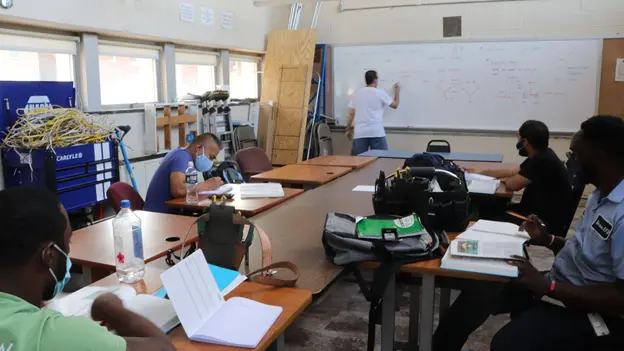
The sticker price of a trade program rarely equals what a student actually pays, and understanding the full picture is the first step in any honest ROI calculation.
A quality trade program’s tuition is not just seat time in a classroom. It typically covers hands-on lab hours on industry-standard equipment, instruction from professionals with real field experience, safety training, and preparation for the certifications employers look for. In the skilled trades, that hands-on component is the value. You are paying to build a demonstrable skill, not to accumulate credits.
The $18,000 figure is a starting point, not a final bill for most students. Federal financial aid, grants, and other assistance can significantly reduce what a student pays out of pocket, and veterans may be able to apply education benefits. Prospective students in Philadelphia can review financial aid options and use a net price calculator to estimate their actual cost before enrolling. For many students, the real out-of-pocket number is meaningfully lower than the published tuition, which only improves the return.
Run your own numbers. Estimate your true cost with PTTI’s net price calculator, then compare it against realistic starting pay in your target trade.
Not every trade hits $60,000 in the first twelve months, and setting accurate expectations matters. Entry-level wages usually start lower and climb quickly with certifications, overtime, and demand. The $60,000 range is most attainable in higher-paying trades, particularly with union pathways, specialty skills, and overtime, which is common in these fields.
Here is an honest look at where several PTTI training areas tend to land for motivated graduates in the Philadelphia market.
| PTTI Training Area | Typical Entry Range | Path Toward $60K+ |
| Steam, Sprinkler & Pipe Fitting | Competitive entry, strong ceiling | Union pathways, overtime, specialty piping |
| Welding Technology | Solid entry, portable credential | AWS certifications, pipe/structural welding, overtime |
| Manufacturing & Automation | Steady entry, growing demand | Automation skills, certifications, shift premiums |
| Automotive Repair Technology | Entry plus flat-rate upside | ASE certifications, specialization, EV/diagnostics |
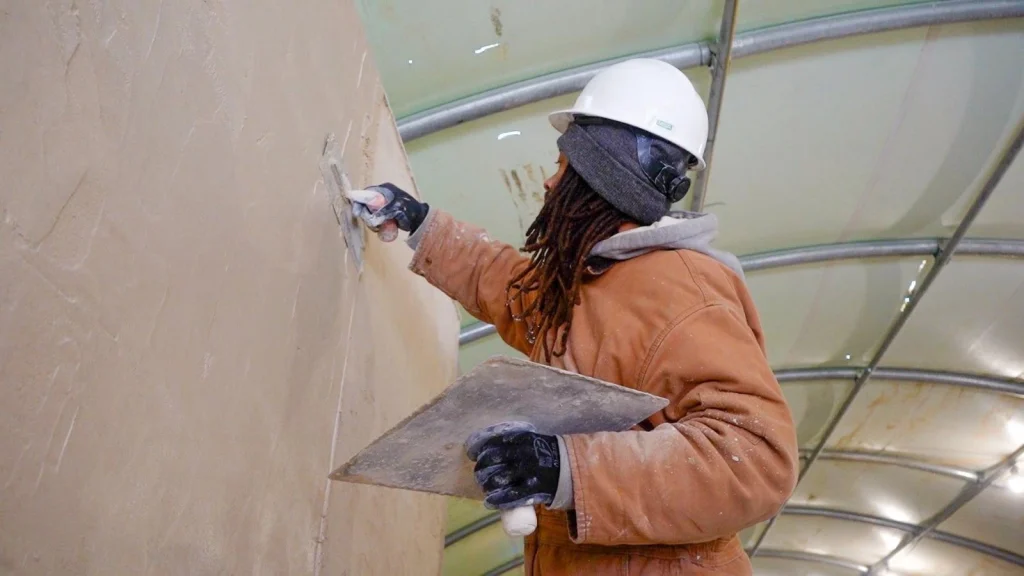
| Concreting, Masonry & Framing | Reliable construction demand | Skilled specialization, supervisory roles |
| Central Processing & Sterile Services | Stable healthcare entry | Certification, hospital experience, shift differentials |
The pattern across every trade is the same: the credential and the certifications you stack are what move you from entry pay toward the $60,000 range and beyond. Skilled trades reward proven competency, and they reward it fast. You can explore all of these paths on PTTI’s trade programs page, including the Steam, Sprinkler & Pipe Fitting program and the Manufacturing & Automation program, which are among the strongest earners.
The most useful comparison is not trade school against nothing; it is trade school against the four-year degree most students are quietly weighing. When you put the two side by side, the return-on-investment gap becomes clear.
| Factor | $18K Trade Program | Four-Year Bachelor’s Degree |
| Typical total cost | Roughly $18K (often less after aid) | Frequently $40K–$100K+ with living costs |
| Common debt at graduation | Low to none for many students | Around $29,000–$37,000 on average nationally |
| Time before full-time earning | Months | About four years |
| First-year earning potential | Can approach $60K in strong trades | Varies widely by major |
| Payback speed | Often within year one | Frequently years, sometimes a decade-plus |
According to national data from the Education Data Initiative, the average bachelor’s degree borrower graduates with roughly $30,000 or more in student loan debt, and public four-year tuition and fees alone often run well over $11,000 per year before housing, food, and lost income are counted. A trade student, by contrast, can finish, enter the workforce, and begin recovering their much smaller investment while the degree student is still in year two.
This is the piece most cost comparisons leave out. To understand the full picture, it helps to read PTTI’s breakdown of trade school ROI versus a bachelor’s degree and how graduates start earning faster than a four-year degree.
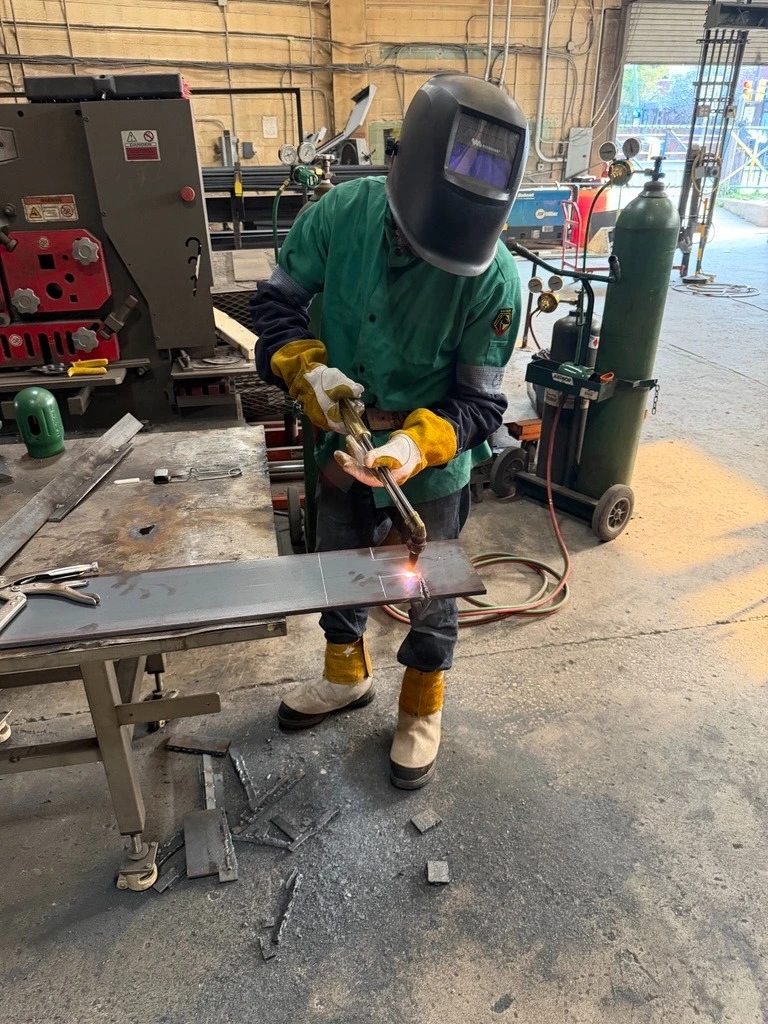
The salary comparison is only half of the ROI story. The other half is time, and time is where the trade path quietly wins.
Consider two students who start at the same moment. One enrolls in an $18,000 trade program, finishes in under a year, and begins earning in the $50,000 to $60,000 range. The other enrolls in a four-year degree, earns little to no income during those years, and often takes on debt. By the time the degree student walks across the graduation stage, the trade graduate has potentially earned well into six figures cumulatively, carries little or no debt, and already has multiple years of real work experience and certifications.
That head start compounds. Early earnings can be saved, invested, or used to buy a home years sooner. The opportunity cost of four years without income is real money, and it rarely appears on a tuition invoice. When you factor it in, the question shifts from “can I afford trade school?” to “can I afford to delay earning for four years?”
An ROI calculation only works if the jobs are actually there, and in the Philadelphia region, demand for skilled trades is a genuine tailwind. The area supports welding and fabrication, active shipbuilding and ship repair, pipefitting and mechanical contracting, manufacturing, healthcare, and ongoing commercial and infrastructure construction.
Several forces reinforce that demand into 2026 and beyond. An aging workforce means experienced tradespeople are retiring faster than they are being replaced, creating steady openings. Aging infrastructure across Pennsylvania requires continuous repair and rebuilding. And much of this work is difficult to automate because it happens on-site, in variable conditions, and requires hands-on judgment. For a student weighing whether an $18K investment will translate into a reliable $60K trajectory, a strong local labor market is one of the most important variables, and Philadelphia delivers on it. See PTTI’s overview of the highest-paying trade jobs in Philadelphia for a closer look.
An $18K program does not guarantee a $60K outcome on its own. The return depends on execution, and understanding the variables helps a prospective student make a smart decision.
This is where choosing the right school matters. A program that combines applied training, certification preparation, and career support turns tuition into earning power far more reliably than one that does not.
The $18K-to-$60K equation is especially compelling for several groups:
If you fall into any of these categories, the ROI case for a focused trade program is worth taking seriously.
An $18,000 trade program that leads to roughly $60,000 in first-year earnings is not a gamble; it is one of the clearest value propositions in education today. The tuition is modest, the debt exposure is low, the earning begins in months rather than years, and the Philadelphia labor market has the demand to support it. When you account for time, opportunity cost, and the growing cost of a four-year degree, the return-on-investment case for a focused, hands-on trade program is strong for the right student.
The key is choosing a program that delivers what the ROI actually depends on: real hands-on training, certification readiness, and support getting into the workforce. That is where a decision becomes a career.
Take the next step. Explore PTTI’s trade programs, request information, or schedule a campus tour to see the labs and equipment for yourself. When you’re ready, connect with the admissions team to map your fastest path from training to a paycheck.
For most students, yes. When an $18,000 program leads to first-year earnings near $60,000, the tuition is typically recovered within the first year of work, and financial aid can lower the cost further. That payback speed is difficult to match with a traditional four-year degree.
It is realistic in higher-paying trades such as pipefitting, welding, and manufacturing automation, particularly with certifications, overtime, and strong local demand. Many entry roles start lower and climb quickly, so setting expectations by trade and effort level is important.
Often within the first year. With a relatively low fixed tuition and full-time earnings that can approach $60,000, many graduates recover their investment faster than a single semester of a four-year degree would cost.
Generally, yes. A focused trade program’s total cost is a fraction of the average four-year degree, which frequently exceeds $40,000 to $100,000 once tuition, living costs, and four years of lost income are counted. Trade students also tend to graduate with far less debt.
Yes. Federal aid, grants, and veterans’ education benefits can reduce the out-of-pocket cost. Prospective students should review available aid and estimate their true net price before enrolling rather than assuming they will pay full tuition.
Steam, sprinkler and pipe fitting, welding, and manufacturing and automation are among the strongest earners, especially with union pathways, certifications, and overtime. Automotive and sterile processing also offer solid, stable earning trajectories with certification.
Yes. Both groups often value speed to income and hands-on work. Veterans may apply education benefits, and career changers benefit from a short training window that gets them earning quickly rather than pausing their income for years.