
Cars keep getting more complicated, not less. Every new model year adds more sensors, more software, and more electric and hybrid components, and someone has to understand how all of it fits together. That someone is the modern auto mechanic. If you are weighing an auto mechanic career against a four-year degree or another skilled trade, the honest question is simple: do the pay, the demand, and the daily work actually add up in 2026?
This breakdown gives you straight answers. We will look at what the job really pays, where the field is heading, what it takes to get started, and the downsides nobody likes to mention. Throughout, we will keep a close eye on what an auto mechanic in Philadelphia can realistically expect, because local demand and pay matter more than national averages when you are deciding where to build a career.
The short answer: Yes, an auto mechanic career is a strong choice in 2026 for people who enjoy hands-on, problem-solving work. The field offers steady demand, roughly 70,000 openings each year nationwide, entry without a bachelor’s degree, and real room to raise your pay through experience and ASE certification.
Being an auto mechanic is a good career in 2026 if you like practical work and want to earn without four years of college debt. The U.S. Bureau of Labor Statistics reports about 805,600 people already work in this field, with roughly 70,000 openings projected each year through 2034 as older workers retire.
A few things make the auto mechanic career appealing right now. Demand is steady rather than trendy, so the work does not disappear when the economy shifts. Every household with a vehicle eventually needs a technician, and the average car on the road keeps getting older, which means more repairs. On top of that, the skills transfer. Once you can diagnose and fix vehicles, you can work almost anywhere in the country, and you can move between dealerships, independent shops, fleets, and specialty repair.
The trade also rewards curiosity. Diagnosing a modern vehicle is closer to detective work than to turning a wrench blindly. Technicians read data, test circuits, and interpret computer codes, then confirm the fix by hand. For people who like solving puzzles and seeing the result the same day, an automotive technician career delivers that satisfaction.
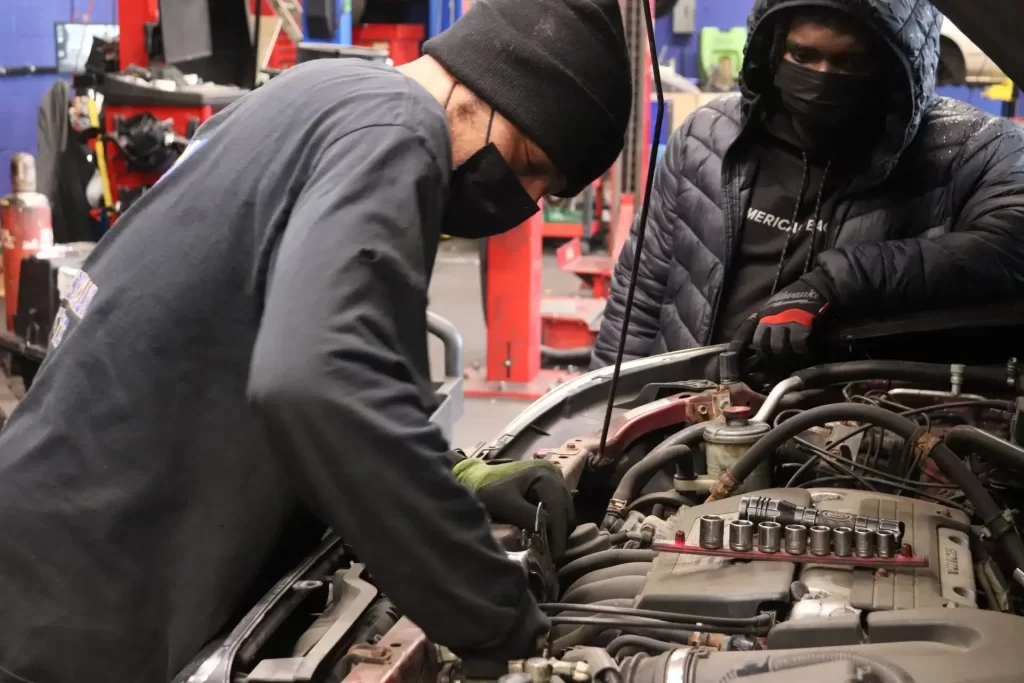
Nationally, the median auto mechanic salary was $49,670 per year, or about $23.88 an hour, according to the most recent federal wage data. That is the midpoint: half of all technicians earn more, and half earn less. The honest picture is that the auto mechanic salary you can expect spreads widely based on experience, certifications, specialization, and where you work.
Here is a realistic breakdown of what the numbers look like across a typical career. For a wider national view, PTTI’s automotive mechanic salary guide breaks down pay by experience and region.
| Career Stage | Approximate Annual Pay | Notes |
| Entry-level (0–2 years) | $33,000 – $42,000 | Learning the trade; building speed and diagnostic skill |
| Experienced technician (3–7 years) | $48,000 – $65,000 | Certifications and specialization raise pay |
| Master / specialized technician | $70,000 – $90,000+ | Diesel, EV, diagnostics, or dealership flat-rate top earners |
A few honest caveats belong with these figures. Many shops pay on a “flat-rate” system, meaning you earn based on the work you complete rather than the hours you clock. Fast, skilled technicians can out-earn the averages, while slower or newer techs may earn less early on. Overtime and commission are common ways to push an auto mechanic salary higher, and the federal data shows experienced technicians can earn more than $80,000 a year.
Local pay matters more than national averages, and the news is reasonably good here. Across Pennsylvania, an auto mechanic salary tends to land in the low-to-mid $50,000s on average, with experienced technicians earning well beyond that. In the Philadelphia market specifically, several salary trackers place average automotive technician pay between roughly $52,000 and $67,000, with top and specialized earners reaching into the $70,000s and higher.
Why does the auto mechanic salary range so widely here? Dealership work, fleet maintenance, and specialized diagnostic roles pay more than entry-level general service, and the cost of doing business in a large metro also tends to lift wages. For someone working as an auto mechanic in Philadelphia, the practical takeaway is that steady raises are realistic as you add certifications and take on tougher repairs.
If you want to move from the bottom of the range to the top, the levers are clear:
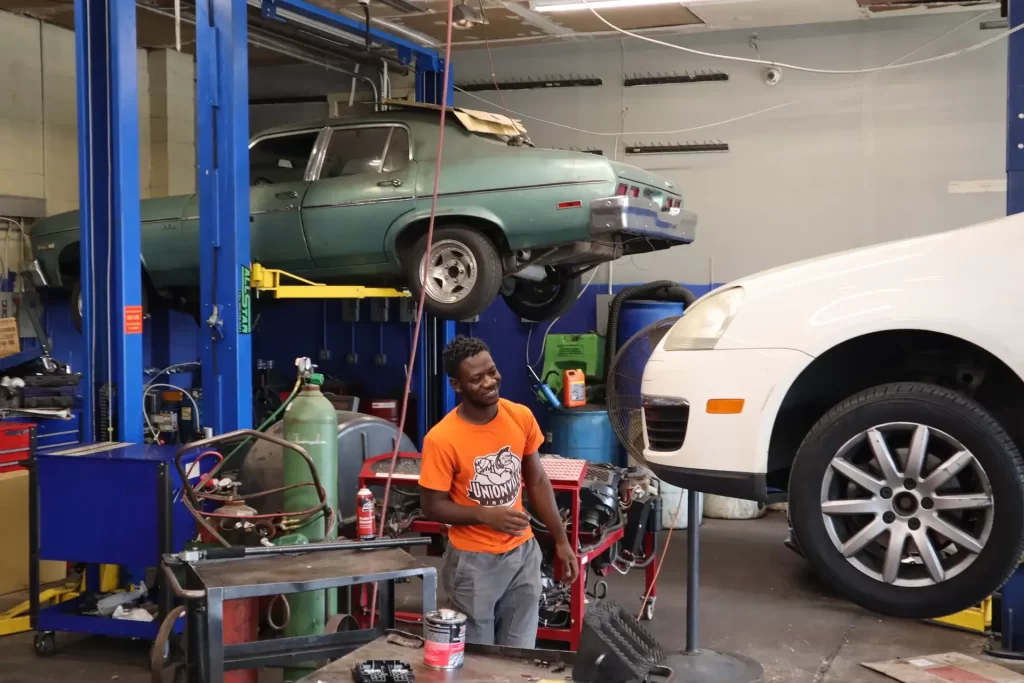
The auto mechanic job outlook is stable and steady through the next decade. Federal projections show employment growing about 4 percent from 2024 to 2034 — roughly as fast as the average job — with around 70,000 openings each year, most created as experienced technicians retire or move on.
Two forces keep this trade grounded. First, there are hundreds of millions of vehicles on American roads, and they all need maintenance and repair regardless of what the economy is doing. Second, the work is hands-on and judgment-heavy, which makes it hard to automate. A computer can flag a fault code, but a skilled human still has to diagnose the root cause, reach into a tight engine bay, and verify the repair.
The rise of electric and hybrid vehicles is reshaping the trade rather than shrinking it. These vehicles still need brakes, suspension, tires, software updates, and high-voltage system service performed by trained technicians. Shops across the region are actively looking for people who understand modern automotive electronics, which is exactly why hands-on automotive technician training now includes hybrid and EV fundamentals. That shift also means an automotive technician career today rewards people who are comfortable with both wrenches and software. PTTI’s look at electric vehicle technician training explains how the trade is adapting to these vehicles.
You do not need a four-year degree to enter this field. Employers typically prefer candidates who have completed a postsecondary automotive program, and industry certification is usually expected once you are working. The most reliable path combines focused training with hands-on practice, then certification as you gain experience. It also helps to know the skills automotive employers want most before you start.
The core skills employers look for include:
Quality automotive technician training is where a career starts. A strong program puts you on real vehicles with industry-standard equipment, not just textbooks. That hands-on lab time builds the diagnostic and repair skills employers test for during hiring, and it shortens the time between enrolling and earning.
The advantage of structured automotive technician training is that it compresses the learning curve. Instead of picking up skills randomly on the job over several years, you learn systems in a logical order, practice under instructors with shop experience, and graduate job-ready. For career changers, veterans, and adult learners, that focused path is often the fastest route into an automotive technician career, and it builds the confidence to walk into a shop ready to work.
At Philadelphia Technician Training Institute (PTTI), the Automotive Training and Repair Technician program is built around applied, hands-on learning using the kinds of diagnostic tools and vehicles graduates will see on the job. That real-shop experience is what turns classroom knowledge into workforce readiness.
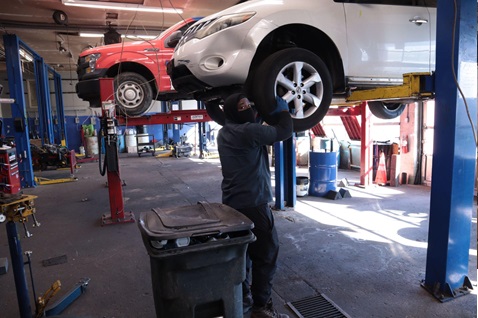
There is no single national “mechanic license,” but ASE certification is the credential that matters most in this trade. Offered by the National Institute for Automotive Service Excellence, the credential is competency-based: you pass standardized tests in specific systems, and you back that with verified hands-on experience. Formal training can count toward part of the experience requirement, and students can begin testing before they even finish a program. It is worth reviewing the automotive technician certifications worth pursuing so you can plan which ones fit your goals.
The reason ASE certification carries so much weight is that it means the same thing at every shop in every state. More than 250,000 technicians hold active ASE credentials. Passing the core automobile tests (A1 through A8) earns Master Technician status, and each certification you add tends to raise your earning potential. Certifications must be renewed periodically to keep pace with new technology, which keeps certified technicians current and valuable. If you want to understand the payoff in detail, PTTI’s guide on why auto mechanic certification matters walks through it clearly.
No career breakdown is honest without the trade-offs. Auto repair is physically demanding. You will stand, bend, lift, and work in awkward positions, sometimes in hot or cold conditions. Entry-level pay starts modestly while you build speed, and flat-rate pay systems can make early paychecks unpredictable.
There is also an upfront investment in tools, which technicians typically build over time. And because vehicle technology changes quickly, the learning never fully stops — you have to keep upgrading your skills and certifications to stay competitive. For the right person, that constant learning is part of the appeal. For someone who wants a job they can fully master and then coast, it may frustrate. Being clear-eyed about this is part of choosing the trade wisely.
This path fits a wide range of people:
If you learn better by doing than by reading, and you want a career where skill is rewarded, an automotive technician career is worth serious consideration. Few paths let you start earning this quickly while still leaving room to specialize and climb.
Philadelphia is a strong place to launch an auto mechanic career, and the demand for a skilled auto mechanic in Philadelphia is steady year-round. The region runs on vehicles — personal cars, delivery fleets, rideshare, municipal vehicles, and commercial trucks — and all of them need service. Dealerships, independent shops, and fleet operations across the city and surrounding Pennsylvania and South Jersey communities regularly hire trained technicians.
For someone training to become an auto mechanic in Philadelphia, that variety is an advantage. You can find entry-level service roles, then move toward specialized, higher-paying diagnostic or dealership work as your skills grow. Because certifications and repair skills are portable, training in Philadelphia positions you to work throughout the tri-state area, from the city’s neighborhoods out to nearby suburbs and across the river into New Jersey.
Local training also plugs you into local hiring, which shortens the distance between the classroom and a real automotive technician career. A Philadelphia-based program with employer connections helps bridge the gap between finishing your automotive technician training and landing that first job as an auto mechanic in Philadelphia. If you are mapping out the steps, PTTI’s overview of how to become an automotive technician in Philadelphia lays out a practical path.
To see where the trade can lead once you are established, PTTI’s look at the highest-paying automotive jobs in Philadelphia shows the earning potential that specialization and certification can unlock.
So, is being an auto mechanic a good career in 2026? For hands-on, curious people who want stable work and real earning growth without four years of college, the honest answer is yes. The pay is solid and climbs with skill, the auto mechanic job outlook is steady, and the shift toward electric and computerized vehicles is creating demand for well-trained technicians rather than eliminating it. The keys to a strong auto mechanic career are the same as they have always been: good training, ASE certification, and a willingness to keep learning.
If you are ready to turn that interest into a career, the next step is training that puts you on real vehicles with real equipment. Explore PTTI’s Automotive Training and Repair Technician program to see how hands-on learning in Philadelphia can get you job-ready and earning.
Yes. An auto mechanic career offers steady demand, entry without a four-year degree, and room to grow pay through experience and ASE certification. With about 70,000 openings projected nationwide each year, the field is stable and hiring, especially for technicians trained in modern diagnostics and EV systems.
The national median auto mechanic salary is about $49,670 a year, or roughly $23.88 an hour. Entry-level technicians often start in the $33,000–$42,000 range, while experienced and certified technicians frequently earn $65,000 to $90,000 or more, especially with specialization and overtime.
Salary trackers place average automotive technician pay in the Philadelphia area between roughly $52,000 and $67,000, with top and specialized earners reaching the $70,000s and beyond. Pay for an auto mechanic in Philadelphia rises with ASE certification, specialization, and dealership or fleet work.
Focused automotive technician training can prepare you for entry-level work in a matter of months rather than years. The exact timeline depends on the program, but hands-on training shortens the path from beginner to job-ready compared with learning entirely on the job.
You can start working before you are certified, but certification is usually expected as you gain experience, and ASE certification is one of the best ways to raise your pay. It is competency-based, recognized nationwide, and often required by dealerships and better-paying shops.
For many people, yes. An automotive technician career lets you start earning quickly, avoid heavy student debt, and build a stable, skilled trade. It suits hands-on learners who want practical work and clear paths to raise their income through certification and specialization.
No. EVs still need brakes, tires, suspension, software, and high-voltage service performed by trained technicians. The trade is shifting toward electronics and EV skills, not shrinking, which is why modern automotive technician training now includes hybrid and EV fundamentals.