
Robotics technician vs automation technician is one of the most common comparisons students weigh once they discover that factories, warehouses, and plants across the Philadelphia region are hiring people to keep automated equipment running. The two titles sound almost interchangeable, and in some workplaces the duties overlap heavily. Yet they are not the same job, and knowing how they differ helps you choose the right training and the right first role. An automation technician keeps entire automated systems — conveyors, sensors, and programmable controllers — working together as one. A robotics technician focuses more narrowly on the robots themselves: the arms, controllers, and vision systems that do the physical work. This guide breaks down what each role does day to day, the skills and tools involved, how long training takes, what the pay and job outlook realistically look like, and how hands-on manufacturing and automation training can prepare you for either direction. Whether you are a high school graduate, a career changer, or a veteran exploring technical careers near Philadelphia, you will leave with a clear picture of which path fits you.
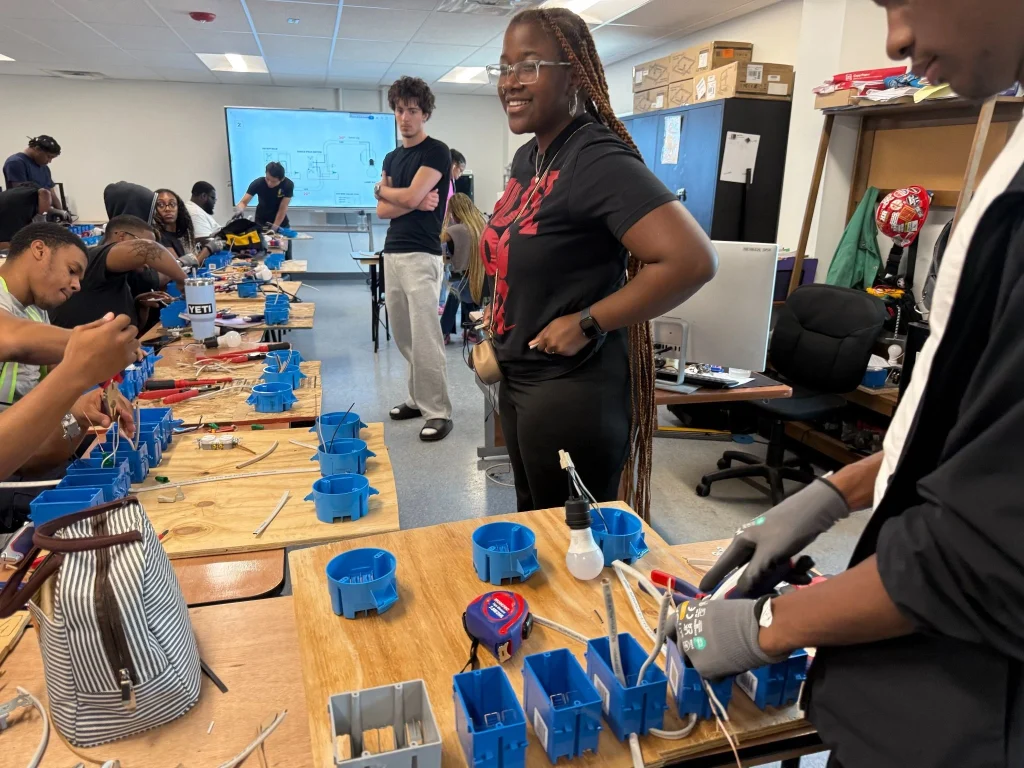
The core difference in a robotics technician vs automation technician comparison is scope. An automation technician is responsible for the entire automated system — the controllers, sensors, motors, and conveyors that make a production line run as a coordinated whole. A robotics technician specializes in the robotic machines inside that system, keeping arms, controllers, and vision tools operating accurately.
Think of it this way. If an automated bottling line stops, the automation technician asks, “Where in the whole system did the fault occur?” They trace the problem across programmable logic controllers (PLCs), sensors, and drives. A robotics technician asks a narrower question: “Is this robot moving, positioned, and calibrated correctly?” They focus on the machine doing the physical task.
In practice, the two careers sit on a spectrum rather than in separate boxes. Smaller employers often expect one person to cover both. Larger plants with many robots may employ dedicated robotics specialists alongside broader automation and controls staff. Understanding that spectrum is the first step in deciding which direction to train for.
| Factor | Automation Technician | Robotics Technician |
| Primary focus | The entire automated system and its controls | The robotic machines within the system |
| Typical equipment | PLCs, HMIs, SCADA, drives, sensors, conveyors | Robotic arms, controllers, vision systems, grippers |
| Core question on the job | “Is the whole line running correctly?” | “Is the robot operating and positioned correctly?” |
| Common work settings | Factories, plants, warehouses, utilities | Manufacturing cells, warehouses, labs |
| Shared ground | Install, program, troubleshoot, and repair industrial equipment | Install, program, troubleshoot, and repair industrial equipment |
An automation technician installs, maintains, troubleshoots, and repairs the automated systems that run modern production. On a typical day, that means monitoring programmable controllers, calibrating sensors, adjusting drives and motors, reading electrical and mechanical diagrams, and keeping a production line running with minimal downtime.
The role blends several disciplines. You need electrical knowledge to work on wiring, power, and controls; mechanical knowledge to service motors, belts, and actuators; and software knowledge to read and adjust PLC logic and operator interfaces. This mix is exactly why employers value people who understand how an automated system behaves as a whole. A deeper look atwhat a manufacturing and automation technician does shows how broad the day-to-day work can be across different plants.
These technicians work across many industries: food and beverage, pharmaceuticals, packaging, logistics, and general manufacturing. Because almost every plant now relies on automated equipment, the skill set travels well between employers and sectors, which adds a layer of job stability that many entry-level careers lack.
A robotics technician installs, programs, tests, maintains, and repairs robotic equipment. The focus is the robot itself — an articulated arm, a collaborative robot (cobot), or an automated handling unit — along with the controllers, sensors, and vision systems that guide its movement.
Day to day, a robotics technician might set up a robot for a new task, adjust its programmed path, replace a worn component, recalibrate a vision system, or diagnose why a robot is missing its target position. The work demands precision and patience, because small errors in positioning or programming can halt production. A close look at the day-to-day career of an industrial automation and robotics technician captures how much of the job is methodical troubleshooting rather than guesswork.
These specialists are increasingly common in warehouses and distribution centers, where automated picking, sorting, and packing systems run around the clock. They also work in manufacturing cells, electronics assembly, and research labs. As more employers add robots to keep up with demand, the people who can keep those robots running become harder to replace.
Here is where a robotics technician vs automation technician comparison gets practical: the two roles share a large common core of skills, then branch into specialties. Both of these technical careers reward people who are comfortable with electrical systems, mechanical components, and basic programming, and who enjoy solving problems with their hands.
Shared skills that matter in both roles include:
Where they diverge: an automation technician leans harder into whole-system controls — PLCs, SCADA, sensors, and networked equipment — while a robotics technician goes deeper on robot programming, motion, and vision. Both sets of skills build on the same foundation, which is why the robotics and automation skills that today’s trade students need are taught together before students specialize.
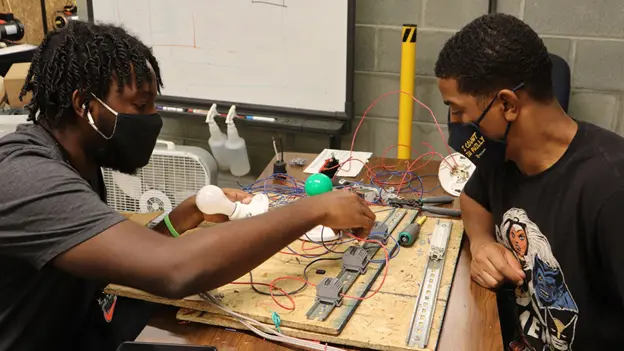
You usually enter either career with a high school diploma or GED plus hands-on technical training, not a four-year degree. Employers care most about whether you can safely work on electrical, mechanical, and control systems and troubleshoot problems under real conditions. That ability is built in a lab, not a lecture hall.
A focused program is the most direct route. Quality automation technician training concentrates on the skills employers test for: electrical theory, mechanical systems, PLC and controls fundamentals, safety practices, and real equipment time. Many technician programs run for several months up to about a year, which is far faster and lower-cost than a traditional degree. For beginners deciding where to start, this overview of hands-on training in robotics and manufacturing automation for beginners is a useful starting point.
A common question is whether to choose community college or a trade institute. Both can work, but they emphasize different things. A degree-focused path adds general academic coursework and takes longer; a technician-focused program at a trade school prioritizes lab time, employer-relevant skills, and getting you job-ready sooner. For many students in these fields, the hands-on route is the better fit because the work itself is hands-on. Manufacturing and automation technician programs that combine classroom theory with real equipment practice tend to produce graduates who can contribute on day one.
Importantly, PTTI does not guarantee employment, a specific salary, or certification. What strong automation technician training provides is the practical competency and workforce readiness that make you a credible candidate for entry-level roles.
Pay for robotics and automation technicians is competitive for careers that do not require a bachelor’s degree, though figures vary by the exact occupation, industry, and region. Because job titles differ from employer to employer, these roles map onto a few U.S. Bureau of Labor Statistics (BLS) categories rather than one clean number.
According to the BLS, electro-mechanical and mechatronics technologists and technicians — the category that most closely matches dedicated automation and robotics technician work — had a national median wage of about $70,760 in May 2024, with higher earners well into six figures. That occupation is small, however, and is projected to grow only about 1 percent through 2034, slower than average. Many automation and robotics maintenance roles instead fall under industrial machinery mechanics and maintenance workers, a much larger category with a national median around $63,510 to $64,100 and projected growth of roughly 13 percent from 2024 to 2034, much faster than average.
| Role (closest BLS category) | Approx. national median pay | Projected outlook 2024–2034 |
| Electro-mechanical & mechatronics technicians (dedicated automation/robotics techs) | ~$70,760 (May 2024) | ~1% (slower than average) |
| Industrial machinery mechanics & maintenance (many automation/robotics maintenance roles) | ~63,510–64,100 | ~13% (much faster than average) |
When you weigh a robotics technician vs automation technician choice on pay alone, the gap is modest; both sit in a similar band that rewards experience and specialization. The practical takeaway: the broad field of keeping automated and robotic equipment running is in solid demand, especially on the maintenance and plant side, even though the narrowest specialty title is a smaller niche. Automation is also reshaping which skills employers reward, a trend explored in this look at how AI is changing automation and manufacturing careers. Earnings rise with experience, certifications, and specialization, and overtime is common in plants that run multiple shifts. As always, actual pay depends on employer, location, skills, and the specific role.
The Philadelphia area is a practical place to pursue either path. The region’s manufacturing base, its fast-growing logistics and warehousing sector, and its pharmaceutical and food-production plants all run automated systems that need skilled people to maintain them. That demand is spread across the city and the surrounding counties, which widens your options after training.
Graduates who want to become automation technician find opportunities not only in Philadelphia neighborhoods but across nearby Pennsylvania communities such as Drexel Hill, Lansdowne, Ardmore, and Darby, and into South Jersey towns including Camden, Pennsauken, Cherry Hill, and Maple Shade. Because the underlying skills transfer across industries, a technician trained in Philadelphia can follow the best opportunity in any direction, including Delaware and the broader tri-state market. The reasons behind this local momentum are covered in this breakdown of why manufacturing and automation jobs in Philadelphia are growing.
For students who want to learn manufacturing automation without committing to a traditional four-year college, a hands-on trade program is a direct way in. The goal is simple: build real competency on real equipment so you are ready for manufacturing and automation technician roles — industrial maintenance, manufacturing line, or robotics support — in the regional job market. Practical automation technician training is what turns that goal into a hireable skill set.
Choosing between a robotics technician vs automation technician path comes down to how you like to work. If you enjoy seeing the big picture and keeping an entire system coordinated, automation leans your way. If you prefer going deep on a specific machine and perfecting its precision and motion, robotics may suit you better.
Here is a simple way to decide:
For most newcomers, the smartest move is a program that teaches the shared fundamentals first. A manufacturing and automation technician learns that common core — electrical, mechanical, and controls — before choosing a lane. You can specialize later, once you have worked with real equipment and know which problems you enjoy solving.
The robotics technician vs automation technician decision is less about which career is “better” and more about which work energizes you. One keeps the whole automated system in sync; the other perfects the robots inside it. They share a strong common foundation in electrical, mechanical, and controls skills, and both offer stable, hands-on careers in a region where manufacturing and logistics keep the demand real. The most reliable way in is practical, equipment-based training that makes you job-ready and keeps both specialties open while you decide.
If you are ready to explore a hands-on path into robotics and automation, connect with PTTI admissions to learn about the Manufacturing & Automation program and take the next step toward a technical career.
An automation technician maintains and troubleshoots entire automated systems, including controllers, sensors, and conveyors. A robotics technician focuses specifically on robotic machines — arms, controllers, and vision systems. The automation role is broader; the robotics role is more specialized. In many workplaces the two overlap.
No. Most entry-level roles require a high school diploma or GED plus hands-on technical training in electrical, mechanical, and controls skills. Employers prioritize demonstrated ability to troubleshoot and maintain equipment over a four-year degree, which is why focused automation technician training is a common route in.
Pay varies by role and industry. BLS data places related technician categories roughly in the mid-$60,000s to around $70,000 nationally at the median, with experienced and specialized workers earning more. Actual earnings depend on employer, location, certifications, and specialization.
It can be a strong fit for hands-on problem-solvers. Demand is steady across manufacturing, logistics, and plant maintenance, the work is difficult to fully automate, and the skills transfer across industries. Growth is strongest in the broader industrial maintenance roles that service automated and robotic equipment.
Philadelphia Technician Training Institute (PTTI) offers hands-on manufacturing and automation technician training using real equipment, serving students across Philadelphia, the surrounding Pennsylvania counties, and South Jersey.