
The automotive career path is one of the clearest, most rewarding routes into skilled work that does not require a four-year degree. You can enter as a beginner, build real diagnostic ability, earn nationally recognized certifications, and grow all the way to master mechanic and eventually shop owner. Each stage carries more responsibility, higher pay, and greater control over your future.
What makes this field so durable is that vehicles keep getting more complex. Today’s cars are rolling computer networks, and the person who fixes them plugs in a laptop before picking up a wrench. That shift has turned the automotive technician into a high-skill, high-demand professional. In Philadelphia, where hundreds of thousands of vehicles need service year-round, that demand is steady and local.
This guide walks the full automotive career path stage by stage. It covers what each role does, what it pays in the Philadelphia region, the ASE certification steps that unlock master mechanic status, the job outlook for 2026 and beyond, and how hands-on training sets the foundation. Whether you are a high school graduate, a career changer, a veteran, or an adult learner, this is the practical roadmap for building a lasting career in the automotive industry.
The automotive career path is the step-by-step progression a technician follows from entry-level work to advanced roles. It typically runs from lube or entry technician, to journeyman mechanic, to ASE-certified specialist, to master mechanic, and then into leadership positions such as shop foreman, service manager, or independent shop owner. Each stage adds skills, certifications, and earning power.
The reason this path works so well is that automotive skill is measurable. Employers do not care about a transcript; they care about whether you can diagnose a fault, complete a repair correctly, and pass the certification tests that prove it. That structure makes advancement predictable. Put in the work, earn the credentials, and the automotive career path rewards you at every level.
Every automotive career path begins here. Entry-level technicians handle the foundational work of a shop: oil changes, tire rotations, fluid checks, brake inspections, and basic maintenance. This is where you learn shop workflow, safety, tool handling, and how experienced techs approach a repair order.
New automotive technicians in the Philadelphia area typically start in the range of roughly $38,000 to $48,000, depending on the shop, the shift, and whether the role includes flat-rate incentives. It is a starting point, not a ceiling. The goal at this stage is exposure and repetition: the more systems you touch, the faster you build the judgment that leads to higher-paying work.
Strong entry-level performance depends on more than turning bolts. Employers watch for reliability, attention to detail, clean work habits, and the willingness to learn. Those soft skills, combined with solid fundamentals from quality automotive training, are what get a new technician promoted quickly.
Building a foundation with structured automotive training and repair technician program coursework gives new technicians a meaningful head start over those who try to learn entirely on the job.
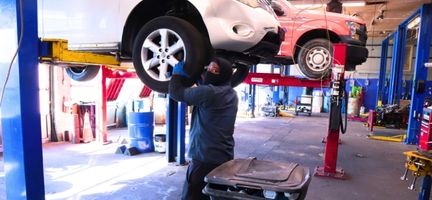
After a year or two of solid entry-level work, technicians move into mid-level or journeyman roles. This is where the automotive career path starts paying off. You take on real diagnostics, brake and suspension work, electrical troubleshooting, and heavier repairs with less supervision.
Mid-level automotive technicians in Philadelphia commonly earn in the $50,000 to $62,000 range, and flat-rate pay structures let efficient techs earn more by completing work faster and accurately. This is also the stage where you accumulate the documented hands-on experience needed to sit for certification tests, which is the gateway to the next level.
Employers increasingly expect mid-level techs to be comfortable with computerized diagnostics. Reading live sensor data, interpreting trouble codes, and working through a logical diagnostic tree are now core competencies, not bonus skills. Technicians who master modern automotive diagnostics advance faster and command better pay.
Certification is the turning point of the automotive career path. The National Institute for Automotive Service Excellence (ASE) is the industry-standard credential, and it validates skill independently of any employer or school. ASE has certified roughly 250,000 working technicians since 1972, and reputable shops treat it as the baseline for serious hires.
The A-series covers passenger-vehicle repair: A1 Engine Repair, A2 Automatic Transmission, A3 Manual Drivetrain, A4 Suspension & Steering, A5 Brakes, A6 Electrical/Electronic Systems, A7 Heating & Air Conditioning, and A8 Engine Performance. Each test requires two years of hands-on experience, though ASE allows one year of formal automotive training to substitute for one of those two years. That single rule is one of the strongest arguments for completing an accredited program: it can shave a full year off your certification timeline.
Certifications are valid for five years and must be renewed. Many technicians start with A4, A5, and A6, the everyday repair areas, then build from there. Each certification you earn increases both your skill range and your value to an employer. Learning which automotive certifications matter most early helps you plan the most efficient route up the automotive career path.
The master mechanic designation is the summit of the general automotive career path. To earn ASE Master Automobile Technician status, you must pass all eight core tests, A1 through A8, and meet the experience requirement. (A9 Light Vehicle Diesel is optional and not required for master status.)
Reaching master mechanic status typically takes several years and two or three testing cycles, though motivated technicians with strong training move faster. The payoff is significant. Dealerships and specialty shops actively recruit master technicians, advertise them as a mark of quality, and pay a premium for the credential. Industry salary data commonly places ASE master technicians in the $70,000 to $95,000-plus range, well above the general technician average.
Becoming a master mechanic is not a one-time trophy. Because certifications expire every five years, master status is a living credential that requires ongoing recertification. That discipline is exactly what keeps master technicians current with new diagnostic systems, safety features, and emissions technology, and it is why they remain the most trusted, highest-paid technicians in any shop.
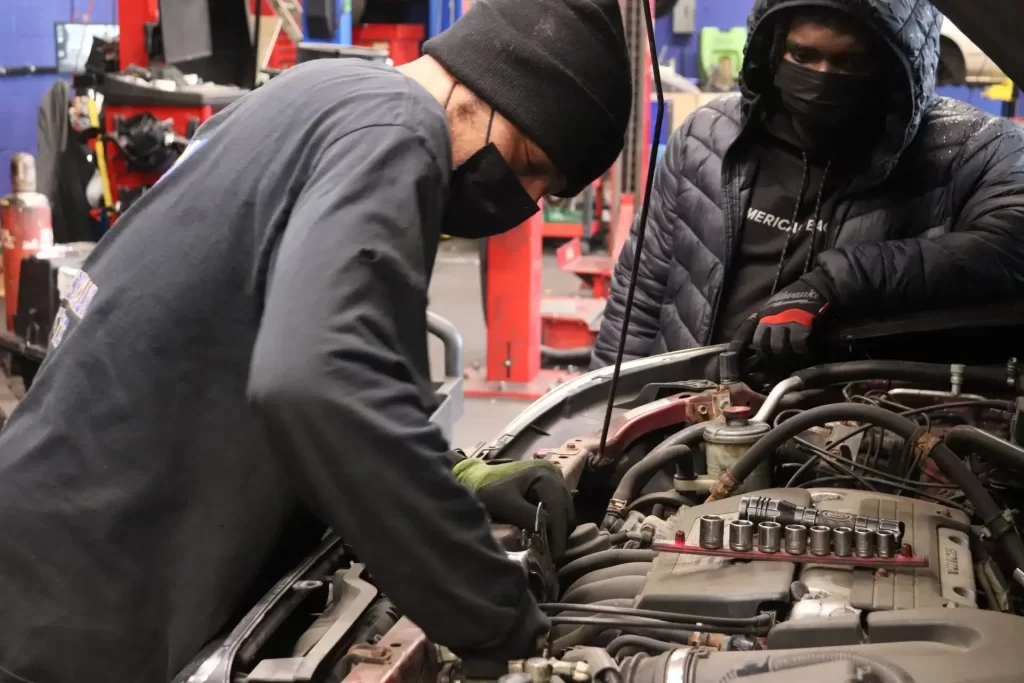
The automotive career path does not end at master mechanic. Experienced technicians frequently move into leadership: shop foreman, service manager, service advisor, or shop owner. These roles blend technical mastery with people management, customer service, scheduling, and business operations.
A shop foreman leads the technical team and handles the toughest diagnostic cases. A service manager runs the service department, manages workflow, and owns customer relationships. Both roles typically pay more than a flat-rate bench position and offer a more predictable schedule.
Ownership is the top of the ladder. Many independent shops in the Philadelphia region are owned by former technicians who spent years building skill, reputation, and a customer base before opening their own doors. The transition takes more than wrenching ability. It requires understanding pricing, staffing, inventory, marketing, and finances. Technicians who plan for the move from employee to shop owner early, and who keep their certifications current, are best positioned to make ownership work.
Timelines vary by effort, but the automotive career path has a predictable rhythm. Focused hands-on training can prepare you for entry-level work in well under a year, and each stage after that is driven by experience and certification.
| Stage | Typical Timeline | What Defines It |
| Entry-level technician | Job-ready in under a year with training | Maintenance, basic service, shop fundamentals |
| Journeyman / mid-level | ~1–3 years in | Independent diagnostics and heavier repairs |
| ASE-certified specialist | ~2+ years in | Passing individual A-series tests |
| Master mechanic (A1–A8) | ~3–5 years in | All eight core certifications, current |
| Foreman / manager / owner | ~5+ years in | Leadership, business, and ownership skills |
The single biggest accelerator is quality training. A program that builds real diagnostic ability and counts toward ASE experience compresses the early stages and gets you earning and certifying sooner.
Automotive technicians in Philadelphia earn competitive wages that grow steadily along the career path. Recent 2026 market data places the average automotive technician salary in the Philadelphia area around $65,000, with entry-level pay lower and experienced, certified technicians earning well above that.
| Career Stage | Approximate Annual Range (Philadelphia Area) |
| Entry-level technician | $38,000 – $48,000 |
| Mid-level / journeyman | $50,000 – $62,000 |
| ASE-certified technician | $60,000 – $75,000 |
| ASE master mechanic | $70,000 – $95,000+ |
| Service manager / owner | Varies widely; often $80,000+ |
A few realities shape these numbers. Flat-rate pay rewards speed and accuracy, so efficient technicians out-earn the averages. Certifications add measurable premiums. And specialties like diesel and EV work pay more; nationally, diesel technicians already post a higher median than general auto techs. For a deeper breakdown, PTTI’s guide on how much an automotive technician makes a year shows how pay climbs across the automotive career path.
For national context, the Bureau of Labor Statistics reports a median wage for automotive service technicians and mechanics of roughly $50,000, while the Philadelphia market runs meaningfully higher, driven by the city’s large vehicle population and consistent service demand.
Yes. Automotive technician is a stable, in-demand career in 2026, and the outlook is durable. The BLS projects roughly 70,000 openings for automotive service technicians and mechanics each year through 2034, with most demand coming from dealerships and repair and maintenance shops. A large share of those openings comes from technicians retiring or leaving the field, which creates constant replacement demand.
Several forces keep the automotive career path secure. Vehicles are more numerous and stay on the road far longer than they did decades ago, so the installed base needing service keeps growing. Complexity is rising, which raises the value of skilled diagnosticians. And the hands-on, judgment-heavy nature of the work makes it difficult to automate away. For the Philadelphia region specifically, a dense population of drivers and vehicles means the demand for skilled auto repair professionals stays consistent year-round.
The modern automotive career path rewards technicians who blend mechanical skill with technical literacy. A new vehicle is a network of computer modules, so today’s technician runs software diagnostics, reads live data, and calibrates sensors and cameras as routinely as they replace brake pads.
The most valuable emerging skill sets include:
Technicians who keep learning stay at the front of the automotive career path. Those who stop learning get left behind as the technology moves on.
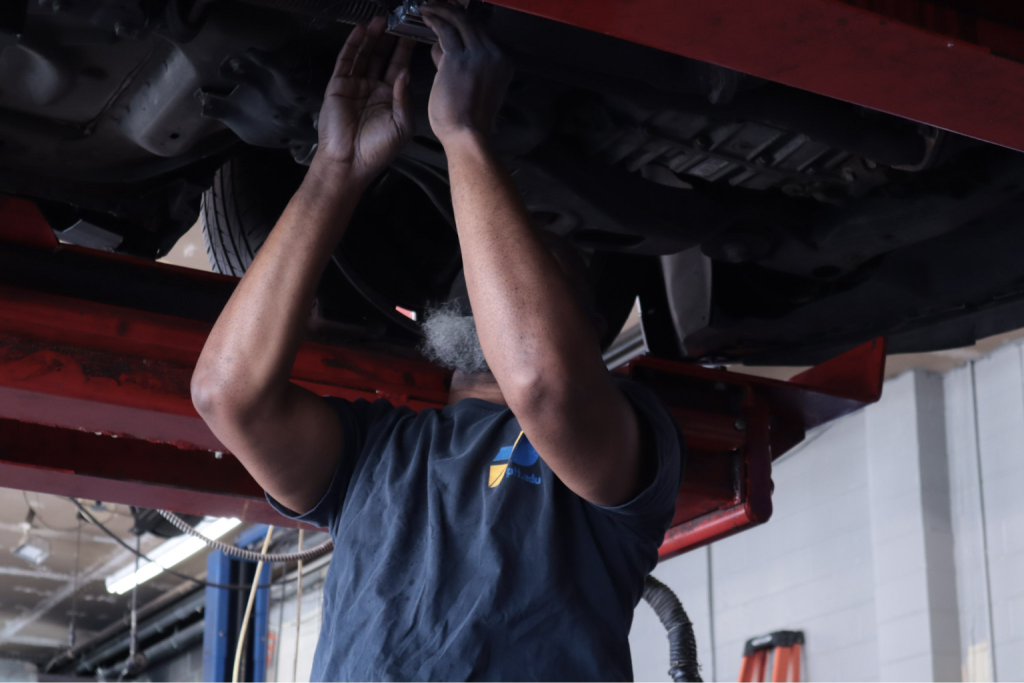
Philadelphia Technician Training Institute (PTTI) is built to launch the automotive career path with hands-on training on industry-standard equipment. Instead of theory-only lectures, students work in real shop-style environments that mirror what employers expect from day one.
The Automotive Repair Technology program focuses on practical competency: diagnostics, repair procedures, electrical systems, safety, and the fundamentals that certification tests measure. Because ASE allows formal training to count toward part of the experience requirement, quality training can shorten your road to certification and master mechanic status.
PTTI serves students across North Philadelphia, South Philadelphia, West Philadelphia, and the surrounding Pennsylvania and New Jersey communities. That local focus matters, because the automotive career path is regional: you train where the jobs are, and PTTI’s connection to the Philadelphia workforce helps graduates move from the classroom into real auto repair roles. Prospective students can explore programs, review financial aid options, or schedule a campus visit to see the labs firsthand.
Veterans and adult learners are a strong fit for this field, and PTTI supports both, including veterans education benefits for those transitioning from military service into a career in the automotive industry.
For many students weighing options, the real question is whether trade school beats a traditional degree for an automotive career. For this field, hands-on training is the standard route, not a compromise.
| Factor | Automotive Trade School | Four-Year College |
| Time to earn | Under a year to job-ready | About four years |
| Cost | Lower, focused tuition | Often significant debt |
| Path to income | Start earning quickly | Earning typically delayed |
| Hands-on training | Core of the program | Often limited |
| Certification alignment | Directly supports ASE path | Rarely relevant |
| Employer demand | Immediate and local | Varies by major |
College suits some careers. But the automotive career path rewards demonstrated skill and certifications, and a focused program delivers both faster and at far lower cost. If you want a direct comparison for your situation, PTTI’s overview of how to become an automotive technician in Philadelphia lays out the practical steps.
The automotive career path is one of the most dependable routes to a skilled, well-paying career without four years of college debt. You start as an entry technician, build real diagnostic ability, earn ASE certifications, reach master mechanic status, and can ultimately manage or own a shop. Each stage rewards effort with more skill, more pay, and more independence, and the local demand in Philadelphia keeps opportunity within reach year-round.
The fastest, most reliable way to begin is hands-on automotive training that builds the fundamentals employers test for and that counts toward your certification timeline. That foundation is what turns a beginner into a confident technician and, over time, a master mechanic.
Take the next step with PTTI. Explore the Automotive Repair Technology program, request information, or schedule a campus tour to see the shop labs. Ready to begin your automotive career path? Contact admissions to apply and start this year.
The automotive career path moves from entry-level technician to journeyman, then to ASE-certified specialist, master mechanic, and finally leadership roles like service manager or shop owner. Each stage adds skills, certifications, and higher pay, with master mechanic status earned by passing ASE tests A1 through A8.
You become a master mechanic by passing all eight core ASE automobile tests (A1–A8) and meeting the experience requirement of two years of hands-on work. One year of formal automotive training can substitute for one year of experience, and certifications must be renewed every five years to keep master status.
Automotive technicians in Philadelphia average around $65,000 per year in 2026. Entry-level pay starts lower, roughly $38,000 to $48,000, while ASE master mechanics often earn $70,000 to $95,000 or more. Flat-rate pay, certifications, and specialties like EV and diesel push earnings higher.
Focused automotive training can prepare you for entry-level work in less than a year. Reaching mid-level roles usually takes one to three years, and master mechanic status generally takes three to five years of experience plus passing all eight ASE tests.
Pennsylvania does not require a general mechanic’s license to perform most auto repair, though technicians who perform state safety or emissions inspections must be registered and approved through PennDOT. ASE certification is voluntary but strongly preferred by reputable employers along the automotive career path.
Yes. With roughly 70,000 national openings projected each year through 2034, steady local demand in Philadelphia, rising vehicle complexity, and work that resists automation, the automotive career path offers strong stability and clear advancement.
PTTI offers hands-on automotive training in Philadelphia using industry-standard equipment, with a curriculum built around diagnostics, repair, safety, and certification readiness. The program serves students across the Philadelphia region and nearby Pennsylvania and New Jersey communities.
Most shop owners start as technicians, earn certifications, reach master mechanic status, and build years of experience before opening a shop. Ownership also requires business skills like pricing, staffing, inventory, and customer management, so planning the transition early is key.