
People ask this question all the time, usually with a bit of doubt in their voice. Can an auto mechanic make a six-figure salary, or is that just something shops say to recruit new techs? The honest answer is that yes, some auto mechanics do earn six figures, but not all of them, and not overnight. The path is real, though, and it is more achievable than most people think once you understand how the pay actually works.
This guide gives you the straight version. We will look at what a typical auto mechanic salary looks like in 2026, which mechanics break into six figures and how, what drives pay up, and what the road looks like for someone starting an auto mechanic career in Philadelphia. No hype, just numbers, context, and a clear next step.
Yes, an auto mechanic can make a six-figure salary, but it usually takes the right combination of experience, ASE certification, specialization, and often a flat-rate or ownership setup. Average pay in the field is lower than that, yet the top clearly reaches $100,000 or more.
Think of it as a ladder rather than a lottery. Entry-level pay is modest. As you gain speed, earn certifications, and specialize in high-demand work, your pay climbs. The technicians hitting six figures are almost always the ones who kept stacking skills and moved into the highest paying automotive jobs available to them.
Before we talk about six figures, it helps to ground the conversation in real numbers. According to the U.S. Bureau of Labor Statistics, the median annual wage for automotive service technicians and mechanics was $50,620 in May 2025. Half of all techs earned more than that, and the highest 10 percent earned more than roughly $80,000. That top slice is where six figures starts to come into view.
Here is a realistic picture of how an auto mechanic salary changes as you move up:
| Career Stage | Typical Annual Range (2026) | What Changes |
| Entry-level technician | $38,000 – $50,000 | Learning speed, basic services, building certifications |
| Mid-level technician | $50,000 – $67,000 | Faster work, first ASE certifications, some specialization |
| Experienced / ASE-certified | $67,000 – $85,000 | Master status, diagnostics, flat-rate productivity |
| Specialist / owner / manager | $85,000 – $110,000+ | Diesel, EV, exotics, mobile service, shop ownership |
A few honest notes belong with any automotive technician salary figures. Many shops pay on a flat-rate system, meaning you earn based on the jobs you complete rather than the hours you sit at the shop. A fast, skilled technician can out-earn the averages, while a newer tech may earn less at first. Overtime, commission, and side work also push real take-home pay above the base auto mechanic salary you see in a job listing.
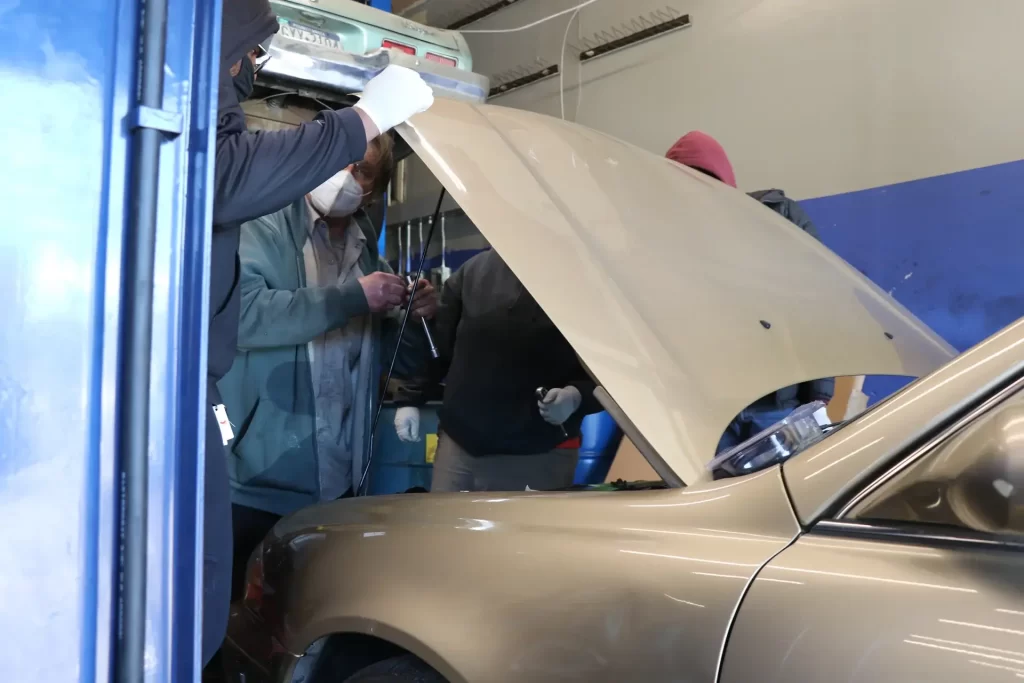
Six-figure pay in this trade rarely comes from doing the same oil changes for twenty years. It comes from moving into the highest paying automotive jobs and getting good enough that shops compete to keep you. Here are the most common paths.
The classic route to six figures is becoming an ASE Master Technician who works flat-rate at a busy dealership or independent shop. Once you can diagnose and repair quickly and accurately, flat-rate pay rewards your speed. Top master techs routinely clock more billable hours than the calendar has, which is exactly how their earnings cross into six figures.
Diesel pays more than gas work, consistently. The Bureau of Labor Statistics reports a median wage of $61,770 for diesel service technicians in May 2025, with the top 10 percent earning more than $88,740. Add overtime and specialization, and a diesel-focused auto mechanic career can reach six figures, especially with fleets, trucking, and heavy equipment.
Electric and hybrid vehicles are reshaping the highest paying automotive jobs. Shops need technicians who can safely service high-voltage systems, and there are not enough of them yet. Techs who add EV and hybrid skills to a strong diagnostic foundation position themselves for premium pay as these vehicles become the norm on Philadelphia roads. If you want to understand where the field is heading, PTTI’s overview of electric vehicle technician training is a useful starting point.
Two of the biggest jumps in pay come from working for yourself. A mobile mechanic who builds a loyal customer base can charge premium rates for convenience. A shop owner earns from the business, not just their own labor. Both carry more risk and responsibility, but both are proven routes to six figures for skilled, business-minded techs.
You do not have to stay under the hood forever. Experienced technicians often move into service advisor, service manager, or shop foreman roles that combine technical knowledge with customer and team leadership. These positions frequently pay six figures and reward the exact skills a strong auto mechanic career builds.
If six figures is the destination, these are the levers that get you there. Understanding them early helps you plan an auto mechanic career that grows instead of plateauing.
Notice that four of those five levers are within your control. That is the encouraging part. Your starting pay is not your ceiling, and the techs who treat it that way are the ones who eventually reach six figures.
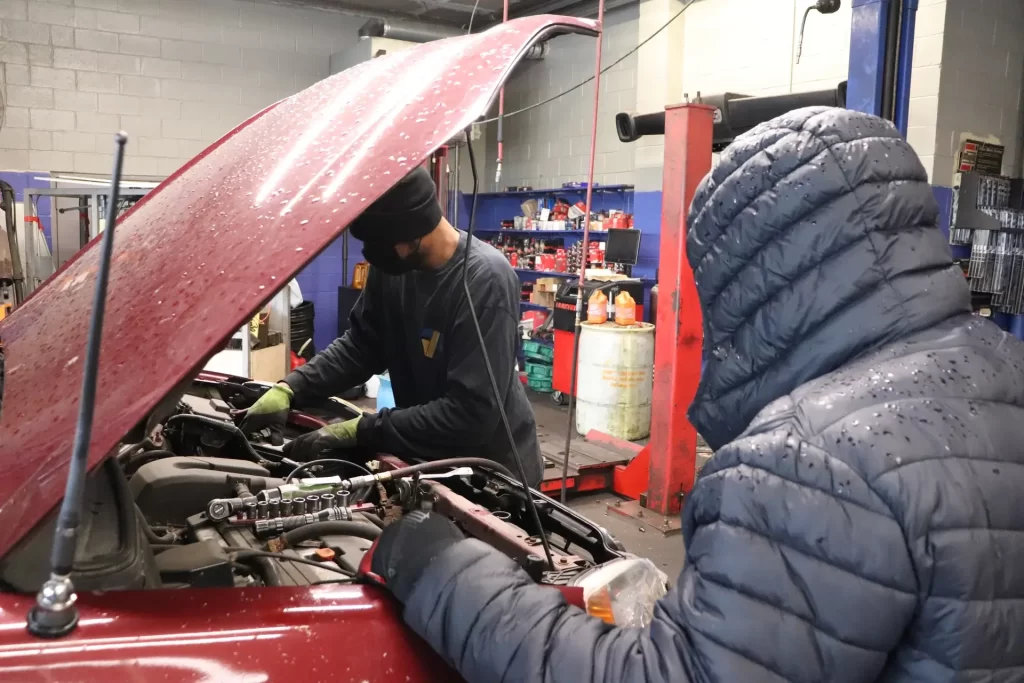
ASE certification, offered through the National Institute for Automotive Service Excellence, is the credential employers recognize most. It tells a shop that you have proven your knowledge on real tasks. That trust translates into pay.
Earning ASE certification in multiple areas, and eventually reaching Master Technician status, is one of the clearest ways to lift an automotive technician salary. It also opens the door to the highest paying automotive jobs, because complex diagnostic and specialty work usually goes to certified techs first. If certifications interest you, PTTI’s guide to the top automotive technician certifications breaks down which ones matter and why.
For anyone serious about six figures, the plan is simple to state and worth the effort: build strong fundamentals, earn ASE certification steadily, and specialize where the money is. Good auto mechanic training sets that foundation from day one.
The auto mechanic job outlook is steady and dependable. The Bureau of Labor Statistics projects employment of automotive service technicians and mechanics to grow about 5 percent from 2025 to 2035, with roughly 66,200 openings each year over the decade. Many of those openings come from experienced workers retiring, which keeps demand constant.
Cars are not going away, and they are getting more complex, not less. That complexity actually helps a modern auto mechanic career, because advanced diagnostics, hybrids, and EVs all require trained technicians rather than casual DIYers. Steady demand plus rising complexity is a healthy combination for both job security and long-term auto mechanic salary growth.
Local pay matters far more than national averages, and the Philadelphia picture is encouraging. Several salary trackers place the average automotive technician salary in the Philadelphia area between roughly $52,000 and $67,000, with top and specialized earners reaching the high $70,000s, $80,000s, and beyond. That upper range is where six-figure pay becomes a genuine target for Philadelphia master techs and specialists.
Philadelphia and the surrounding region support a wide mix of employers: dealerships, independent repair shops, fleet operations, collision centers, and specialty performance shops. That variety matters, because it gives a Philadelphia auto mechanic career room to move toward the highest paying automotive jobs without leaving the area. Demand extends well beyond the city too, across nearby communities such as Camden, Cherry Hill, Drexel Hill, Lansdowne, Darby, Ardmore, and Yeadon.
For a broader look at local earning potential, PTTI’s breakdown of the highest-paying automotive jobs without a degree in Philly shows how techs move up the pay scale in this region.
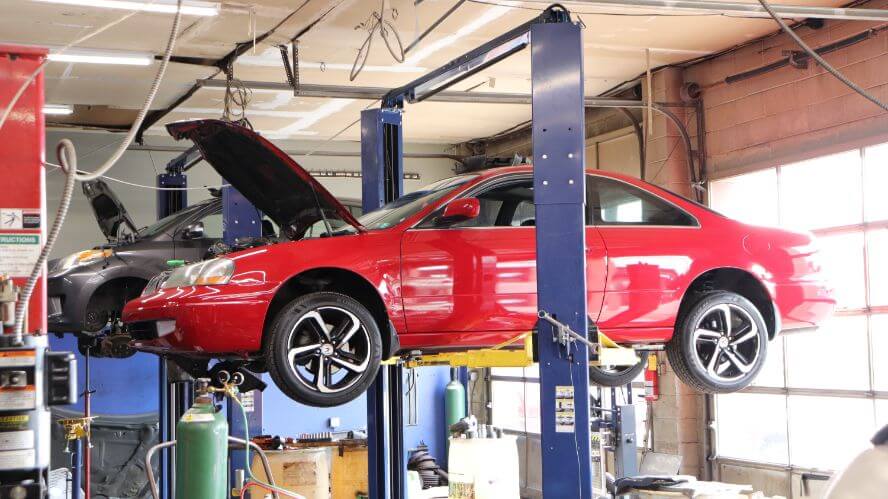
Reaching six figures starts with getting job-ready in the first place. You do not need a four-year degree to enter this field. What you need is solid, hands-on auto mechanic training, a willingness to earn certifications, and a plan to specialize over time.
Here is the practical sequence most successful technicians follow:
his is exactly the kind of career-focused path PTTI’s automotive training and repair technician program is built around, with real lab time, industry-standard equipment, and certification preparation. If you are weighing the field first, PTTI’s honest look at how much an automotive technician makes a year pairs well with this guide.
For people who like solving problems with their hands, an auto mechanic career is genuinely worth it in 2026. You can enter without heavy student debt, start earning quickly, and grow your auto mechanic salary steadily through experience, ASE certification, and specialization. A six-figure income is not guaranteed, but it is on the table for those who commit to the craft.
The trade offers something a lot of desk jobs cannot: clear cause and effect between skill and pay. Get faster, get certified, get specialized, and your pay follows. That direct link is why so many career changers, veterans, and high school graduates in Philadelphia choose this path over a traditional degree.
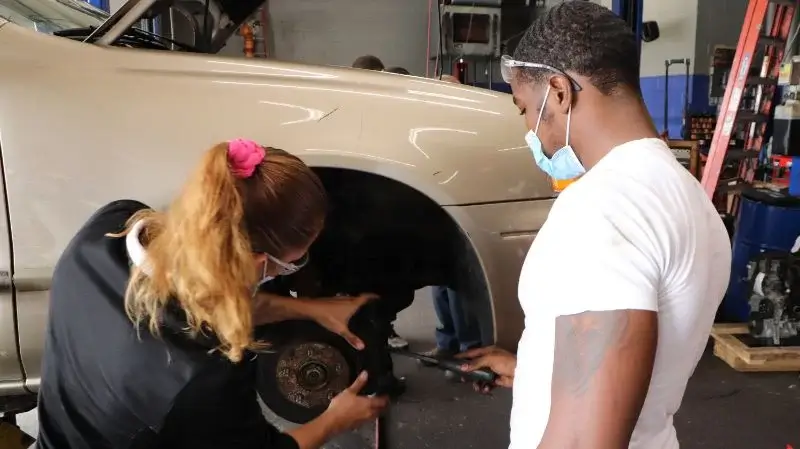
So, can an auto mechanic make a six-figure salary? Yes, though it takes the right moves: strong fundamentals, ASE certification, a high-demand specialty, and often flat-rate or ownership. Average pay is more modest, but the ceiling is high, and every year in the trade gives you more control over where your pay lands. In a market like Philadelphia, with steady demand and a full range of employers, the top of an auto mechanic career is well within reach for those who put in the work.
The first step is the same for everyone: get trained. Hands-on auto mechanic training is what turns interest into a job, and a job into a climbing automotive technician salary.
Ready to start your auto mechanic career in Philadelphia? Explore PTTI’s Automotive Training and Repair Technician Program and take the first step toward a higher-earning future.
Yes. While the average auto mechanic salary is closer to $50,000, master technicians, diesel and EV specialists, mobile mechanics, and shop owners regularly reach six figures. It typically takes experience, ASE certification, and a high-demand specialty to get there.
The national median wage for automotive service technicians was about $50,620 in May 2025, according to the Bureau of Labor Statistics. Experienced and certified techs earn well above that, and the top 10 percent earn more than roughly $80,000.
In the Philadelphia area, the average automotive technician salary generally runs between about $52,000 and $67,000, with top and specialized earners reaching the high $70,000s, $80,000s, and beyond. Local demand and cost of living push Philadelphia pay above the national average.
The highest paying automotive jobs usually include ASE Master Technicians on flat-rate pay, diesel and heavy-duty technicians, EV and hybrid specialists, shop owners, mobile mechanics, and service or shop managers. Specialization and certification are the common threads.
No. You do not need a four-year degree. Most technicians start with hands-on auto mechanic training, earn ASE certification over time, and build an auto mechanic career through experience and specialization rather than a traditional college path.
Focused, hands-on auto mechanic training can prepare you for entry-level work in a matter of months rather than years. From there, certifications and specialization continue to raise your automotive technician salary throughout your career.
Yes. With about 66,200 openings projected each year through 2035, steady demand, no degree requirement, and a clear path to a higher auto mechanic salary, it remains a strong, stable choice, especially for hands-on problem solvers in the Philadelphia region.
ASE certification signals proven skill, so shops trust certified techs with more complex, higher-paying work. Building multiple certifications and reaching Master Technician status is one of the most reliable ways to raise an automotive technician salary toward six figures.