
In countries like the USA, Canada, the UK, and others that face extreme temperatures, HVAC and its maintenance are essential. These houses need an HVAC system year-round. Most needed in winter , summer and more . Every household needs it; maintenance is required before summer and winter arrive. Therefore, who gets the call? An HVAC tech. If you’re weighing this trade, you probably want the honest version of HVAC technician salary and career path, not a glossy brochure. So here it is. We’ll cover the daily work, the pay, and where this career can go. Some parts are great. Some parts are hot, tight, and tiring. You should know both.
Forget the idea that techs just swap filters. It’s more than that. It’s the job of maintaining the temperature of a 700 sq ft warehouse, or a larger residential home. The real HVAC technician job description covers much more. Techs install, maintain, and repair heating, cooling, and refrigeration systems. Additionally, they diagnose problems that don’t always show up right away.
A typical day might include:
Some days are calm. Others are packed with emergency calls. Summer and winter get busy fast.
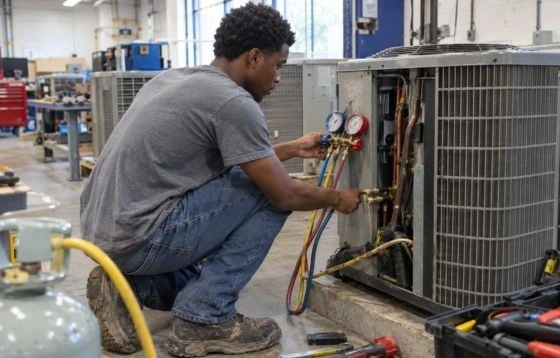
Let’s keep it real. You’ll work in attics, crawl spaces, and rooftops. It gets hot and cold, depending on the season. The work can also be physical, so you’ll lift, bend, and climb.
Electricity, refrigerants, and gas all carry real risk. That’s why good training spends so much time on safe habits. You’ll also deal with stressed-out customers sometimes. Staying calm helps a lot.
HVAC technician salary depends on experience along with location you stay .The Pay also depends on, certifications, and employer. Here’s a general picture:
| Experience Level | Typical Hourly Range | What Changes |
| Entry-Level | $18 – $23 | Learning systems, working under a senior tech |
| Mid-Career | $25 – $32 | Working more independently, handling harder jobs |
| Experienced/Specialized | $34 – $44+ | Commercial work, leadership, or niche skills |
All these salary prediction are analyzed from BLS .
If you do Overtime can add up, and dedication in your resume,along with extra pay especially during peak seasons. Some employers also offer on-call pay, vehicle use, or tool allowances. Always ask what’s included before you accept an offer. All these offers depends on employers as well
Not every tech earns the same. A few things move the needle. Therefore, it helps to plan for them early.
Here’s how HVAC technicians earn good pay: 30% certifications, 25% specialization, 25% location, and 20% employer type and union status. Certifications and specialization are the parts you control most.
Note: Those percentages are illustrative, not official statistics.
Here’s where it gets exciting. HVAC technician career opportunities don’t stop at the first job. Moreover, each step builds on the last.
| Stage | Typical Role | What You Do |
| Starting Out | Entry-Level Technician or Helper | Learn the systems and support senior techs |
| Growing | Certified/Independent Technician | Handle service calls on your own |
| Specializing | Commercial Refrigeration or Energy Specialist | Work on bigger, more complex systems |
| Leading | Lead Technician or Supervisor | Guide crews and review quality |
| Owning | Contractor or Business Owner | Run your own HVAC company |
You don’t have to do all of it. Some people love being a hands-on tech for 30 years. Others move into sales, estimating, or management. The trade gives you choices. Moreover, by following these paths, you can become HVAC technician at the age of 30.
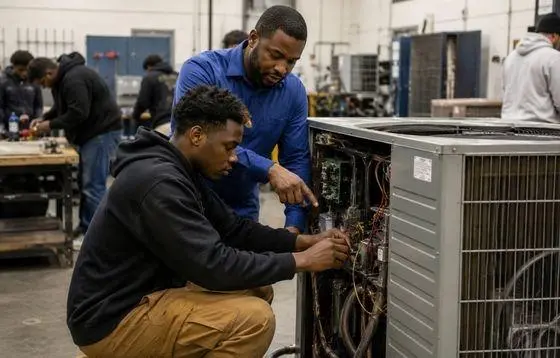
Employers care about credentials. Therefore, treat them as part of your pay plan, not just paperwork.
PTTI’s HVAC program includes EPA Section 608 certification and free OSHA 30 certification. Always confirm current requirements with the certifying organization, since rules can change.
You don’t need years of classroom time. Most of the time will be spent on HVAC lab with the HVAC unit. HVAC technician training teaches you the basics first, then builds toward advanced systems. At PTTI, the course sequence runs from Introduction to HVAC and Refrigeration Fundamentals through Electricity in HVAC, Air Conditioning, Heating Systems, and Commercial Refrigeration. It also includes Job Application Skills and an externship.
The moment you start, understanding goes from basic to configuration it has various steps that include how cooling works, then moves into electrical, heating, and commercial systems. By the end, you’ve handled real equipment and practiced real troubleshooting.
Note: Once you enroll in HVAC Training program confirm the current program length and schedule directly with PTTI, since sources list slightly different durations.
Every career has trade-offs. Here’s a quick look:
| Pros | Cons |
| Steady demand, since systems break year-round | Hot attics and cold rooftops |
| Training is shorter than a four-year degree | Physical work |
| Clear path to higher pay | Busy seasons mean long hours |
| Skills you can use anywhere | Ongoing learning as technology changes |
Overall, people who like hands-on problem-solving tend to do well here. People who want a quiet desk job probably won’t.
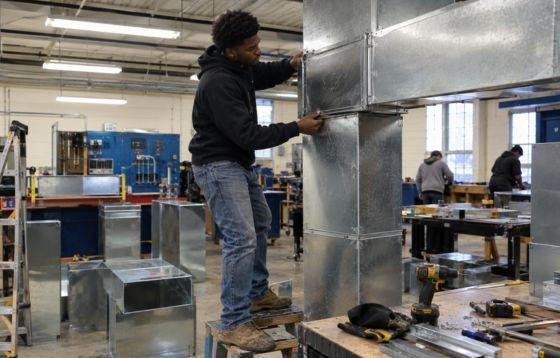
Every home and business needs heating and cooling. Systems age and break. New buildings need new installs. According to the U.S. Bureau of Labor Statistics, employment for heating, air conditioning, and refrigeration mechanics is projected to grow steadily over the next decade. So skilled techs will stay in demand, supporting your long-term options.
From the very first day PTTI mentors will assist you with the program. Philadelphia Technician Training Institute (PTTI) builds hands-on lab work, certifications, and career coursework into its HVAC program. Additionally, PTTI reports a placement rate near 92% across its trade programs. Ask your advisor how they calculate that number. A good school explains it clearly.
Here’s how enrollment works:
HVAC technician salary varies according to experience and location. This is one of the most in-demand jobs in the country. The HVAC technician salary and career path offer steady demand, real pay growth, and room to move up. However, the job isn’t easy. It’s physical, seasonal, and requires you to keep learning. If that sounds like your kind of challenge, the trade can reward you well. Start with solid training, earn your certifications, and build from there. The rest follows.
Ready to see if HVAC fits you? Call PTTI at 215-381-9403 or email info@ptt.edu to talk with an advisor. Get the enrollment criteria and follow up with the demand; provide the needed document, discuss financial aid, ask about schedule flexibility, and join the program that suits your comfort.
They diagnose, repair, and install heating and cooling systems, and they explain issues to customers.
Pay varies by experience, location, and employer. Entry-level starts lower, and experienced specialists earn more.
Handling refrigerants legally requires EPA 608 certification, and employers often want OSHA training too.
Yes. Many experienced techs move into contractor roles or start their own companies.
Yes. PTTI’s HVAC program covers refrigeration through commercial systems and includes EPA 608 and free OSHA 30 certification.
Read more :