
Learning a trade when English is your second language is absolutely achievable, and in many ways the skilled trades are one of the most welcoming paths for newcomers and multilingual learners in the Philadelphia region. If you can follow a demonstration, use your hands, and commit to practice, language differences become far smaller obstacles than most people expect. The trades reward what you can do, not how perfectly you speak.
This guide is written for immigrants, refugees, international students, and anyone who grew up speaking another language at home and now wants a stable, well-paying career in a hands-on trade program. You will learn what to realistically expect in the classroom and the lab, how technical vocabulary works, why demonstration-based teaching helps multilingual students, and the kinds of support a quality trade school in Philadelphia can offer. We will also cover entry requirements, practical study strategies, and which trades tend to be a strong fit. The goal is simple: to show you exactly what the journey looks like so you can start with confidence.
Yes. You can absolutely succeed in a trade program if English is your second language. Skilled trades are taught primarily through hands-on demonstration, repetition, and practice, so you learn by watching and doing, not only by listening. As long as you can follow instructions and practice consistently, limited English rarely stops a motivated student from completing training and getting hired.
The reason this works comes down to how the trades are actually taught. In a welding booth, an automotive bay, or a pipefitting lab, your instructor shows a technique, you watch, and then you repeat it until your hands remember it. That style of learning relies on observation and muscle memory, which cross every language. Many successful tradespeople in Philadelphia began with modest English and built both their craft and their vocabulary at the same time. In fact, the structured environment of hands-on training often accelerates language learning, because you hear the same technical terms used in context again and again.
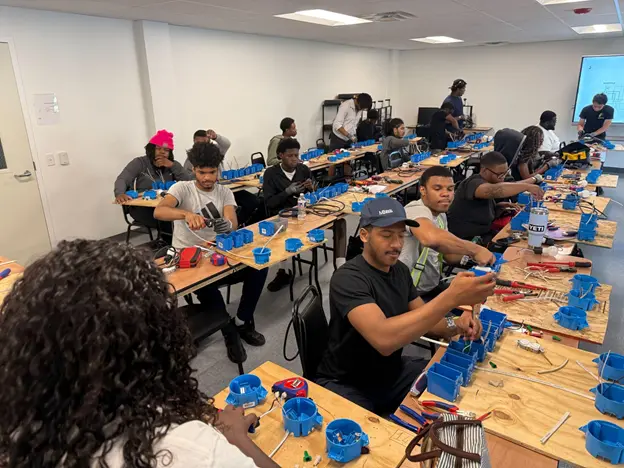
For many immigrants and multilingual adults, the trades offer a faster, more direct route to a stable income than a traditional four-year degree. A college path leans heavily on advanced reading, essay writing, and lecture comprehension, all of which put non-native speakers at a disadvantage. The trades flip that equation by rewarding practical skill, reliability, and the ability to produce quality work.
There is also the question of timing. Many newcomers cannot spend years in school before earning a living. Shorter, focused trade programs let you build a marketable skill in months rather than spending years on a degree, which matters when you are supporting a family. This is a key reason students worry needlessly that learning a trade when English is your second language will hold them back, when in reality the opposite is often true.
Finally, the trades provide dignity and independence. A certified welder, mechanic, or sterile processing technician holds a credential that employers across Pennsylvania, New Jersey, and Delaware recognize. That portability gives English language learners real leverage in the job market, regardless of their first language.
Here is what to realistically expect when learning a trade when English is your second language in a hands-on program. Understanding the experience ahead of time removes a lot of the fear that keeps capable students from enrolling.
One of the most reassuring truths about the trades is that technical vocabulary is new for native speakers too. Words like “amperage,” “torque,” “flux,” “fitting,” and “tolerance” are not everyday English. Everyone in the room is learning this specialized language together, which puts ESL students on far more equal footing than they might expect. You are not behind; you are simply adding trade vocabulary the same way your classmates are.
A practical tip: keep a small personal glossary. Each time you learn a new tool or term, write it down in English alongside the word in your first language. Within weeks, that notebook becomes your fastest route to fluency in the words that actually matter on the job.
Expect to spend a large share of your time doing, not just listening. In quality hands-on training, instructors demonstrate a process, then supervise while you repeat it. This visual, physical approach means you can understand and master a skill even when a few spoken words slip past you. If you miss a term, you can usually still see exactly what to do.
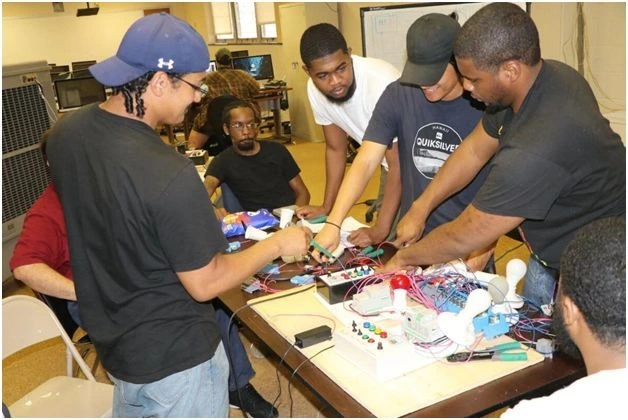
Safety is the one area where clear communication matters most, and good programs know this. Expect safety procedures to be taught slowly, shown visually with signs and demonstrations, and repeated often. Many certification exams in the trades are also heavily performance-based, meaning you prove your ability by doing the work correctly rather than by writing long essays. Preparing for these assessments is a normal part of training, and instructors help ESL students get comfortable with the specific exam language in advance.
A strong trade school in Philadelphia supports ESL students through patient, demonstration-based instruction, smaller class settings, repetition of key terms, and a learning culture that expects students from many language backgrounds. The right school treats a diverse, multilingual classroom as normal, because Philadelphia itself is a city of many languages and communities. It is worth reviewing exactly what ESL support a program offers for technical training before you enroll.
When you are comparing programs, look for the support systems that make learning a trade when English is your second language far more manageable. Helpful features often include instructors with real-world field experience who teach by showing, hands-on labs where you practice continuously, and staff who are used to working with newcomers from North Philadelphia, South Philadelphia, and nearby communities such as Camden and Pennsauken. A welcoming admissions team that answers your questions patiently is itself a good sign of how the whole program will treat you.
It also helps to visit in person. Before committing to any trade school in Philadelphia, walking through a lab, watching a class, and seeing how instructors interact with students tells you more than any brochure. If you learn better by doing than by reading, a school that emphasizes real equipment and practice over long lectures will serve you well.
Beyond choosing the right program, a few habits make learning a trade when English is your second language noticeably smoother. These strategies come directly from how successful multilingual students approach their training.
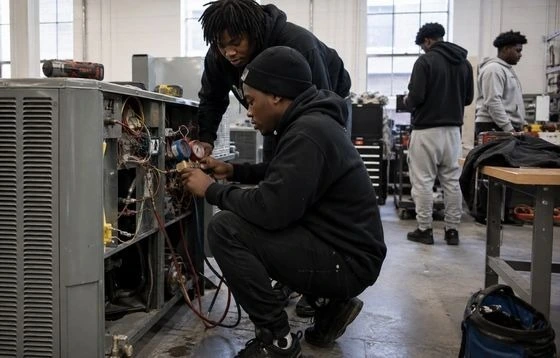
No, you generally do not need perfect English or even a high school diploma to begin many trade programs. A large number of trade schools focus on your ability and commitment rather than past academic records, and plenty of successful students started with basic conversational English and no formal diploma.
Requirements vary from one trade school in Philadelphia to the next, so it is important to ask directly during admissions. Some programs may ask for a GED or offer a pathway to earn one, while others emphasize an entrance conversation and a willingness to learn. The key point for English language learners is that the trades are built around demonstrated skill. If you can show up, follow safety rules, and practice until your work meets standard, you are the kind of student these programs are designed to serve. This article is educational guidance rather than a guarantee of admission, so always confirm specific requirements with the school directly.
The Philadelphia region continues to need skilled workers, and that demand creates real opportunity for newcomers. According to the U.S. Bureau of Labor Statistics, skilled-trade occupations face ongoing openings each year, driven largely by experienced workers retiring. For English language learners, that steady replacement demand means consistent hiring across a range of trade programs. A well-connected trade school in Philadelphia can help you turn that demand into an actual job offer.
Several trades tend to be an especially strong fit for multilingual learners, because they are highly hands-on and demonstration-based. Welding is a classic example, where skill is proven at the booth; you can explore this path through a Welding Technology program. Automotive repair rewards diagnostic ability and careful work with your hands. Manufacturing and automation roles rely on following precise, repeatable processes. Pipefitting, masonry, and sterile processing all share the same trait: your work speaks for itself.
Because these credentials are recognized by employers throughout Pennsylvania, New Jersey, and Delaware, training in Philadelphia positions you for jobs across the whole region, from West Philadelphia and Southwest Philadelphia to nearby towns like Cherry Hill, Darby, and Collingswood. For many families, that stability is exactly why the skilled trades are worth the effort.
Learning a trade when English is your second language can open the door to a stable, respected career without years of schooling or heavy debt. The trades reward what you can do with your hands, and demonstration-based hands-on training means language differences shrink quickly as your skill and your vocabulary grow together. With patience, practice, and the right support, a multilingual background is no barrier to becoming a welder, mechanic, or technician in the Philadelphia region.
If you are ready to take the next step, schedule a visit or appointment with PTTI to ask your questions in a welcoming, no-pressure conversation.
Yes. Learning a trade when English is your second language is realistic and common. Most trades are taught through demonstration and hands-on practice, so you learn largely by watching and doing. Consistent practice matters far more than perfect English.
Support varies by school, but many trade programs are experienced with multilingual classrooms and teach technical vocabulary slowly, visually, and through repetition. When comparing options, ask admissions directly how they support ESL students with technical terminology.
Not always. Many trade programs focus on your ability and commitment rather than past academic records, and some offer pathways for students without a diploma. Requirements differ by program, so confirm with the specific school before enrolling.
Highly hands-on trades such as welding, automotive repair, manufacturing, pipefitting, and masonry tend to suit English language learners well, because skill is demonstrated physically. Hands-on training reduces reliance on spoken language and helps you learn by doing.
Usually, yes. Hands-on training exposes you to the same technical terms repeatedly and in context, which is one of the most effective ways to build real-world English. Many tradespeople became fluent in job-specific English entirely during training and on the job.